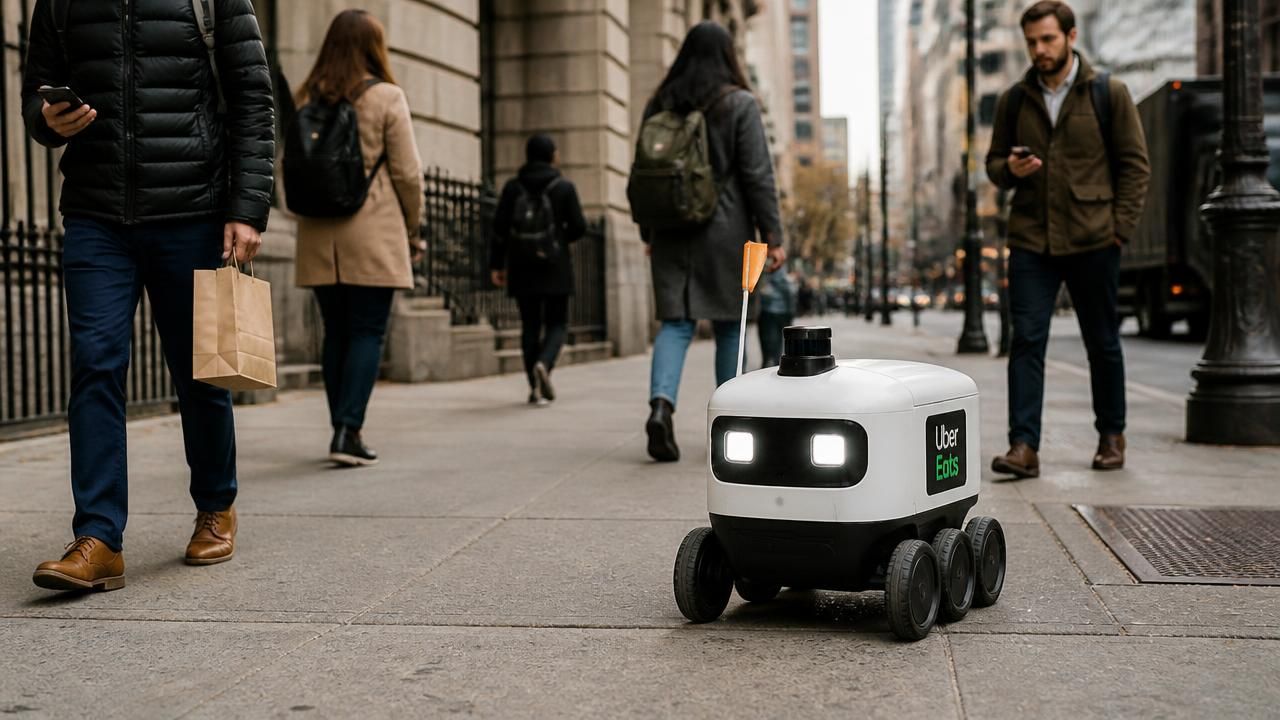
Uber’s push into autonomous vehicles and robotic delivery is running into two very different kinds of resistance: a strategic chill from a key self-driving partner and a street-level backlash from pedestrians who are not ready to share the sidewalk with machines. In Philadelphia, Uber Eats delivery robots have been kicked, sat on, and blocked just one month after launch, with one woman arrested for obstructing a robot. In Sheffield, similar delivery robots were vandalized. And according to The Verge, Uber’s relationship with Waymo — the robotaxi leader Uber has touted as a cornerstone of its autonomous future — is more fragile than CEO Dara Khosrowshahi suggested.
A partnership more brittle than advertised
On Uber’s late-August earnings call, Khosrowshahi sounded confident about the company’s “very strong” partnership with Waymo. The two companies had worked together for years in several cities, including exclusively in Austin and Atlanta, and Khosrowshahi told investors the arrangement would continue.
“We believe we’ll continue to operate next year in those marketplaces,” he said. “It’s a terrific product, and the on-the-ground partnership continues to be very strong.”
But The Verge reports that several weeks later, Waymo co-CEO Teke signaled a more independent posture, making the partnership look more brittle than Uber had portrayed. The Verge’s headline was blunt: the robots are ditching Uber. The shift matters because Uber has leaned on partnerships rather than building every piece of autonomous technology itself. If Waymo decides to compete more directly for riders — or to work with other platforms — Uber’s robotaxi strategy could lose a key differentiator. Khosrowshahi’s sunny earnings-call forecast, in other words, may have been premature.
Philadelphia: ‘Man vs. Machine’ on the sidewalk
The delivery-robot conflict in Philadelphia has been framed in strikingly different ways. Fox News cast it as “Man vs. Machine,” reporting that Philadelphians “aren’t taking kindly to sharing sidewalks with delivery robots” and that residents kicked and sat on the machines. The New York Post emphasized timing, noting that Philadelphians were already attacking the robots one month after launch. USA Today reported that at least one robot was roughed up but kept going — a detail that underscores both the durability of the hardware and the intensity of the public reaction. PennLive described a city greeting the robots “with both feet,” while Yahoo News reported that a Philadelphia woman was arrested for blocking one of the delivery robots.
The incidents do not appear to reflect a single organized protest. Instead, they suggest a scattered, street-level frustration with automation occupying public space. Delivery robots are designed to be unobtrusive: they roll along sidewalks at pedestrian speeds, carrying food from restaurants to customers. But they also introduce a new presence into already crowded urban environments, raising questions about accessibility, safety, surveillance, and whether public sidewalks should be used for private commerce. For some residents, the robots are a novelty; for others, they are a nuisance or a symbol of tech companies pushing change faster than communities can absorb it.
Sheffield and the wider backlash
The problem is not limited to Philadelphia. MSN reported that Uber Eats delivery robots were vandalized in Sheffield, adding another city to a growing pattern of public friction with sidewalk robots. The Sheffield incidents and the Philadelphia confrontations share a common thread: people are testing the limits of the machines, sometimes physically. That is a warning sign for Uber and its partners as they expand autonomous delivery. Public acceptance is not guaranteed by technical competence. A robot can navigate a curb cut and still fail to navigate a hostile pedestrian.
It is not clear from the reports how Uber will respond to the vandalism or whether it will adjust routes, add staff, or work more closely with city officials. But the company’s broader challenge is clear. Its delivery robots need sidewalks, permits, and public tolerance. Its robotaxi ambitions need partners like Waymo. Both depend on trust — from cities, regulators, and ordinary people who encounter the technology up close.
Why it matters
The twin stories reveal a tension at the heart of Uber’s automation strategy. On the business side, Uber wants to be the platform that connects riders and customers to the best autonomous technology, whether that comes from Waymo or its own partners. On the street, that strategy depends on people accepting robots in their daily lives. The Philadelphia and Sheffield incidents show that acceptance can be fragile. So does the Waymo relationship, which The Verge suggests is less stable than Uber’s public comments implied.
For now, the robots are still rolling. USA Today’s report that a damaged robot kept going is a fitting metaphor for the industry: the machines may be resilient, but the social license to operate is not automatic. Uber’s next task is not just to prove that its robots can deliver food or that its partnerships can deliver rides. It is to convince cities that the robots belong on the sidewalk — before more residents decide to answer with their feet.