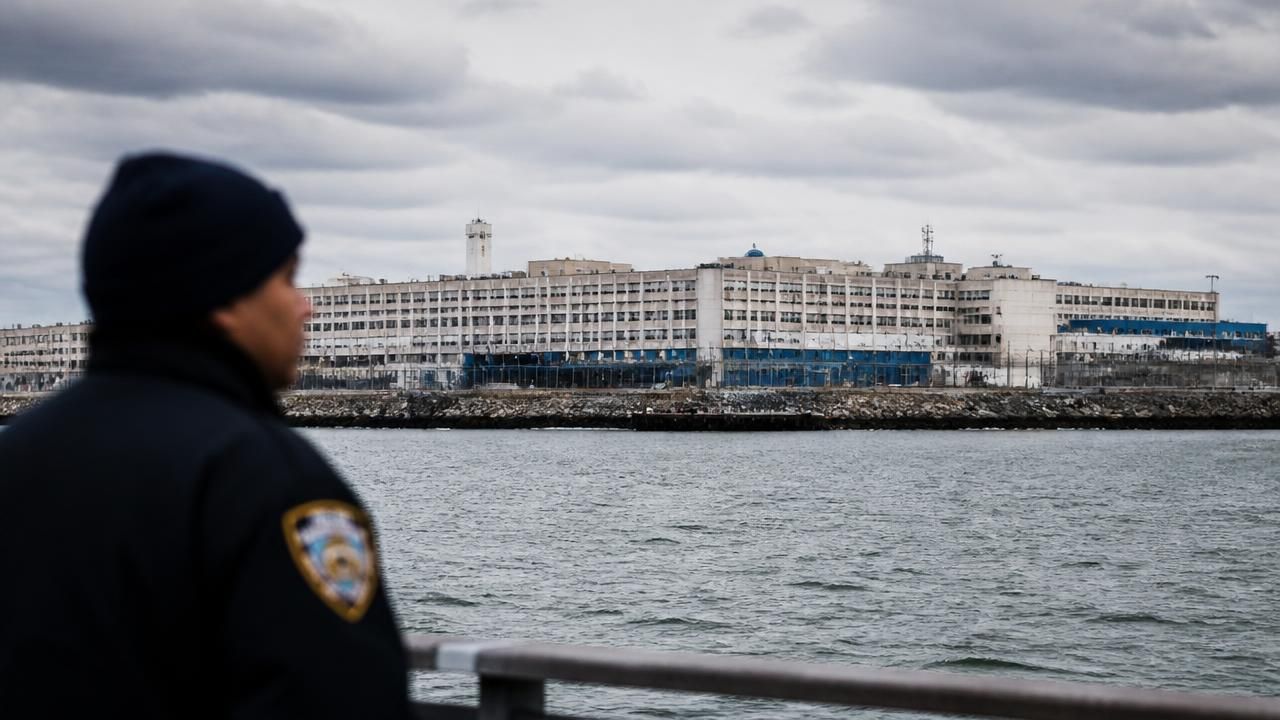
New York City is pressing forward with a long-delayed plan to close the Rikers Island jail complex, the sprawling 413-acre penal facility in the East River that has become a byword for violence and dysfunction in the nation's largest municipal jail system. The proposal, described in local and national coverage as a "bold plan" to move the city's incarcerated population off the island, was unveiled by Mayor Zohran Mamdani, according to MSN's account, while NPR reported that city officials are "moving forward with plans to close Rikers" after years of discussion.
The details available in early reporting sketch the outline of a policy rather than a completed blueprint: the city intends to replace the island's aging, decentralized jail complex with smaller facilities closer to the communities they serve, following the "borough-based jails" framework that the City Council endorsed in 2019. That plan called for four new detention facilities — in Manhattan, Brooklyn, Queens and the Bronx — sized to hold roughly 3,300 to 4,000 people, with Rikers shuttered by 2027.
Why Rikers Became a Symbol
Rikers has dominated New York's criminal justice debate for more than a decade. In a single line, NPR captured the case for closure: the jail "has been plagued by assaults and inmate deaths."
The jail has been plagued by assaults and inmate deaths. — NPR News
The human toll is well documented. The 2015 death of Kalief Browder, who spent three years at Rikers — much of it in solitary confinement — awaiting trial on a stolen-backpack charge that was ultimately dropped, became a national indictment of the system. He died by suicide two years after his release. Federal oversight followed a 2015 consent decree in Nunez v. City of New York, which found a pattern of excessive force by correction officers, and a court-appointed monitor has documented persistent problems in the years since.
In 2017, then-Mayor Bill de Blasio pledged to close Rikers within a decade. A 2021 independent commission chaired by former New York Chief Judge Jonathan Lippman produced a detailed roadmap for closure, arguing that the island's isolated geography — reachable only by bus over a single bridge — makes family visits, legal access and rehabilitation programming extraordinarily difficult.
The Obstacles Ahead
Advocates who have campaigned for years to shut Rikers welcomed the renewed push, framing it as a moral and public-safety imperative. But the plan confronts a thicket of practical and political problems that have stalled previous efforts.
- Cost: The borough-based facilities have repeatedly run over budget and behind schedule, with the Manhattan jail alone projected in the billions of dollars.
- Population pressure: The city's jail population, which fell sharply during the pandemic, has since climbed back toward roughly 6,000 to 6,700 people — well above the capacity envisioned for four smaller facilities.
- Local opposition: Community boards in Chinatown and in Queens have fought the siting of new jails in their neighborhoods, citing scale, design and neighborhood impact.
- Legal entanglement: Federal oversight of the jails remains in place. In 2024 a judge declined to impose a federal receivership but broadened the monitor's authority, complicating any transfer of custody to new facilities.
The question of sequencing is central. Closing Rikers before replacement capacity is ready risks overcrowding elsewhere; opening new jails first risks locking in a larger carceral footprint than advocates want. Critics on the left have argued that the city should reduce the number of people held in pretrial detention altogether — through diversion, supervised release and faster case processing — rather than build new cells.
How the Story Is Being Framed
The sourcing differences are instructive. NPR's framing emphasizes process and momentum — "officials are moving forward" — situating the news within a years-long civic debate and foregrounding the conditions that made closure urgent. MSN's headline places the mayor at the center, presenting the announcement as a signature Mamdani initiative and leaning on the word "notorious" to signal the stakes. Both converge on the same essential fact: the political will to end Rikers' use as the city's primary jail complex has been reaffirmed, even as the mechanics remain unfinished.
The two accounts also reflect a broader shift in how the story is told. What was once a mayoral legacy project under de Blasio is now being re-launched as a fresh, bold commitment by a new administration eager to distinguish itself — a re-branding that will be tested by the same budget hearings, court deadlines and neighborhood fights that slowed the original plan.
What Comes Next
City officials are expected to face questioning over financing and timetables in the months ahead, while the federal monitor continues to report on conditions inside the jails. The central test will be whether the administration can hold together a coalition of reform advocates, construction unions, local council members and court overseers long enough to move a population of thousands across the East River.
For the roughly 6,000 people currently held on Rikers, the announcement changes little in the short term. But it reopens a question New York has answered on paper more than once: whether a city can close its most infamous jail without simply rebuilding it somewhere else.
Note on sourcing: Two syndicated feeds reviewed for this report returned only automated access notices and contained no usable reporting on this story.