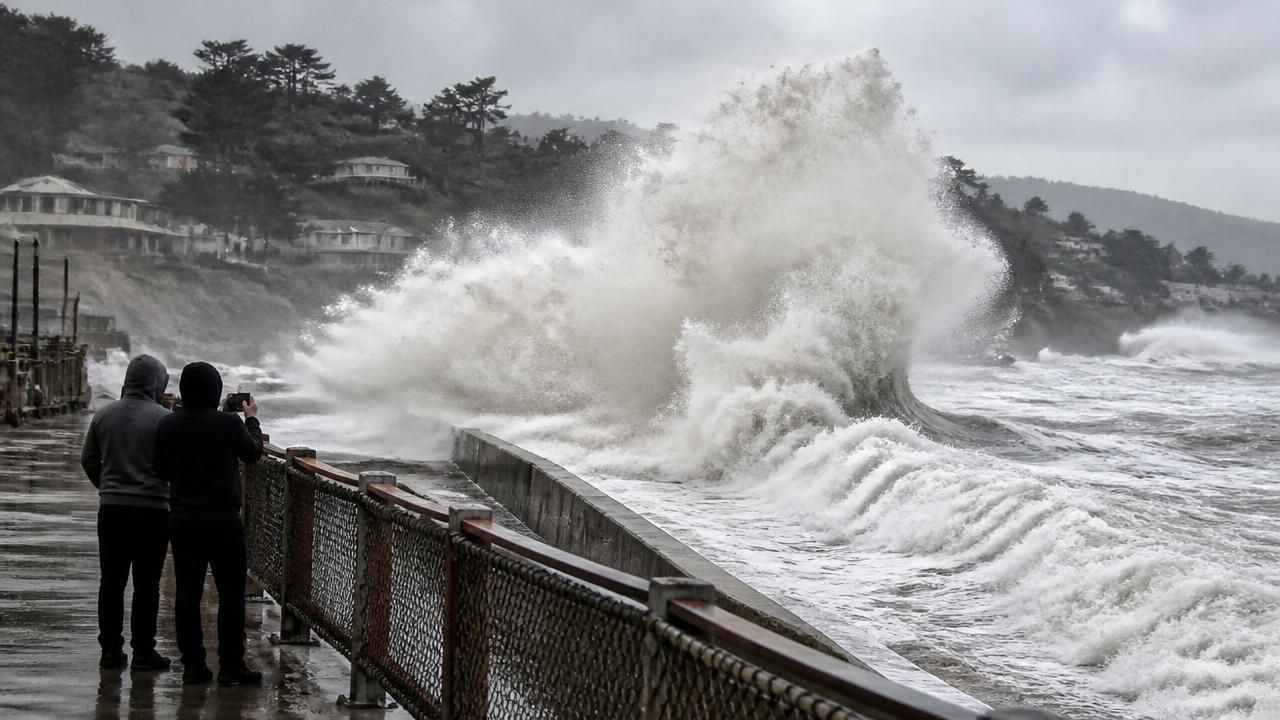
California’s coastline is under a multi-day alert as powerful Pacific storm systems drive some of the largest waves in years onto beaches, piers and coastal neighborhoods, prompting closures and hazard warnings from San Diego to the Bay Area. Offshore NOAA buoys recorded waves above 30 feet last Friday, and the Monterey buoy hit 34.1 feet—possibly the highest reading in 30 years, according to the Guardian. Warnings were extended through Friday night as successive low-pressure areas churned up swells and large breaking waves.
What’s happening
Forecasters expect waves of 10–18 feet along much of the coast, with local sets of 18–22 feet for San Luis Obispo County beaches and the Santa Barbara County central coast. The National Weather Service and local officials have issued coastal hazard warnings throughout the week. Beaches and piers were closed last weekend after large waves crashed ashore. Some headlines warned of “monster” 50- to 60-foot waves, while other reports cited 35-foot surf; the differences reflect location, timing and how forecasters measure offshore swells versus breaking waves at particular beaches.
Storm train behind the surf
The waves are being generated by successive areas of low pressure over the Pacific, which have sent long-period swells toward California. Those same systems are bringing unsettled conditions across the western U.S., including heavy rain, mountain snow and strong winds. San Francisco saw record-breaking rainfall on Wednesday, and heavy rain knocked out power to about 32,000 customers in Sacramento. Into the weekend, another low-pressure system is expected to bring substantial moisture to southern Oregon and northern California, with more than 100 mm (4 inches) of rain in places and additional snowfall at Donner Pass in the northern Sierra Nevada.
Flooding, erosion and king tides
The threat is not only the surf. Coastal flooding is worsening as king tides—exceptionally high astronomical tides—coincide with heavy seas. Reports from Southern California describe flooding on beaches and in some neighborhoods, while local outlets warn that large waves are eroding beaches and dunes. Yahoo News framed the event around a longer-term question: whether El Niño will make coastal erosion worse. The Guardian and other outlets noted that the current pattern is consistent with a strong El Niño influence, which can raise sea levels along the West Coast and intensify storm-driven waves.
Erosion matters because California’s beaches are both an economic engine and a natural buffer. When waves overtop dunes and seawalls, saltwater and debris can reach roads and homes. Beach closures are also disrupting holiday visitors and local businesses, though officials say safety comes first.
Warnings and differing frames
The story has been framed in sharply different ways. The Guardian emphasized meteorological records and the sequence of coastal warnings. The New York Times put it simply: “The Surf’s Way, Way Up.” Tabloid-style aggregators leaned into alarm, with headlines about “monster” waves and dire warnings to beachgoers. Local television stations focused on Central Coast forecasts and weekend timing, while climate and science outlets connected the event to El Niño and erosion.
“The beach is not your friend this weekend,” one meteorologist warned, according to reports, as massive waves pummeled the coast.
That quote captures the core public-safety message: stay off beaches and piers, avoid jetties and rocks, and never turn your back on the ocean. Sneaker waves can sweep people into cold, violent surf even when the sea looks calm between sets.
What to watch
- Coastal hazard warnings remain in effect through Friday night in many areas.
- Waves of 10–18 feet are forecast, with local sets to 22 feet on parts of the Central Coast.
- Another storm system could bring more than 4 inches of rain to parts of northern California and southern Oregon by Sunday night.
- King tides and El Niño conditions may worsen flooding and erosion, especially during high tide.
The immediate advice from forecasters is unchanged: respect closures, check local warnings, and keep distance from the water. The longer-term question—how much more of California’s coast will be reshaped by this winter’s El Niño—will linger after the surf subsides.