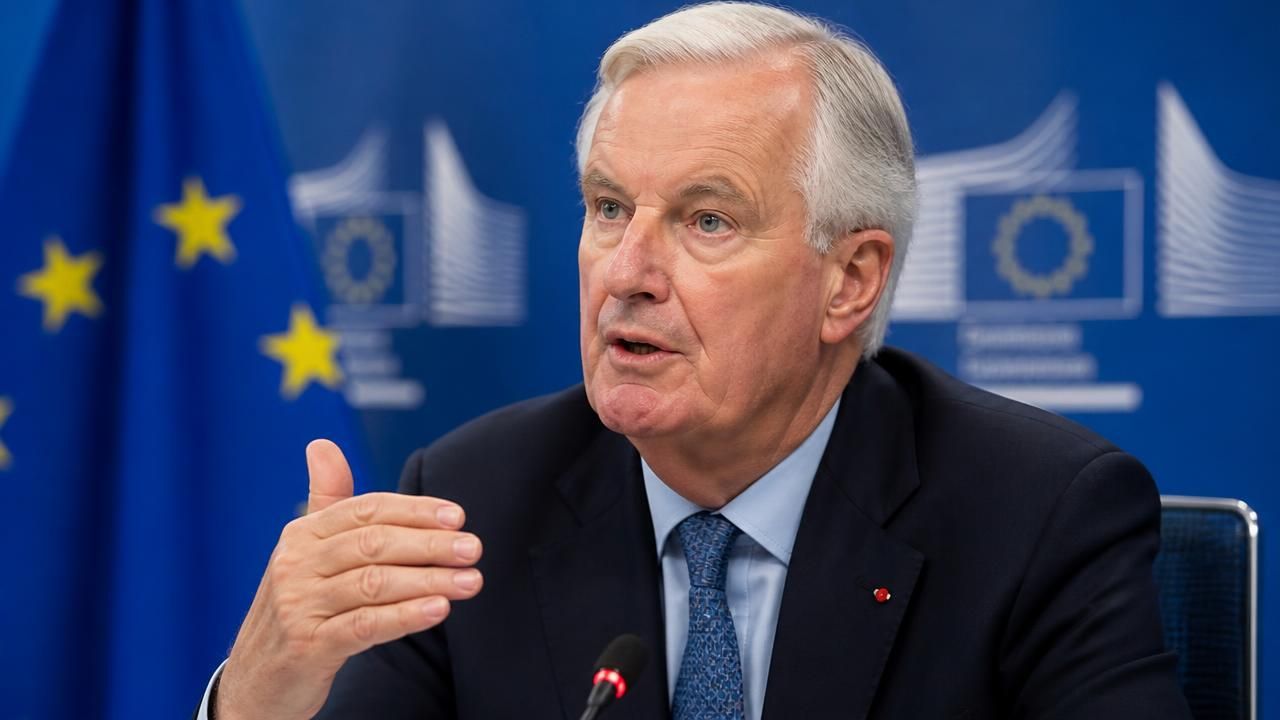
Michel Barnier, the European Union's former chief Brexit negotiator, has said the bloc's door "is open" to the United Kingdom and welcomed new Prime Minister Andy Burnham's stated ambition to rebuild cooperation with Brussels — while simultaneously warning that Britain will not be allowed to pick and choose which EU rules it follows.
The remarks, made in an interview with Bloomberg Television and carried widely by European outlets including Euronews, mark one of the most conciliatory public interventions from the architect of the EU's Brexit strategy, and one of the most pointed. Barnier, who served as the EU's lead negotiator throughout the 2017–2020 withdrawal talks before briefly becoming France's prime minister, framed the moment as an opportunity that comes with conditions attached.
"I'm very happy that the new prime minister of the UK, Andy Burnham, wants to build a new cooperation with the EU."
A door left ajar — on Brussels' terms
The headline that travelled fastest was Barnier's suggestion that adopting the euro need not be an automatic obstacle for a future UK return. British coverage, including reports syndicated via MSN and Sky News, seized on the framing that the single currency could be "optional" for a re-joining Britain — characterised in some outlets as a "Brexit bombshell" — before stressing that the concession came with a "massive catch."
That catch is the familiar Barnier doctrine: membership of the single market means accepting its rules, including the free movement of people, the jurisdiction of the European Court of Justice and adherence to state-aid discipline. Countries cannot, in his long-standing formulation, assemble a bespoke arrangement by selecting the parts of the club they like. The warning that the UK "will not be able to pick and choose trade rules" is consistent with the position he held throughout the Article 50 negotiations, when he repeatedly rejected British proposals for sector-by-sector market access.
The euro question is legally and politically more nuanced than the headlines suggest. EU treaties commit member states to eventually adopt the single currency, and Denmark's opt-out is a pre-existing exception rather than an available template. Britain negotiated its own permanent opt-out in 1992 under the Maastricht arrangements. Whether a returning UK could secure comparable treatment — or whether the issue would simply be parked as a distant, theoretical obligation, as it has been for Sweden — remains unresolved and would be the subject of hard bargaining.
Why the timing matters
Barnier's comments land at a delicate moment in UK–EU relations. Downing Street under Burnham has signalled a desire to deepen the relationship beyond the bare-bones Trade and Cooperation Agreement, with talk of closer alignment on defence, security, energy and mobility for students and touring artists. Brussels has welcomed the shift in tone but has consistently linked any meaningful improvement in market access to dynamic alignment with EU standards.
Barnier's earlier warning that a smooth transition period was "not a given" if disagreements persisted remains relevant to that dynamic: the EU has long treated market access as a function of trust and treaty compliance, not sentiment. His latest comments can be read as an invitation to negotiate seriously — and a pre-emptive rebuttal of any expectation that goodwill alone will deliver a favourable deal.
Mixed signals from different capitals
The story's divergent framing across outlets illustrates how Brexit remains a Rorschach test. Bloomberg, covering the remarks through a markets and diplomacy lens, emphasised the cooperative signal and Barnier's broader commentary on the French presidential race — a reminder that the former commissioner remains an active figure in domestic French politics, where his own tenure in Matignon was brief and turbulent. Euronews foregrounded the "door is open" message. British outlets, by contrast, led with the euro opt-out angle and the caveat, framing the story as a test of whether re-engagement is a genuine offer or a trap dressed as an olive branch.
Eurosceptic voices in the UK will likely treat the episode as proof that Brussels' price for closeness is sovereignty; pro-European analysts will counter that Barnier is doing what he always did — setting out the terms plainly rather than letting expectations inflate.
What to watch next
- Whether Downing Street formally requests a structured dialogue on market access, and on what terms.
- Any EU signal on bespoke arrangements for the UK — or a restatement that the existing third-country model is the ceiling.
- The euro question's trajectory: a live negotiating issue or a long-fudged obligation, as with Sweden.
- Barnier's own role in French politics, given his commentary on the presidential field.
For now, the substance is clear enough: the door may be open, but the EU's former negotiator is making plain that the threshold is high, the rules are written in Brussels, and the UK will walk through on terms the bloc recognises — not ones Westminster designs.