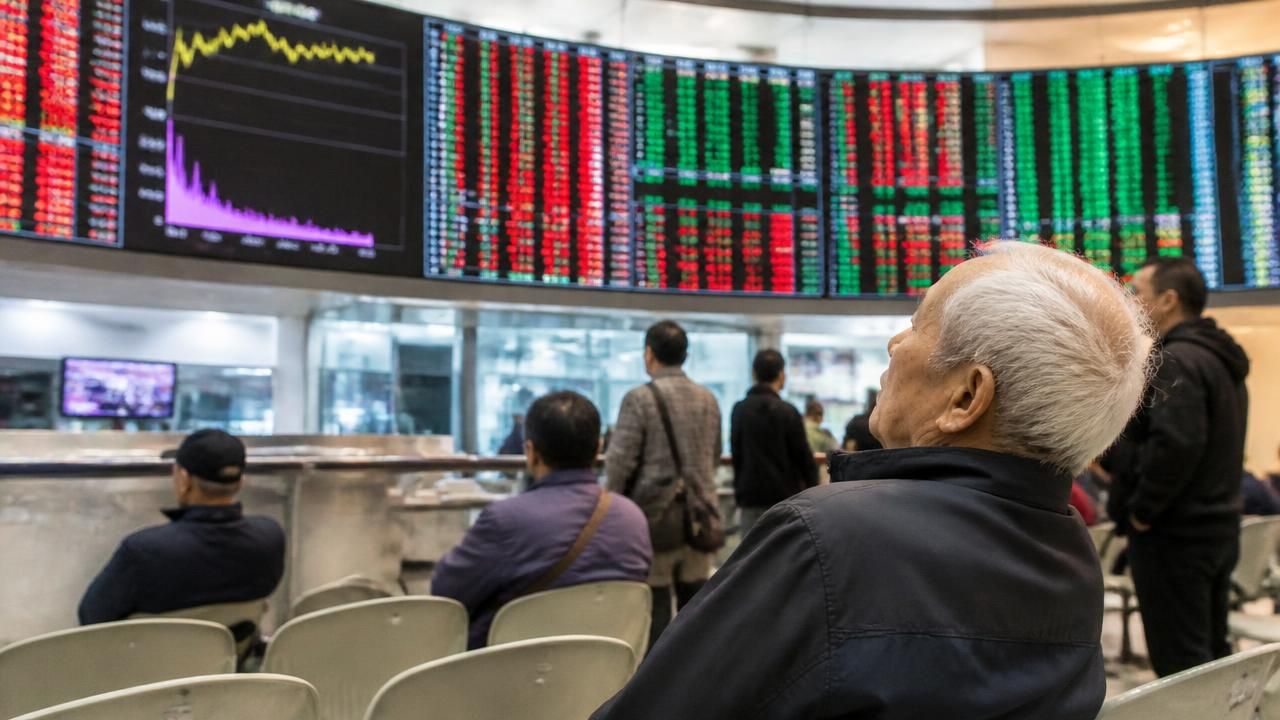
Taiwan's Financial Supervisory Commission moved to tighten restrictions on short selling this week, aiming to arrest a slide that has put the island's equity market on course for its steepest monthly decline since the 2008 global financial crisis. The measures took effect Monday and were followed almost immediately by a sharp rebound, with the benchmark TAIEX rallying roughly 6% and index heavyweight Taiwan Semiconductor Manufacturing Co. surging as much as 7%, according to market reports.
The intervention follows a brutal stretch of trading in which Taiwan's stock market suffered its worst weekly drop since 2001 — a comparison that underscores how quickly sentiment has deteriorated in one of Asia's most export-dependent and technology-concentrated markets. The weighting of chipmakers, led by TSMC, makes the TAIEX unusually sensitive to swings in global demand for semiconductors and to shifts in U.S. technology shares.
What Regulators Did — and How Markets Responded
The FSC's package centers on curbs on short selling, the practice of borrowing shares to sell them on the expectation of buying them back cheaper later. Such restrictions are a common — if blunt — tool deployed by Asian regulators to dampen downward momentum and stem panic selling in periods of acute stress.
The Financial Supervisory Commission said the tighter curbs were intended to help stabilize the local equity market and maintain orderly trading conditions.
Alongside the short-selling limits, authorities deployed a stabilization fund worth NT$500 billion, a pool designed to support share prices during periods of severe dislocation. According to coverage from Yahoo Finance, the combination of short-sale curbs and the fund's activation lifted sentiment materially, driving a broad rally that outpaced the gains seen after earlier, smaller regulatory gestures.
TSMC's rebound was the headline event. Yahoo Finance reported the chipmaker's shares rising 4.68% as the curbs and stabilization fund took hold, while a separate report earlier in the session described a surge of 7%. The discrepancy reflects the timing of publication as the stock moved during the trading day, but the direction was never in doubt: the world's largest contract chipmaker, and the single most important stock in Taiwan's market, led the recovery.
How Different Outlets Framed the Story
Coverage of the episode illustrates how the same regulatory action can be read through very different lenses.
- Bloomberg Markets framed the decision as a defensive move by regulators, emphasizing the severity of the backdrop: a market set for its biggest monthly decline since 2008.
- Crowdfund Insider focused on timing and sequence, reporting that the curbs would begin Monday after the market's worst weekly drop since 2001 — a framing that foregrounds the speed of the deterioration rather than the policy itself.
- MSN carried two distinct headlines: one spotlighting TSMC's 7% jump as Taiwan restricted short selling to halt a "brutal semiconductor crash," and another reading the move more soberly as a response to a market drop.
- Yahoo Finance took the most forward-looking angle, treating the session as a rally story in which short-sale curbs and the NT$500 billion fund combined to revive sentiment.
The divergence is instructive. For market-data outlets, the story is the rebound; for regulatory watchers, it is the intervention; for technology-focused coverage, it is the fate of TSMC and the semiconductor supply chain that anchors Taiwan's economy.
Historical Context: A Familiar Playbook
Taiwan is not new to this approach. The FSC has repeatedly resorted to tighter short-selling rules and margin requirements during periods of extreme volatility, including the 2008 financial crisis, the 2015 selloff tied to concerns over Chinese growth, and the pandemic-driven turmoil of 2020. The playbook typically includes raising margin requirements, restricting short selling at prices below the previous close, and activating the National Stabilization Fund.
Such measures often produce a sharp initial bounce — precisely what Taiwan witnessed this week — because they force bearish traders to cover positions and remove a source of selling pressure. The question for investors is whether that bounce proves durable.
Why It Matters Beyond Taipei
Taiwan's market is a bellwether for the global semiconductor cycle. TSMC manufactures chips for Apple, Nvidia and much of the world's advanced computing industry, and its share price is read as a proxy for demand across artificial intelligence infrastructure, smartphones and data centers. A crash in Taipei therefore reverberates in Silicon Valley and in supply chains across Asia.
Analysts caution that short-selling curbs address symptoms rather than causes. If the underlying driver is a reassessment of technology valuations, export orders, or the trajectory of U.S. interest rates, administrative measures can delay price discovery without altering fundamentals. Some market participants argue that restricting short sellers reduces liquidity and can widen spreads, potentially amplifying moves once the curbs are lifted.
For now, the immediate effect is clear: a market facing its worst month since 2008 has been handed a reprieve, and TSMC — the bellwether of the AI trade — has reclaimed some of its lost ground. Whether the stabilization fund and short-selling limits mark a turning point or merely a pause will depend on forces far beyond the reach of Taiwan's regulators.