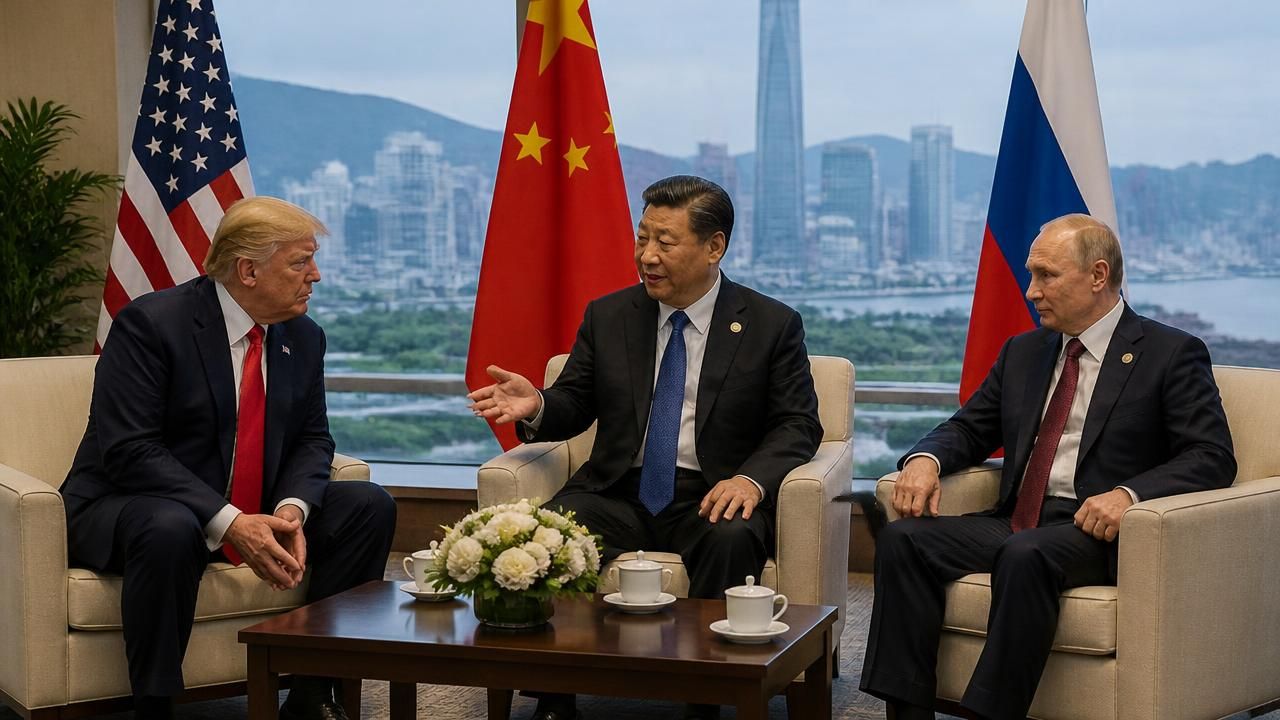
President Donald Trump, Chinese President Xi Jinping and Russian President Vladimir Putin sat down together on the sidelines of the APEC summit in China, convening the first three-way meeting of the leaders of the United States, China and Russia in modern history. The talks, held in Shenzhen and lasting roughly 90 minutes, according to multiple outlets including the BBC, Sky News and India Today, were described by participants and their governments as a diplomatic milestone — even as the concrete results remained disputed.
Trump, who arrived in China ahead of the trilateral session, held separate bilateral meetings with Xi and with Putin first, a sequencing confirmed by MSN and LBC. Greeting his counterparts, the U.S. president struck an upbeat tone. "Nice to meet you," Trump said, adding that the gathering was "making history," according to geo.tv. Chinese and Russian state-aligned outlets echoed the framing of an unprecedented moment, while Western coverage emphasized the absence of verifiable breakthroughs.
What was on the table
According to Newsday, citing Chinese and Russian officials, the three sides discussed nuclear arms and the war in Ukraine, and agreed on a set of measures: support for reform of the United Nations, steps to boost fuel supplies, and the opening of dialogue on nuclear issues. Those three items — UN reform, energy cooperation and nuclear talks — formed the closest thing to a common agenda to emerge from the summit.
India Today reported that the leaders concluded their session by issuing a joint peace declaration, headlined by the statement that "nuclear war must never be fought." That framing, if accurate, would represent the most tangible deliverable of the meeting and a notable rhetorical convergence between Washington, Beijing and Moscow at a moment of acute nuclear tension.
A conflicting readout
Not every outlet corroborated that account. NBC News reported that the talks wrapped up "with no immediate statement" from the three governments, and the Associated Press and other agencies similarly noted the absence of a formal communique in the hours after the meeting ended. The discrepancy — a joint declaration according to some regional outlets, silence according to others — underscores how rapidly the summit's narrative has fragmented across media markets and how much of the substance remains to be confirmed by official readouts.
Bloomberg framed the meeting as occurring "amid ongoing attempts to stabilize US-China ties and continued hostilities between Russia and Ukraine" — a reminder that the trilateral format sits atop two relationships moving in opposite directions. Washington and Beijing have been in a fragile de-escalation mode, while Moscow's war in Ukraine remains unresolved and is the central obstacle to any durable U.S.-Russia understanding.
Europe left watching from the outside
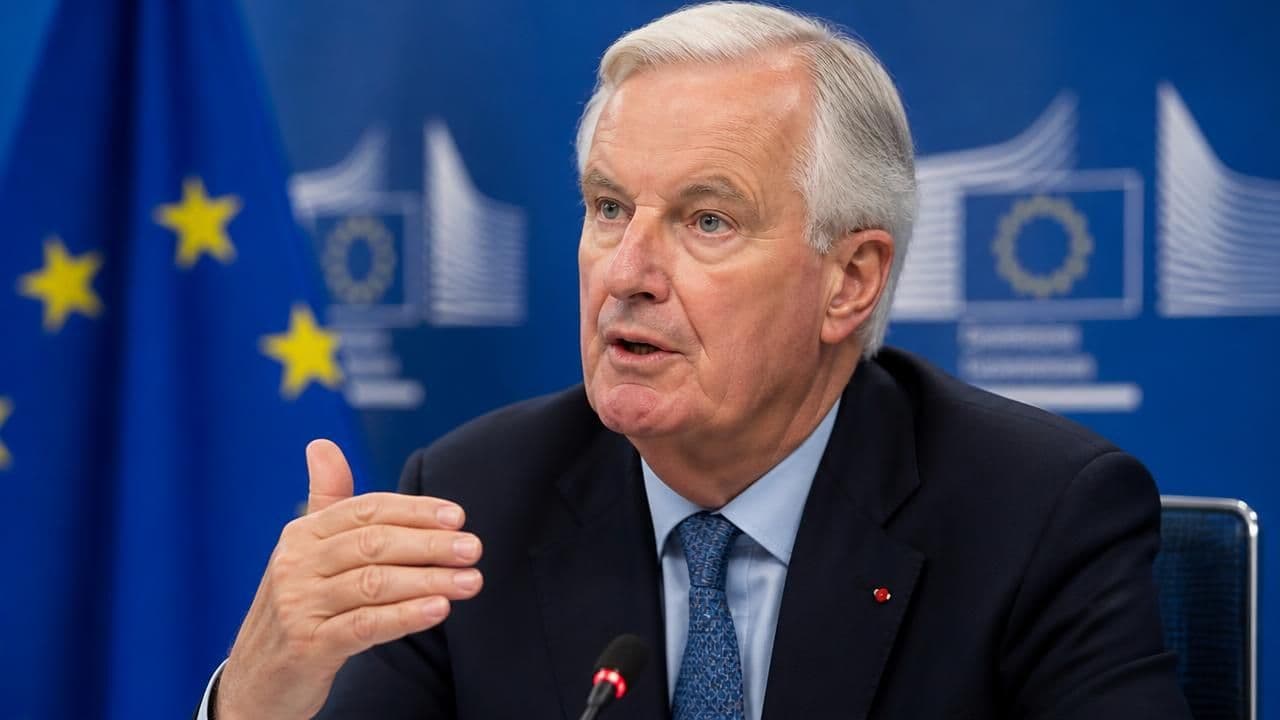
Perhaps the sharpest divergence in coverage came from Yahoo, which reported that Europe was "left out in the cold" as the three leaders met in China. The trilateral format — excluding the European Union, Ukraine and other U.S. allies — raises pointed questions in Brussels and European capitals about whether decisions touching the continent's security architecture could be shaped without European input.
"Nuclear war must never be fought" — the headline commitment attributed to the joint declaration reported by India Today, a phrase that echoes a Reagan-Gorbachev formulation from 1985.
The historical resonance is deliberate. The last time Washington and Moscow stood behind that language, the world was emerging from a Cold War confrontation. Reviving it now — with Beijing as a third signatory — would mark a symbolic shift in how the three nuclear superpowers publicly manage strategic risk, even if it carries no binding obligations.
The financial and energy dimension
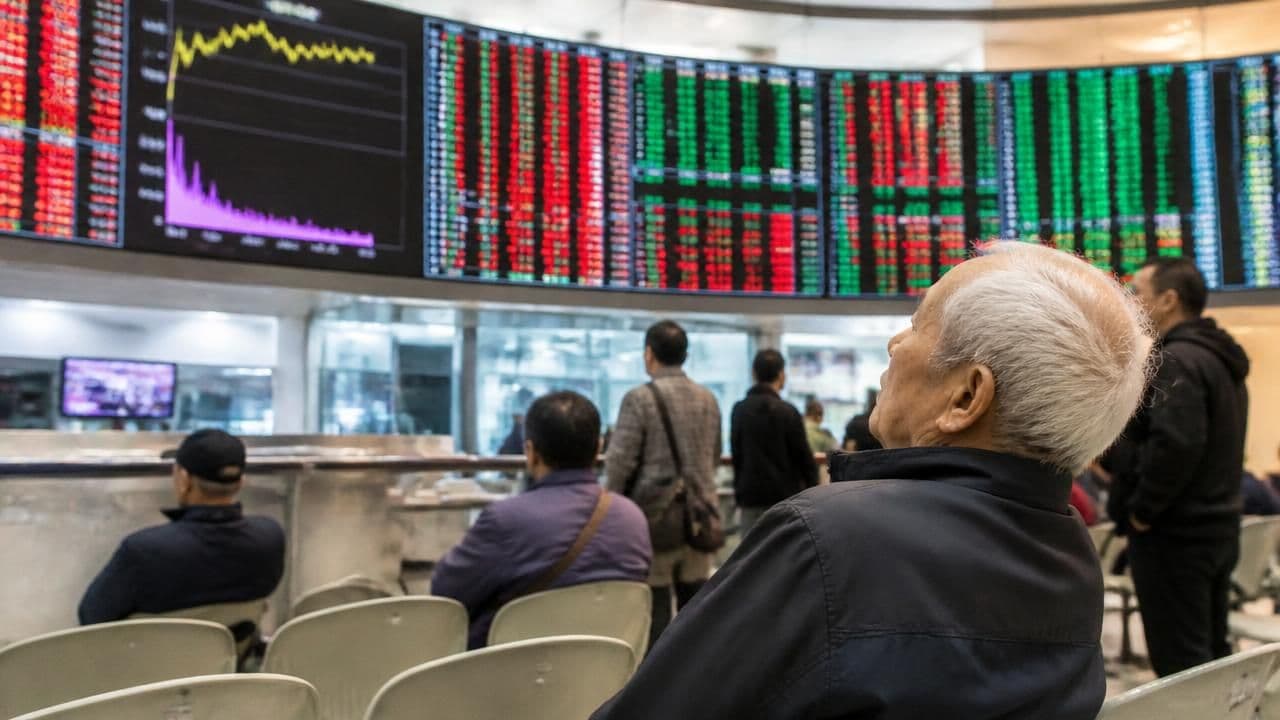
Markets had reason to pay attention. Bloomberg Markets covered the summit as a macro event, reflecting investor sensitivity to any signal of U.S.-China stabilization or movement toward de-escalation in Ukraine. The reported agreement to boost fuel supplies, if implemented, would carry direct consequences for global energy prices, which have been buffeted by sanctions regimes, shipping disruption and demand uncertainty. For commodity traders and emerging-market currencies, the summit's ambiguities — an apparent declaration on one hand, an absence of published text on the other — are themselves a source of volatility.
The UN reform plank is also economically consequential. Beijing and Moscow have long pushed for a restructuring of multilateral institutions they argue over-represent the West; Washington's willingness to endorse reform language signals a bargaining posture that could shape everything from development finance to sanctions governance.
Why it matters, and what comes next
The summit's significance lies less in what was signed than in the fact that it happened. A three-way leaders' meeting at this level has no precedent in the postwar order, and its occurrence reflects a world in which U.S., Chinese and Russian interests are so entangled that bilateral channels alone are judged insufficient. Critics will note that symbolism is cheap and that Russia's war in Ukraine, U.S.-China technology tensions and divergent visions of the international system remain unaddressed.
- The confirmed: a 90-minute trilateral meeting in Shenzhen on the APEC sidelines, preceded by Trump's separate talks with Xi and Putin.
- The reported: agreement on UN reform, increased fuel supplies and nuclear dialogue, per Chinese and Russian statements cited by Newsday.
- The disputed: whether a joint declaration on nuclear war was issued, with NBC reporting no immediate statement.
- The absent: Europe and Ukraine at the table, a gap Brussels is likely to raise.
For now, the three governments have given the world a photograph, a handful of assurances and a phrase about nuclear war that everyone can endorse and no one has yet defined. Whether that becomes a framework for stability — or a stage-managed detour around harder negotiations — will depend on follow-through that no communique can guarantee.