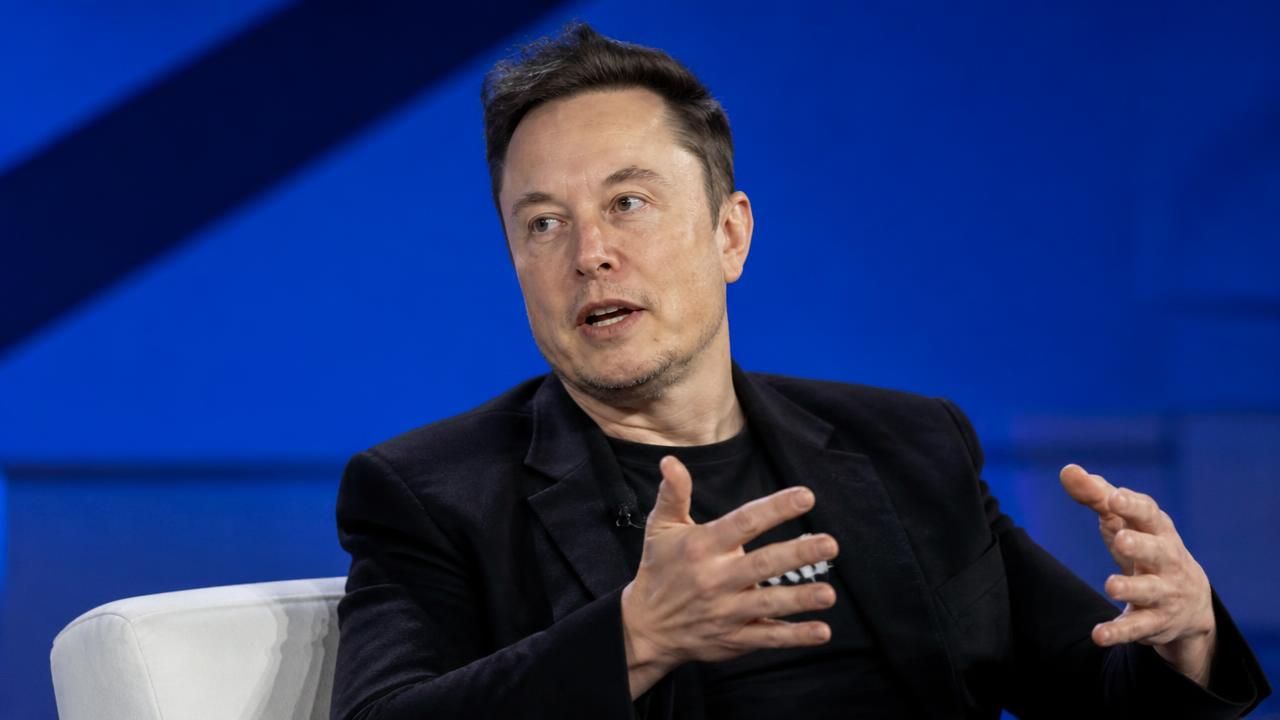
Elon Musk used a high-profile stage at The New York Times' DealBook Summit on Wednesday to offer his most detailed — and most combative — account yet of why SpaceX throttled Starlink service in Ukraine, insisting that Kyiv had broken the company's terms of service by repurposing a civilian communications network for lethal offensive drone strikes. The appearance capped weeks of back-and-forth between Musk, Ukrainian President Volodymyr Zelenskyy and the U.S. government, and it came as high-speed connectivity was restored to Ukrainian terminals.
"From the beginning, I've said that Starlink is a civilian system," Musk said. "It is not meant to be used for offensive drone strikes that kill people. If you want to do that, you need to do Starshield, which is a separate system that is controlled by the …" The sentence trailed off in the published transcript, but the implication was clear: military-grade use belongs to the Pentagon-controlled tier, not the consumer product SpaceX sells to households and governments alike.
Closing the 'loophole'
Musk confirmed he personally ordered the restrictions, telling the summit that SpaceX had shut a "loophole" that allowed Ukrainian forces to exceed agreed limits on Starlink's use. Reports across multiple outlets — from CNBC and UPI to the Chicago Tribune and the Mercury News — described the same sequence: speeds were throttled, Ukrainian operations involving long-range drones were affected, and service was subsequently returned to full strength.
The dispute is not solely about bandwidth. Musk also accused Zelenskyy of misrepresenting the situation, saying the Ukrainian president was not telling the truth about disruptions to Starshield, the encrypted, military-focused constellation that SpaceX builds for the U.S. Department of Defense and allied agencies. Ukraine has publicly complained that Starshield terminals — which are supposed to be insulated from commercial-policy decisions — have experienced outages at critical moments.
Starlink versus Starshield: a distinction with consequences
The technical split Musk keeps invoking is central to the story and frequently blurred in public debate.
- Starlink is the commercial broadband constellation, governed by consumer terms of service that prohibit use in weapons systems or offensive combat operations.
- Starshield is a separate, government-oriented line built on similar spacecraft but sold under defense contracts, with the U.S. government — not a foreign ministry or a battlefield commander — holding operational control.
- The practical problem: on a fast-moving front line, the boundary between a communications link and a targeting link is thin. A terminal that guides a reconnaissance drone and one that guides an armed drone may be the same device.
That ambiguity is what makes Musk's "loophole" framing so consequential. If the commercial tier can be redefined as military infrastructure at any moment, then a single executive's interpretation of a contract becomes a variable in a war.
Kyiv disputes the account
Ukrainian officials rejected the characterization that their forces violated Starlink's terms, arguing that the service was being used for legitimate self-defense against an invasion and that any degradation of connectivity was a political decision rather than a contractual enforcement action. The public disagreement has sharpened since Musk and Zelenskyy first clashed over the issue, with each side offering a different account of who broke faith first.
"I'm not going to be intimidated," former Labor Secretary Robert Reich said after Musk called for his imprisonment amid the Starlink row — a remark that pushed the dispute well beyond procurement and into the realm of personal political combat.
Framing the fight
The coverage illustrates how differently the same facts can be read. The Verge centered on Musk's attempt to explain his own position, presenting the summit remarks as a clarification of a confusing policy. The New York Post framed the episode as a "blame game" involving the White House, casting the throttling as collateral damage in a Washington power struggle. CNBC and UPI emphasized the restoration of service and the legal question of terms-of-service compliance, while Forbes published a pointed argument under the headline "Elon Musk Shouldn't Be Able To Turn Off Ukraine's War" — a critique not of any single decision but of the arrangement that permits one unelected executive to make it.
That last point may prove the most durable. Whether or not Ukraine breached a contract, the episode has exposed a structural vulnerability: critical battlefield communications are supplied by a private company answerable to its founder, its shareholders and whichever government happens to be in office in Washington.
Why it matters beyond Ukraine
Starlink terminals arrived in Ukraine in 2022 as an emergency lifeline, keeping command units, hospitals and civilians online after terrestrial networks failed. Since then the constellation has become embedded in allied military planning — and a recurring flashpoint in debates over commercial space actors and the laws of armed conflict.
The restored service will quiet the immediate crisis. But the deeper questions remain unresolved: who authorizes what a satellite network may be used for, how quickly that authorization can be revoked, and whether the answer should ever rest with a single person. For Kyiv, the practical lesson may be diversification. For Washington and its allies, the episode is a reminder that the infrastructure of modern warfare increasingly runs through private balance sheets.