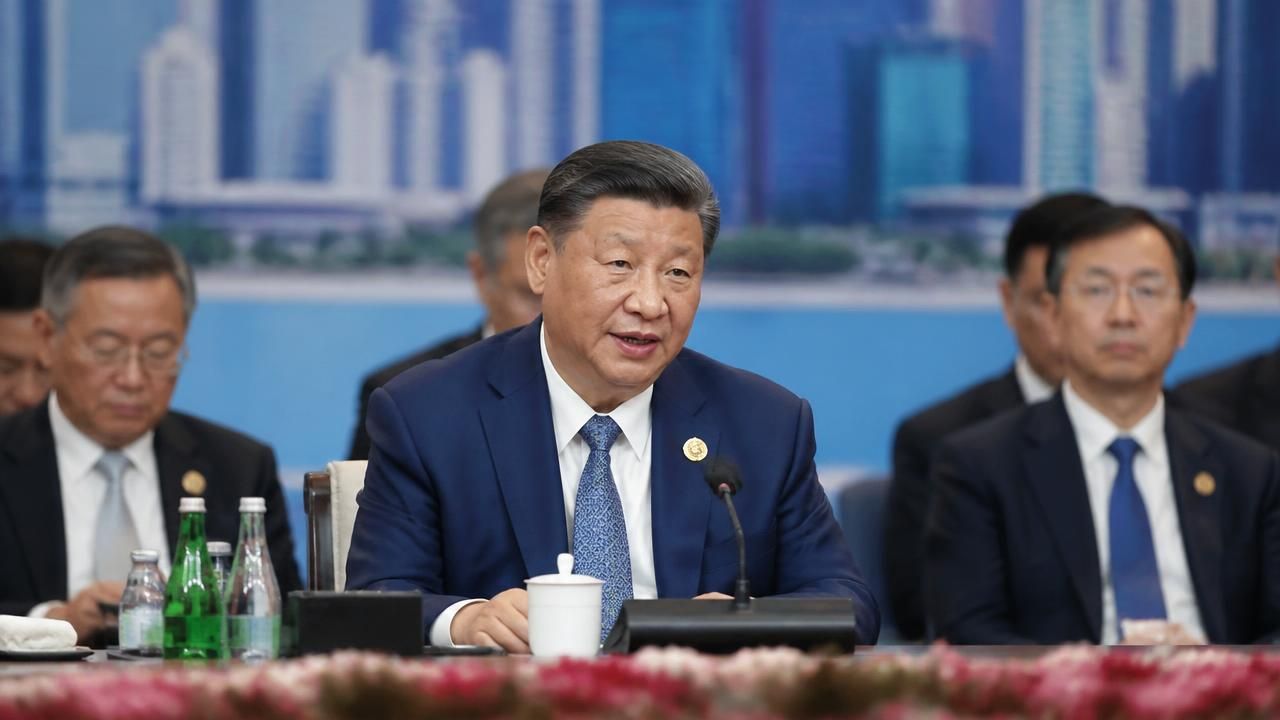
China will provide about $20 million to fund Asia-Pacific Economic Cooperation initiatives, including a policy research center, President Xi Jinping announced at the APEC summit in Shenzhen, according to Bloomberg, MSN, India Today and the Mercury News. The pledge is modest relative to the size of the 21 APEC economies, but it carries symbolic weight: Beijing is casting itself as a defender of multilateralism and open trade at a moment when technology fragmentation, AI export controls and sanctions are straining the region.
Bloomberg’s Stephen Engle reported that the funds would support APEC cooperation and a policy research center. The host city, Shenzhen, is operating under heightened security during the summit and using the event to showcase China’s push to develop homegrown technology. That backdrop matters. APEC members are navigating divided technology supply chains and restrictions on advanced AI chips, and China wants to present itself as a stabilizing force for regional commerce rather than a source of disruption.
A pledge with a political message
India Today framed the announcement as a $20 million boost to Asia-Pacific cooperation, while an MSN headline distilled China’s message as “We must unite.” Another MSN live blog noted China’s pledge for APEC research and projects and highlighted Russian President Vladimir Putin’s declaration that Russia is an integral part of the region. The Mercury News, meanwhile, focused on the geopolitical crosscurrents: Xi’s call for open trade, Putin’s condemnation of sanctions and the arrival of President Donald Trump in China.
“The Asia-Pacific needs open trade,” Xi said, according to the Mercury News, which also reported that Putin condemned sanctions at the summit and that the remarks came as Trump arrived in China.
Those competing headlines show how the same announcement can be read through different lenses. For Bloomberg, the story is about China’s financial contribution and its strategic push into homegrown technology. For MSN’s live coverage, it is a running diplomatic tableau featuring China, Russia and the broader APEC membership. For India Today, it is a headline pledge to boost cooperation. For the Mercury News, it is a story about trade, sanctions and the arrival of the U.S. president — a reminder that APEC’s consensus-driven model is being tested by great-power rivalry.
Different lenses on the same announcement
- Bloomberg emphasized the $20 million pledge, the policy research center and Shenzhen’s heightened security and technology showcase.
- MSN’s live coverage paired China’s pledge with Putin’s insistence that Russia remains an integral part of the Asia-Pacific region.
- India Today treated the announcement as a straightforward boost to Asia-Pacific cooperation.
- The Mercury News foregrounded Xi’s call for open trade, Putin’s attack on sanctions and Trump’s arrival in China.
Why Shenzhen and why now
Shenzhen is not a neutral backdrop. The city is a symbol of China’s export-led rise and its ambition to lead in advanced manufacturing, electronics and artificial intelligence. Holding APEC meetings there allows Beijing to pair its diplomatic message with a visual tour of Chinese technological capacity. But the city’s role also sharpens the subtext: the same technologies that have powered regional growth are now subject to export controls and strategic competition. China’s pledge for a policy research center can be seen as an effort to shape APEC’s intellectual agenda, build convening power and keep the group focused on development and cooperation rather than security-driven restrictions.
The 21 APEC economies account for roughly 60% of global GDP and nearly half of world trade, so even small institutional investments can have outsized signaling value. A research center and project funding may not change trade flows directly, but they can help set priorities, fund technical work and sustain dialogue among officials who might otherwise retreat into bilateral disputes. For a region worried about decoupling, that is the point.
What the money can and cannot buy
At about $20 million, China’s pledge is unlikely to reshape the economic fortunes of the Asia-Pacific. It cannot resolve tariff fights, sanctions regimes or export controls. It will not by itself restore trust between the United States and China or settle the war in Ukraine and its spillovers into energy and food markets. But it can fund research, workshops and cooperative projects that keep APEC’s machinery moving. In a grouping that operates by consensus, such investments can also buy influence over agendas and narratives.
The competing emphases from Beijing and Moscow point to a larger question for APEC’s future. China says it wants open trade and multilateral cooperation. Putin uses the stage to condemn sanctions. Washington, with Trump arriving in China, brings its own transactional approach to trade and security. Those positions are not easily reconciled, and APEC’s strength — voluntary cooperation — is also its weakness when major powers disagree.
Implications for business and finance
For markets and companies, the summit’s signal matters more than the dollar figure. Businesses are watching whether APEC can preserve open channels for trade, data and technology even as governments impose controls on chips, AI and strategic materials. A Chinese-funded research center could become a venue for shaping rules and norms around digital trade and technology cooperation, especially if Beijing frames its proposals as development-oriented.
Yet executives will also note the discord. Putin’s denunciation of sanctions and Trump’s arrival in China underscore how quickly APEC’s economic agenda can be overtaken by geopolitics. The $20 million pledge is therefore best read as a diplomatic down payment: China is investing in the idea that it can lead the region’s cooperation agenda, even as the region’s most important economies compete over the rules that will govern trade, technology and finance for years to come.