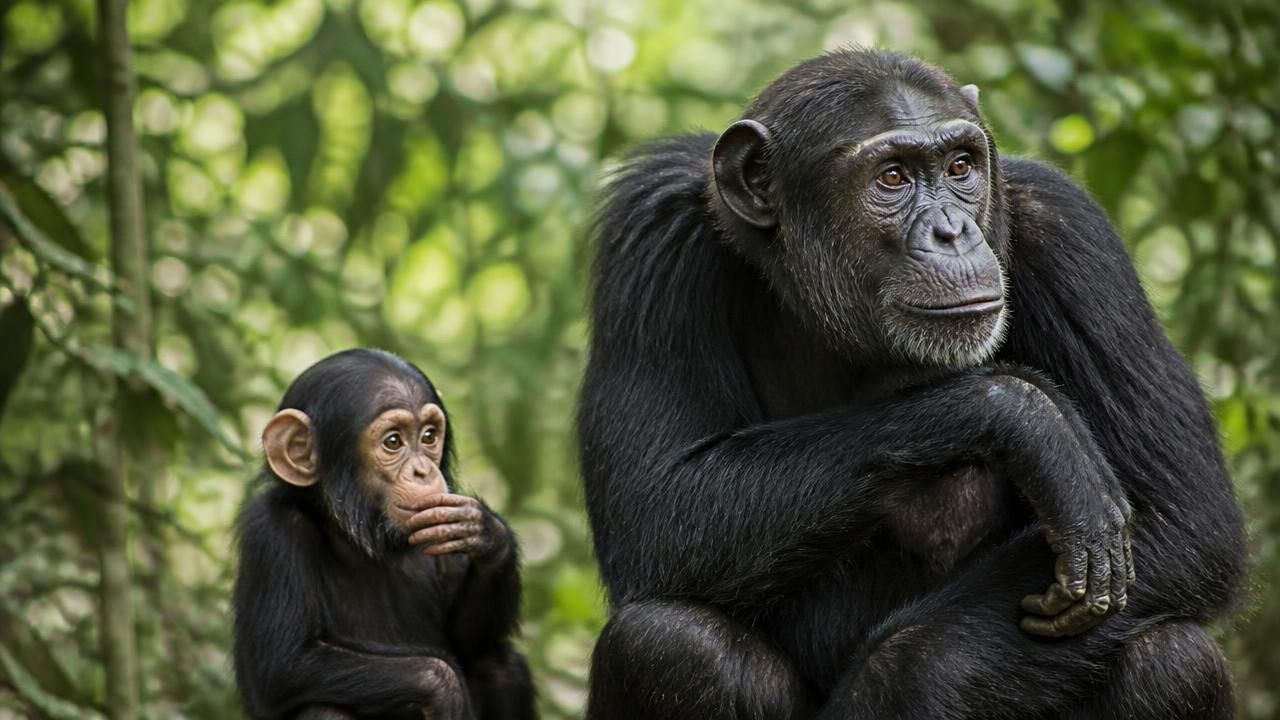
Millions of years ago, a retrovirus slipped into the genome of an ancestor of modern chimpanzees and left a permanent calling card. According to researchers at Lund University in Sweden, that ancient viral sequence may have done more than linger as molecular junk: it appears to have switched off a gene called LINC00662, a gene that remains active in humans and seems to matter for how the brain is built.
The finding, reported by Science Daily and circulated widely through MSN, ScienceTechDaily, Yahoo and News-Medical, offers a new angle on one of biology's most persistent questions: what, at the level of DNA, separates human brains from those of our closest living relatives, with whom we share roughly 98 to 99 percent of our genetic code.
What the researchers found
The Lund team's work centers on LINC00662, a long non-coding RNA gene — a stretch of DNA that does not produce a protein but instead helps regulate how other genes are expressed. In humans, LINC00662 stays switched on, particularly during early neural development. In chimpanzees, the gene is effectively silent, and the researchers trace that silence to a retroviral insertion that landed in the chimp genome long ago and has persisted ever since.
In humans, LINC00662 remains active during early brain development; in chimpanzees, ancient viral DNA appears to have shut it down.
The mechanism is a familiar one in evolutionary biology. Retroviruses work by copying their genetic material into a host's DNA, and when that insertion occurs in germline cells, the sequence is passed to descendants. Over millions of years, these endogenous retroviruses accumulate — they make up an estimated 8 percent of the human genome — and can influence nearby genes as promoters, enhancers or silencers. In this case, the viral remnant seems to have acted as an off switch specific to the chimpanzee lineage.
Why a single gene matters
Long non-coding RNAs have moved from obscurity to the center of developmental biology over the past two decades. Though they do not build proteins, they can orchestrate when and where protein-coding genes are activated, influencing processes such as the proliferation of neural progenitor cells and the timing of when those cells stop dividing and start specializing.
That timing is thought to be important. Human brains are not simply larger than chimpanzee brains; they are built differently, with extended periods of neural progenitor expansion and a prolonged developmental window. Even modest changes in when a regulatory gene is switched on or off can ripple through those processes.
The coverage reflected subtly different framings of the same result. Science Daily emphasized the evolutionary question — what makes the human brain different — while Yahoo's headline stressed the divergence of human and chimp brains, framing the work around gene activity rather than the virus itself. ScienceTechDaily leaned into the narrative hook of a viral "secret," and News-Medical presented the finding in more neutral terms. MSN's syndicated summary largely echoed the Lund release.
Putting the claim in context
Specialists in human evolution are likely to treat the result as intriguing but preliminary. Hundreds of genes differ in expression between humans and chimpanzees, and no single regulatory change explains the complexity of the human cortex. The Lund work adds LINC00662 to a growing list of candidates that includes FOXP2, involved in speech and language circuitry, and human-accelerated regulatory regions identified in comparative genomic studies over the past fifteen years.
There are also methodological questions worth watching as the paper circulates. Demonstrating that a retroviral element silences a gene in chimpanzee cells is one thing; demonstrating that this silencing produced a meaningful cognitive or anatomical difference is another. That step typically requires functional experiments — knocking out the gene in human neural cell models or organoids, or activating it in chimpanzee-derived cells — along with evidence that the retroviral insertion is fixed across chimpanzee populations and absent in humans.
Researchers will also want to know what LINC00662 actually does at the molecular level: which genes it regulates, in which cell types, and at what stage of development. Long non-coding RNAs are notoriously promiscuous in their interactions, and their effects can be highly context-dependent.
Broader implications
If the finding holds up, it would be another illustration of how evolution often repurposes whatever is at hand — including genetic parasites. Viral sequences have been co-opted for roles in placental development, immune defense and, in this case, possibly neural regulation. The human genome is, in a literal sense, a record of ancient infections, and some of those infections may have helped make us who we are.
For medical science, the relevance is indirect but real. LINC00662 and similar regulatory RNAs are increasingly studied in neurodevelopmental disorders and brain cancers, where developmental timing goes awry. Understanding how such genes are controlled in our closest relatives gives researchers a comparative lens they would not otherwise have.
The bigger caveat is interpretive. Discoveries like this one tend to be reported as explanations for human uniqueness, when they are better understood as one thread in a very tangled tapestry. The human brain diverged from the chimpanzee brain through thousands of small genetic changes acting over millions of years — changes in gene regulation, in developmental timing, in metabolic support for a demanding organ. An ancient virus, if it played a role at all, played it as one contributor among many.
What the Lund study does offer is a concrete, testable hypothesis about a specific gene, a specific viral insertion and a specific developmental window. In a field where broad claims about "what makes us human" are common, that specificity is the most valuable part of the finding.