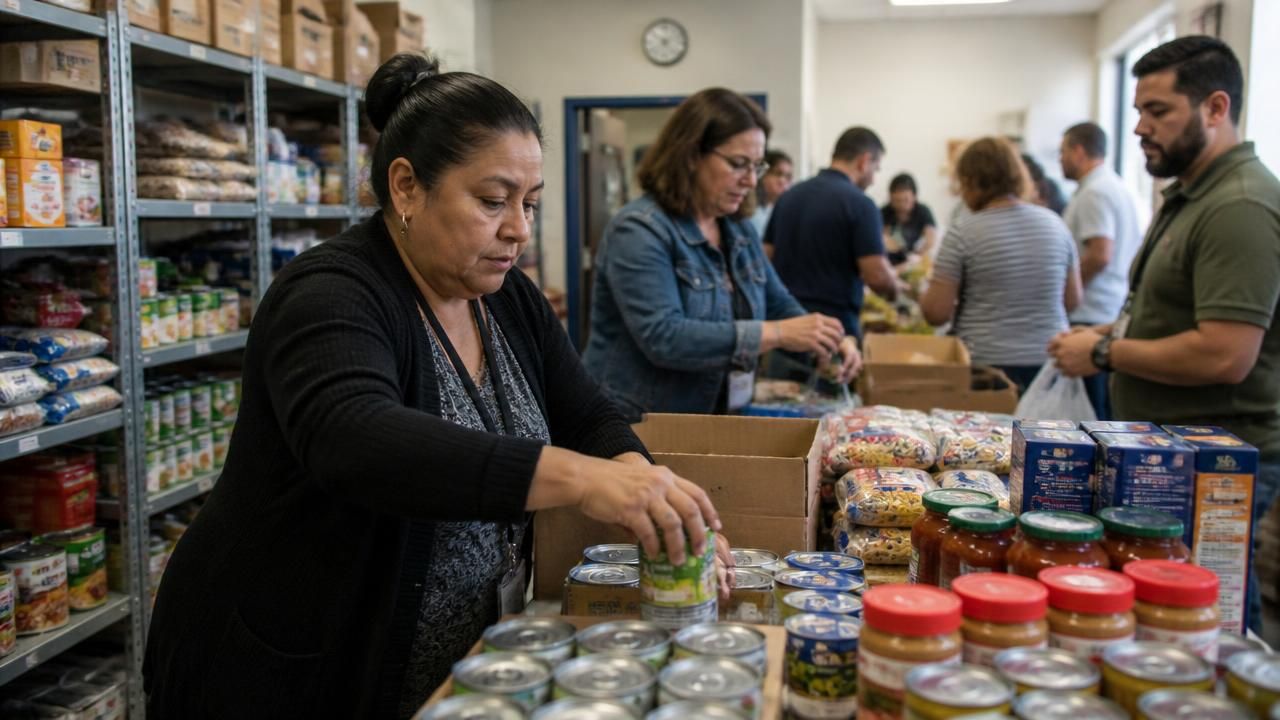
For years, the San Diego workers who administer the Supplemental Nutrition Assistance Program spent their days helping residents navigate applications, verify eligibility and keep food on the table. Now they are doing something they never expected: stocking shelves. As millions of Americans lose food aid amid federal SNAP cuts and changes, a San Diego SNAP office has begun doubling as a food pantry, NPR News reported. The workers said they could not sit back while their neighbors went hungry.
The scene captures the stakes of a policy debate that is unfolding far beyond Washington. SNAP, formerly known as food stamps, is the largest federal nutrition program, serving tens of millions of Americans each month. It is means-tested and administered by the U.S. Department of Agriculture in partnership with state and local agencies. When benefits are cut, tightened or delayed, the effects show up quickly in grocery stores, school cafeterias, food banks and welfare offices.
A federal proposal with local consequences
The nationwide changes are unfolding alongside a new federal SNAP proposal that critics warn would deepen food insecurity. MSN’s coverage is blunt in its framing: “SNAP proposal would increase food insecurity, critics say.” That headline reflects the central argument of anti-hunger advocates, who contend that stricter rules or reduced benefits would push more households toward emergency food assistance rather than toward self-sufficiency.
The political logic behind such proposals often centers on cost, program integrity and eligibility rules. But the immediate debate in these reports centers on hunger. Government workers in San Diego described the changes as difficult professionally and personally. They take pride in helping others, NPR reported, and the decision to turn part of their office into a pantry was a response to visible need rather than an abstract policy dispute.
“As millions lose food aid nationwide, this SNAP office is doubling up as a food pantry.” — NPR News headline
Ohio and the state-level ripple
The proposal’s impact is also being felt at the state level. USA Today’s report, headlined “How a new federal proposal could impact Ohio SNAP benefits,” signals that local audiences are trying to understand what federal changes would mean for households in their communities. The page was inaccessible at the time of review, but the headline alone underscores a key dynamic: SNAP is federally funded but state-administered, so national policy shifts translate into county-by-county differences in outreach, paperwork and benefit levels.
Ohio, like many states, has a mix of urban and rural communities where SNAP functions as a critical buffer against poverty. Food banks and pantries often report that demand rises when benefits are reduced or administrative barriers increase. Even small changes in eligibility can create confusion, missed deadlines and dropped coverage, especially for older adults, working families and people with unstable housing or jobs.
Children and Medicaid
The story becomes more complicated when SNAP is viewed alongside Medicaid. An MSN report warns that “millions of children lose SNAP benefits as Medicaid changes loom.” The two programs are distinct — SNAP pays for food, Medicaid for health care — but they often serve the same low-income households. Administrative changes in one program can destabilize the other, especially when families must reapply, verify income or respond to notices within tight deadlines.
For children, the consequences are cumulative. Food insecurity is linked to worse health outcomes, developmental delays and lower academic performance. Pediatricians and anti-hunger groups have long argued that benefit cuts often cost more downstream in emergency room visits, school supports and long-term health care. The MSN headline suggests that the debate is not only about food aid but about a broader unraveling of the safety net at a moment when Medicaid changes are also looming.
Why it matters
The San Diego pantry is a stopgap, not a substitute for federal benefits. Government workers can collect and distribute food, but they cannot replace the purchasing power that SNAP provides at grocery stores. Food banks across the country have reported strain for years, and they are not designed to absorb millions of newly food-insecure households.
The available coverage is largely critical of the proposal. NPR humanizes the story through the workers who are trying to help. USA Today localizes it for Ohio readers. MSN frames it around critics’ warnings and the impact on children. Together, they describe a policy debate that is already being felt in offices, kitchens and classrooms.
What happens next
The next phase depends on how the federal proposal moves through the rulemaking or legislative process, how states implement changes and how quickly households learn about new requirements. Local SNAP offices may face a dual role: processing applications under changing rules while also serving as emergency food providers. Advocates are urging policymakers to consider administrative burden and child welfare as they weigh the proposal. For now, in San Diego and beyond, the safety net is being tested one household at a time.