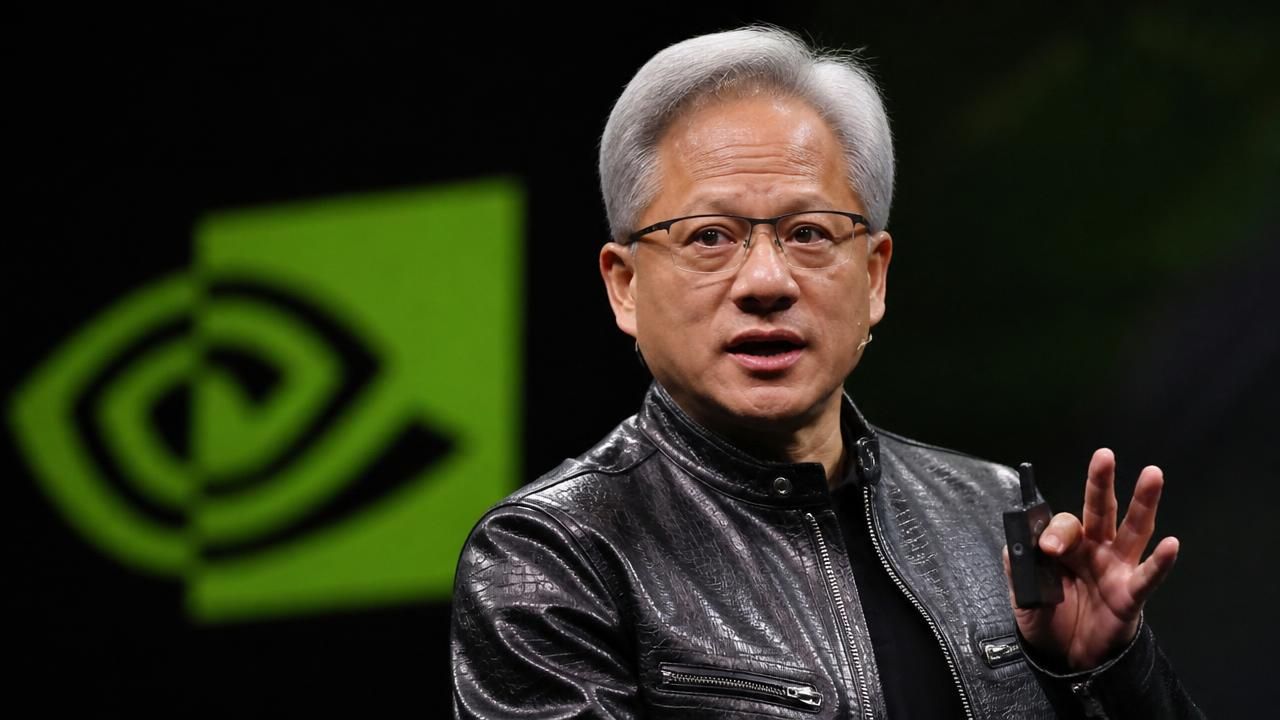
Less than a week after Jensen Huang abruptly resigned as chief executive of Nvidia, the chipmaker's ousted leader is quietly exploring a return — and a circle of influential Silicon Valley allies is already mobilizing to make it happen, according to multiple reports.
Huang has discussed with confidants the possibility of reclaiming the top job, people familiar with the matter told the Financial Times, even as an independent probe commissioned by Nvidia's board continues to examine the conduct that triggered a leadership crisis at the roughly $4 trillion company. The story was amplified across a sprawling cluster of aggregators and outlets — from Ars Technica and MSN's syndicated news feed to Singapore's Mothership and Pakistan's ProPakistani — with each framing the saga through a different lens.
A spectacular fall
Huang stepped down days ago after reports surfaced that he had engaged in affairs with a suspected Chinese spy and with a subordinate at the company. The allegations, which have not been independently substantiated in detail, detonated across an artificial intelligence industry that has come to view Nvidia's hardware as the indispensable engine of the global AI buildout.
The resignation was swift and, by most accounts, unexpected. Nvidia's board moved immediately to open an independent investigation into the conduct, a step that governance experts say was necessary both for legal exposure and for investor confidence.
The 'war room' takes shape
The most striking development is the organized counteroffensive. One Huang ally told the FT that supporters were assembling a “war room” of Silicon Valley executives to lobby for the former chief's return — and that the group would attempt to secure backing from the White House.
“We are putting together a war room of Silicon Valley executives to lobby for his return,” one Huang ally told the Financial Times, adding that the group would try to garner support from the White House.
That detail — a private corporate succession fight reaching into political channels — underscores how central Nvidia has become to national strategy. The company's chips sit at the heart of the AI arms race, and Washington has taken an increasingly direct interest in who controls the supply chain.
Silicon Valley's forgiveness
The tone of coverage has varied sharply. Business and tech outlets have focused on governance: what an independent probe means for board authority, whether a returning CEO under investigation could legally function, and how investors should weigh reputational risk against operational continuity. Tabloids and syndicated aggregators, by contrast, led with the scandal itself — a framing captured bluntly in one headline declaring that Huang “resigned in disgrace” while “many in Silicon Valley are still showering him with support.”
That support is real. Huang's standing as the public face of the AI boom has earned him a deep reservoir of goodwill among founders, venture capitalists, and fellow executives who credit him with anticipating the GPU era years before rivals.
Reverberations through the AI industry
The New York Times reported that Huang's resignation was reverberating across the AI sector, where Nvidia's roadmap is treated as a planning assumption by hyperscalers, startups, and governments alike. Any suggestion of leadership instability at the company ripples outward: customers worry about allocation of next-generation hardware, suppliers about commitments, and investors about whether a distracted or embattled board can steer a firm whose market value exceeds the GDP of most nations.
- The board's bind: Reinstating a CEO mid-investigation could be read as capitulating to pressure, undermining the very governance process the board initiated.
- The ally's case: Supporters argue that no outsider can match Huang's institutional knowledge during a critical expansion cycle, and that a vacuum at the top is the greater risk.
- The political dimension: An effort to enlist the White House raises questions about inappropriate interference in a private company's internal affairs.
What happens next
Much hinges on the independent probe. If investigators clear Huang or produce inconclusive findings, the path back — while constitutionally awkward for the board — becomes considerably easier. If the findings are damaging, the war room's lobbying effort may prove to be a public relations exercise with little purchase.
Huang has not made a public statement. Nvidia has not commented beyond confirming the investigation. Confidants describe a former CEO weighing two competing instincts: loyalty to the company he built, and an awareness that a contested return could fracture it.
For an industry already navigating export controls, staggering capital expenditures, and existential questions about AI's direction, the Nvidia succession fight has become something nobody in tech anticipated — a governance drama with geopolitical stakes, playing out in real time.