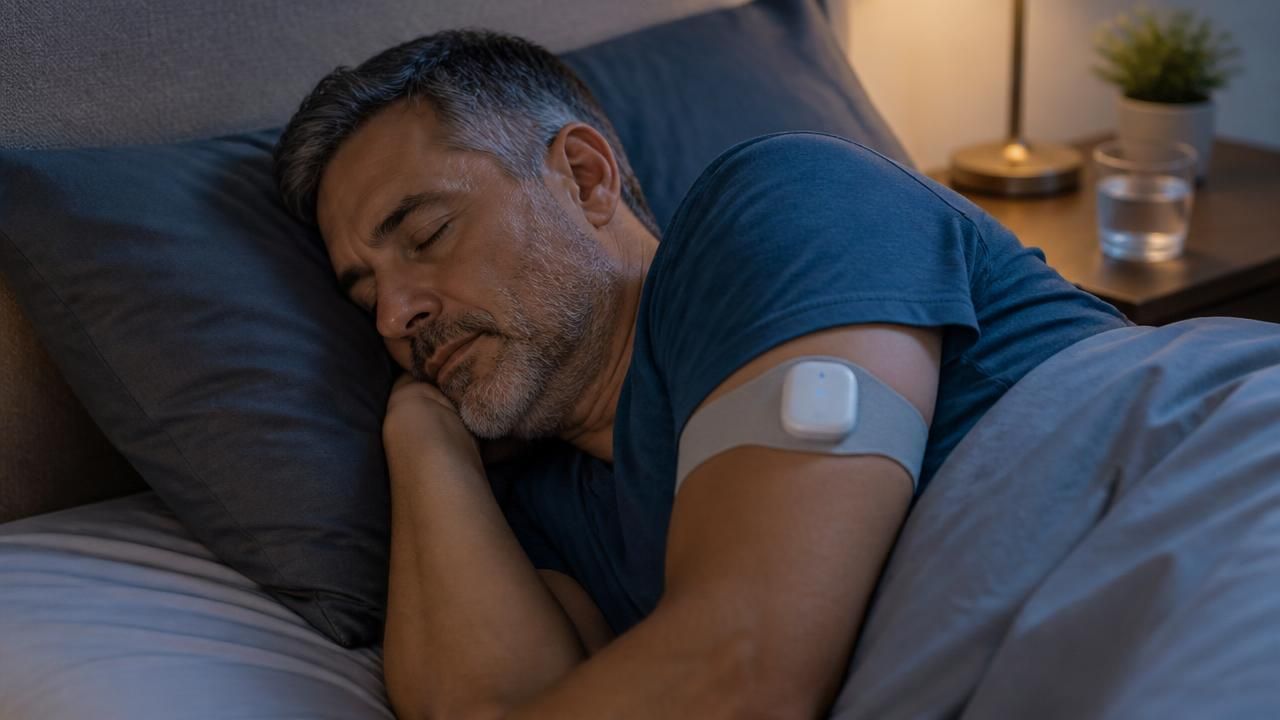
A wearable patch that beams gentle ultrasound into deep brain regions helped participants fall into REM sleep 43 minutes faster and stay there 16 minutes longer on average, according to a new report on research from the University of Texas. The device, which requires neither medication nor surgery, is being described as a potential turning point for a field that has long struggled to treat sleep problems without drugs or cumbersome equipment.
The findings, first reported by Science Daily and quickly picked up by outlets including MSN, TechSpot, Medical Xpress and Mirage News, describe a device worn on the body that delivers low-intensity ultrasound capable of reaching structures deep beneath the skull — territory that scalp electrodes and consumer sleep gadgets cannot reach.
What the device does
According to the research summary, the patch uses gentle acoustic energy to modulate activity in deep brain regions rather than to image them. In the study, participants wearing the device entered REM sleep substantially sooner than they otherwise would have, and once there, remained in that state longer.
“The device uses gentle ultrasound to stimulate deep brain regions, helping participants enter REM sleep 43 minutes faster and remain there 16 minutes longer on average.” — summary of the University of Texas findings, as reported by Science Daily
The researchers also reported promising downstream effects on stress regulation and on brain circuits involved in emotion — a result that fits with what sleep scientists already understand about REM, the stage in which most vivid dreaming occurs and which is thought to play a central role in processing emotional memory.
Why REM is a difficult target
In a normal night, sleep cycles roughly every 90 minutes, moving through light sleep into deep slow-wave sleep and then into REM. The first REM period typically arrives 70 to 90 minutes after sleep onset. Shaving 43 minutes off that interval is therefore not a marginal tweak — it represents a substantial compression of the sleep cycle's early architecture.
REM sleep has been linked to memory consolidation, emotional regulation and stress recovery. People with depression, post-traumatic stress disorder and chronic insomnia frequently show disrupted REM timing and duration, which is part of why clinicians have long sought ways to influence the stage directly. Existing tools are blunt: sedatives generally suppress REM rather than enhance it, and techniques such as transcranial magnetic stimulation require clinic visits and bulky equipment.
Ultrasound offers a different route. Focused ultrasound is already used in medicine — most notably in neurosurgery for tremor and in diagnostic imaging — and its ability to penetrate the skull without implants is precisely what makes a wearable form factor plausible. The Texas work applies that principle at low intensity, aiming to nudge neural circuits rather than ablate tissue.
How the story was framed
Coverage of the research has varied in emphasis, reflecting how different audiences encounter the same announcement. Science Daily, which targets a research-literate readership, led with the phrase “revolutionary” and stressed the absence of drugs and surgery. TechSpot's headline focused narrowly on the headline number — entering REM 43 minutes faster — a framing aimed at readers who care about practical results rather than mechanism. Consumer-facing outlets such as MSN and health-oriented sites emphasized the promise of better sleep and the appeal of a patch worn at home, while Medical Xpress and Mirage News positioned the work within the broader conversation about non-pharmacological sleep interventions.
The convergence is notable: nearly every outlet reported the same 43-minute and 16-minute figures, all traceable to the same source announcement. That is typical of early-stage science coverage, where a single press summary propagates across the web within hours.
The questions that remain
Enthusiasm aside, several things are not yet established, and readers should weigh the results accordingly.
- Scale and replication. The reported averages come from a single research effort; independent replication in larger, more diverse groups is the standard test of whether a sleep intervention truly works.
- Sleep quality versus sleep architecture. Spending more minutes in REM is not automatically the same as waking up more restored. Researchers will need to show improvements in next-day alertness, mood and cognitive performance, not just staging data.
- Long-term safety. Repeated exposure of brain tissue to ultrasound, even at low intensity, requires careful dose studies and regulatory scrutiny before any consumer product could reach shelves.
- Who benefits. It is unclear whether the effect holds for people with clinical insomnia or trauma-related sleep disruption, the populations most in need of new options.
What happens next
The immediate significance of the work is conceptual as much as clinical. It demonstrates that a wearable, non-invasive device can meaningfully shift the timing of a specific sleep stage — a capability that until now belonged largely to laboratory setups and implanted electrodes. If the results hold up, the same platform could plausibly be explored for other deep-brain targets, from stress and anxiety circuits to conditions where neuromodulation is currently invasive.
For now, the practical advice from sleep specialists remains unchanged: the evidence base for the patch is early, and no one should treat a headline number as a substitute for clinical guidance. But the direction of travel is clear. Drug-free, surgery-free neuromodulation is moving out of the lab and onto the body — and sleep, one of medicine's most stubborn frontiers, may be among the first places it arrives.