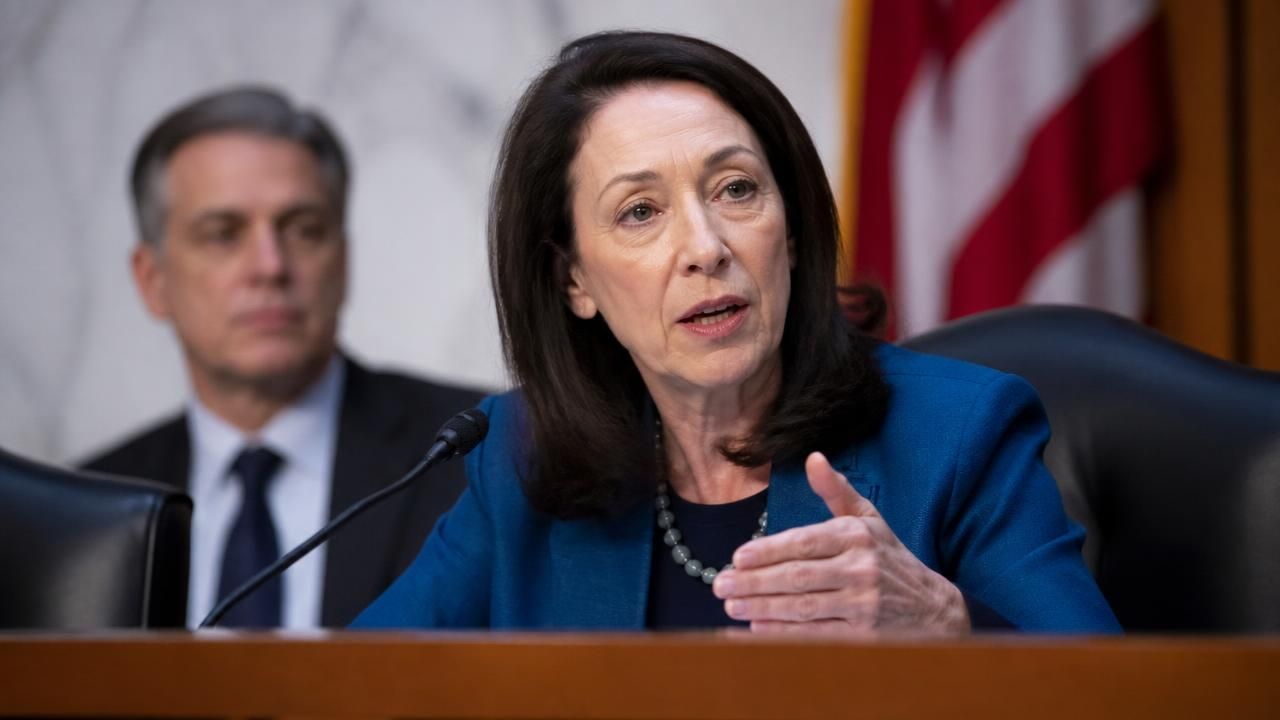
Senator Maria Cantwell (D-Wash.), one of the most senior Democrats on the Senate Commerce Committee, has formally accused the Department of Commerce of failing to enforce the safeguards meant to keep Nvidia's most advanced artificial intelligence chips out of China, escalating a simmering fight over export controls just as Washington prepares for a high-stakes diplomatic moment with Beijing.
In a letter sent Sunday to Commerce Secretary Howard Lutnick, Cantwell charged that the department has "undermined America's national security" and that its failures "help give away America's technology advantage in AI." The letter, first reported by The Verge, lands days before a scheduled meeting between President Donald Trump and Chinese President Xi Jinping — a timing that supporters of tighter controls say is no accident.
What the letter alleges
Cantwell's core argument is that Congress granted the Commerce Department clear legal authority to restrict the export of cutting-edge semiconductors, and that the agency has instead allowed advanced AI accelerators to reach the People's Republic of China through intermediaries — companies with ties to the PRC that act as pass-throughs for restricted hardware.
"Despite clear authority from Congress, the Department of Commerce has allowed advanced AI chips to flow through companies with ties to the People's Republic of China (PRC)," Cantwell wrote. "The Department of Commerce has undermined America's national security."
The senator's office did not dispute reporting that the letter singles out the department's enforcement posture rather than naming specific companies, but the broader context is the sprawling investigation into so-called "diversion" networks — firms that buy Nvidia hardware ostensibly for permitted markets and then route it toward China.
The Nvidia 'spy scandal' and Megaspeed
Cantwell's salvo is the latest turn in what some outlets have taken to calling the Nvidia spy scandal — a widening controversy over whether advanced Nvidia chips have slipped past U.S. controls to buyers linked to Beijing. The scrutiny has focused in part on Megaspeed, a company whose operations have drawn attention from lawmakers and regulators examining how restricted hardware moves through third countries.
Treasury Secretary Scott Bessent added fuel to the internal dispute this week, saying that his department has sought restrictions on Megaspeed for months but that the Commerce Department holds the relevant authority over export licensing.
"Treasury has wanted Megaspeed restrictions for months, but Commerce is in charge," Bessent said, according to MSN.
The remark is notable because it exposes an interagency split: Treasury, which administers sanctions and investment screening, publicly pointing at Commerce, which administers the Export Administration Regulations that govern chip exports. For critics of the administration's approach, the exchange reads as an admission that no single agency has taken ownership of the enforcement problem.
How the story is being framed
Different outlets have emphasized different threads of the same story. The Verge, which covers technology policy closely, led with the substance of Cantwell's national-security argument and the flow of chips. Politico framed the letter as the sharpest personal attack yet on Lutnick, casting the dispute as a political problem for the Commerce Secretary. Other coverage, including reports syndicated through MSN, centered on the diplomatic calendar — the letter as a pre-meeting pressure tactic — and on the relationship between Lutnick and Nvidia CEO Jensen Huang.
That last thread has proven particularly uncomfortable for the department. Reporting has described how Lutnick cultivated a close working relationship with Huang, one of the most influential executives in the semiconductor industry, even as control measures were being debated and, critics say, eroded. Commerce officials have rejected the characterization, arguing that the department has consistently tightened rules and that any suggestion it has been captured by industry is unfair.
Congress moves to tighten the rules
Cantwell's letter is not an isolated gesture. Lawmakers on both sides of the aisle have been pushing legislation and amendments that would tighten export rules on AI chips in the wake of the Nvidia smuggling revelations — closing loopholes, expanding end-use verification, and in some proposals shifting authority or imposing reporting requirements on the Commerce Department.
- Verification: Proposals would require more rigorous tracking of where advanced accelerators end up after sale.
- Presumption of denial: Some drafts would shift the burden onto exporters to prove a buyer is not a diversion risk.
- Accountability: Lawmakers have floated mandatory reporting to Congress on enforcement actions and denied licenses.
The politics are unusually fluid. Hawkish Democrats like Cantwell and China-hardline Republicans share a goal of restricting Beijing's access to frontier AI compute, but they disagree on which agency should hold the reins and how aggressively to constrain Nvidia's commercial reach. Meanwhile, the semiconductor industry warns that overly broad rules could push customers toward domestic Chinese alternatives, ultimately weakening the very advantage the controls are meant to protect.
Why it matters
Advanced AI chips sit at the center of the U.S.-China technological rivalry. Washington's theory of the case is that restricting access to the most powerful accelerators slows Beijing's progress on frontier models with military and surveillance applications. Every reported diversion undercuts that theory — and every letter like Cantwell's makes it harder for the administration to argue that the system is working.
The timing raises the stakes further. If the Trump-Xi meeting produces any easing of trade tensions, critics will point to this moment as evidence that enforcement was allowed to lapse for diplomatic convenience. If the meeting produces nothing, the pressure on Lutnick will only grow.
For Nvidia, the immediate commercial impact is unclear; the company has repeatedly said it complies with export rules. But the reputational and regulatory environment is deteriorating. For the Commerce Department, Cantwell's letter is a public marker: Congress is watching, the clock is running, and the answer to "who is in charge of keeping AI chips out of China" is now, awkwardly, the subject of an interagency argument inside the U.S. government itself.