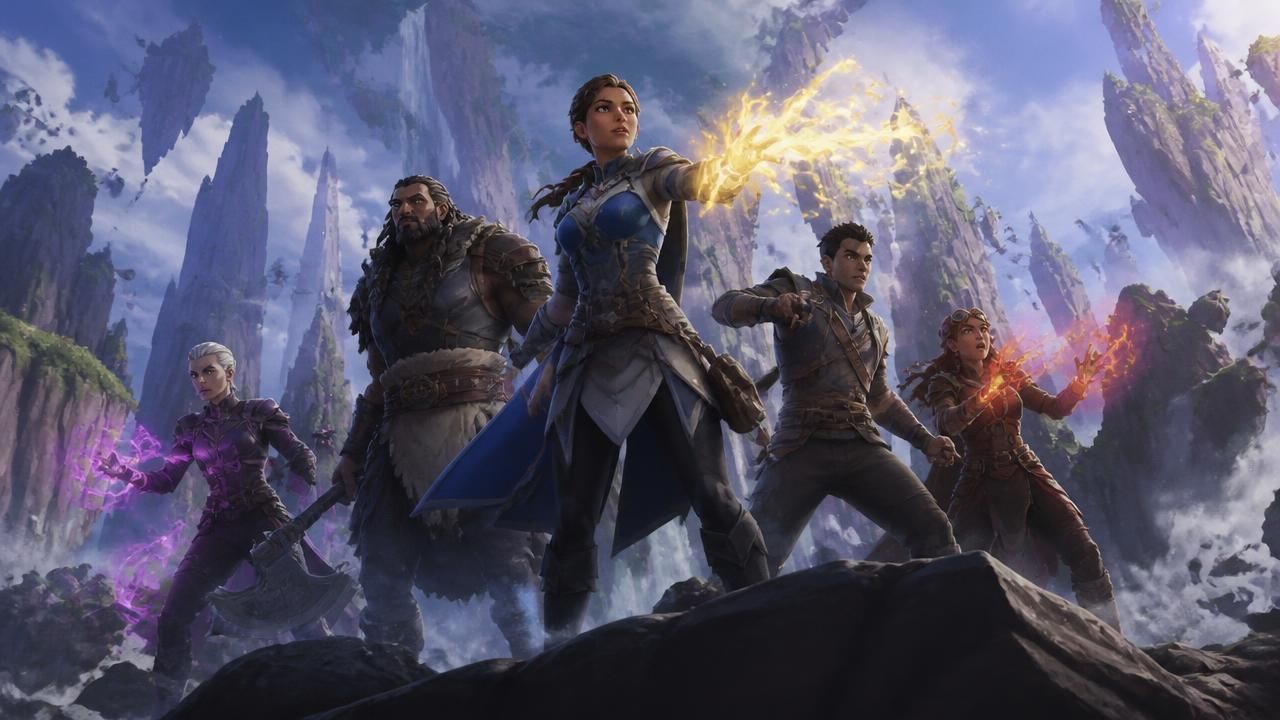
After years of false starts, quiet reworkings, and no small amount of fan skepticism, Netflix's animated adaptation of Magic: The Gathering finally has a name, a first look, and a release window. The series will be titled Planeswalker and is slated to arrive on the streaming service in 2027, according to announcements confirmed across Deadline, IGN, The Verge, Yahoo, and fan outlets including GeekTyrant and KeenGamer.
The reveal came via a video posted by Wizards of the Coast, in which Roy Graham, Head of Story for Magic: The Gathering, addressed the long silence directly — and preemptively.
"It's really happening. I promise. For real."
That opening line, reported by The Verge, reads as much as an acknowledgment of the property's troubled development history as it does a marketing hook. For a franchise whose last animated attempt collapsed publicly, reassurance is part of the pitch.
A First Glimpse of the Multiverse
The sneak peek offered the first concrete look at the show's visual direction. According to the footage described in early coverage, Planeswalker will lean heavily into the game's defining cosmological conceit: the Multiverse, a sprawling collection of distinct realms — "planes" — each with its own rules, cultures, and physics. The preview reportedly illustrates how each plane exists as its own discrete reality, a structure that gives the series an anthology-like flexibility while following characters capable of traveling between worlds.
In Magic lore, "Planeswalkers" are powerful mages with the rare ability to traverse these planes. The title choice signals that the series intends to center those characters rather than anchoring itself to a single setting — a smart structural bet for a franchise with decades of accumulated world-building and a deep bench of fan-favorite settings.
What the Sources Say — and Don't
Coverage so far has been consistent on the essentials but thin on specifics. Deadline framed the news in trade-language terms, emphasizing the first-look photo and release window. IGN and Yahoo focused on the 2027 date and the first-look imagery for general audiences. The Verge took the most knowing tone, framing the announcement explicitly as a correction to a history of setbacks.
- Title: Planeswalker
- Platform: Netflix
- Release window: 2027
- Revealed: First-look footage and photo, plus a statement from Wizards of the Coast's Head of Story
- Not yet disclosed: Voice cast, episode count, showrunner, and animation studio
Notably absent from the announcement: casting, episode order, and production partners. Those omissions are typical for an early teaser, but they also mean the project still has substantial ground to cover before its 2027 target.
The Long Road to 2027
The path to Planeswalker has been anything but smooth. An animated Magic: The Gathering series was first announced in 2019 with Joe and Anthony Russo — the directors behind Avengers: Endgame — attached as executive producers. That version ultimately fell apart, a high-profile casualty of the property's difficulty translating to screen.
In 2024, Netflix confirmed it still intended to make a series based on the game, but said it would rework the project from the ground up rather than salvage the earlier iteration. The new creative team was effectively starting over, which helps explain both the delay and the cautious, promise-heavy tone of this week's reveal.
The history matters for how fans will read the news. Hasbro, which owns Wizards of the Coast, has spent years trying to convert Magic's enormous player base — and its 30-plus-year narrative archive — into a transmedia franchise. A Netflix series represents one of the largest swings yet, and one of the most scrutinized. The property's core audience is famously detail-obsessed, quick to flag lore inconsistencies, and deeply invested in how its planes and characters are rendered.
Why It Matters
For Netflix, Planeswalker is another entry in a strategy of adapting established genre IP for animation — a lane where the service has found success with properties that arrive with built-in, vocal fanbases. For Hasbro, it's a potential gateway: a mass-market on-ramp to a game whose lore is rich but whose barrier to entry remains high for newcomers.
The 2027 window also places the series in a crowded animation landscape, competing for attention against established fantasy adaptations and a steady stream of game-to-screen projects. Whether Planeswalker distinguishes itself will depend largely on execution — and on whether the show can serve both the lore-literate and the entirely uninitiated.
For now, the takeaway is simpler: after seven years of announcements, collapses, and resets, there is footage. There is a title. There is a date. And, as Graham put it, this time it's real.