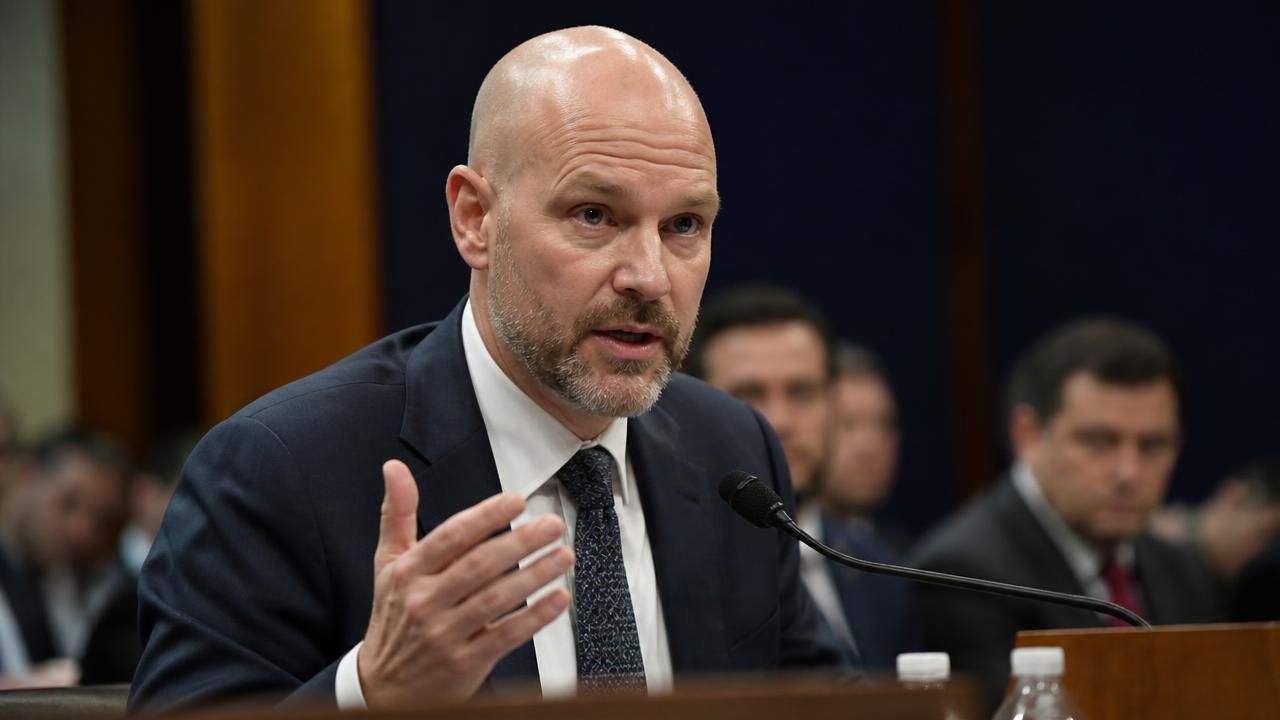
U.S. technology companies are underestimating the risk that China's intelligence services can turn ordinary business and personal relationships into channels for espionage and influence, according to former CIA counterintelligence analyst Peter Mattis. In an interview with Bloomberg This Weekend, Mattis said China's Ministry of State Security can use commercial ties, networking and personal entanglements to gather intelligence and potentially shape decision-making in strategically important industries.
The warning landed as several outlets framed the same issue through more sensational headlines. MSN aggregated reports warning that U.S. companies are underestimating China intelligence risks and that Chinese spies have used sex and secret affairs to target the U.S. tech elite. Fox News went further, running a segment that cited experts linking Nvidia CEO Jensen Huang to a Chinese intelligence honeytrap amid a purported Nvidia CEO scandal. Those claims have not been independently verified in the material reviewed, and they should be treated with caution. The sources provided did not include a public confirmation from Nvidia.
A counterintelligence warning aimed at boardrooms
Mattis's core argument is that classified documents are not the only thing spies want. Executives at AI, semiconductor, cloud and defense-adjacent companies can be valuable targets because they hold strategic knowledge, can influence partnerships, and can open doors to engineers, investors and policymakers. Even executives without security clearances can reveal supply-chain plans, pricing, merger intentions, technology road maps or personnel moves.
Technology executives can become valuable targets even without access to classified information.
—Peter Mattis, former CIA counterintelligence analyst, on Bloomberg This Weekend.
He also pointed to artificial intelligence as an expanding capability for Chinese intelligence operations. AI can help sort open-source data, identify relationships, draft persuasive messages, translate and analyze communications, and spot vulnerabilities at scale. That does not mean every encounter is an operation, but it raises the baseline risk for companies that treat security as a narrow IT function rather than a board-level governance issue.
Silicon Valley, honeytraps and the Huang claims
The Fox News headline reflected a more tabloid framing: foreign spy honeytraps targeting America's tech elite have sparked alarm, with experts alleging a link to Huang. A Eurasia Review op-ed asked Huang Today, Who's Next in Silicon Valley? and described the expanding reach of Chinese intelligence. The op-ed's framing suggests concern that scrutiny of one prominent CEO could be a prelude to wider questions about relationships across Silicon Valley.
But the differing treatments matter. Bloomberg's segment is built around a counterintelligence professional explaining methods and risk. MSN's aggregation emphasizes corporate underestimation and sexual entrapment. Fox News leans into scandal and celebrity. The sensational framing may draw attention, but it can also blur the line between allegation, evidence and speculation. For companies, the practical lesson is not that every executive is compromised; it is that vetting, counterintelligence awareness and incident reporting need to be normal parts of corporate governance.
From tech campuses to fighter jets
The risk is not confined to Silicon Valley. The New York Times reported that U.S. intelligence has warned of China theft risks over the possible sale of F-35 jets to Saudi Arabia. The F-35 is one of the most sensitive weapons systems in the U.S. arsenal, and any export discussion raises questions about protecting stealth, sensor fusion, software and maintenance data. The NYT report broadens the story from executive relationships to defense exports, where intelligence concerns can directly affect alliance politics and arms sales.
Together, the sources describe a spectrum. At one end are personal and business relationships that can be exploited for information or influence. At the other are high-stakes export decisions involving advanced military technology. In between sit AI labs, chipmakers, investors and advisers whose networks cross borders.
Why it matters for finance and corporate governance
For investors, espionage risk is also financial risk. A compromised executive can trigger litigation, sanctions exposure, reputational damage, lost contracts and regulatory scrutiny. Boards that ignore foreign intelligence threats may misprice risk in strategic industries, especially semiconductors and AI, where access to talent and intellectual property is central to valuation.
The sources also show how media framing shapes public understanding. Bloomberg presents the issue as a professional counterintelligence briefing. MSN highlights lurid methods. Fox News personalizes it around Huang. The NYT connects it to a major defense sale. Each angle captures part of the story, but none alone is sufficient. The common thread is that China's intelligence apparatus is perceived by U.S. officials and former officials as persistent, adaptive and interested in strategic advantage.
For technology leaders, the takeaway is to assume that business relationships can be intelligence vectors, to train staff on reporting suspicious contact, and to separate legitimate cross-border collaboration from risks that deserve scrutiny. For policymakers, the F-35 warning shows that export controls and intelligence assessments are increasingly intertwined. For the public, the Huang claims require restraint: allegations of honeytraps are serious, but they are not proof. The broader warning from Mattis and others is that the next target may not be a household name, and may not even know he or she is being cultivated.