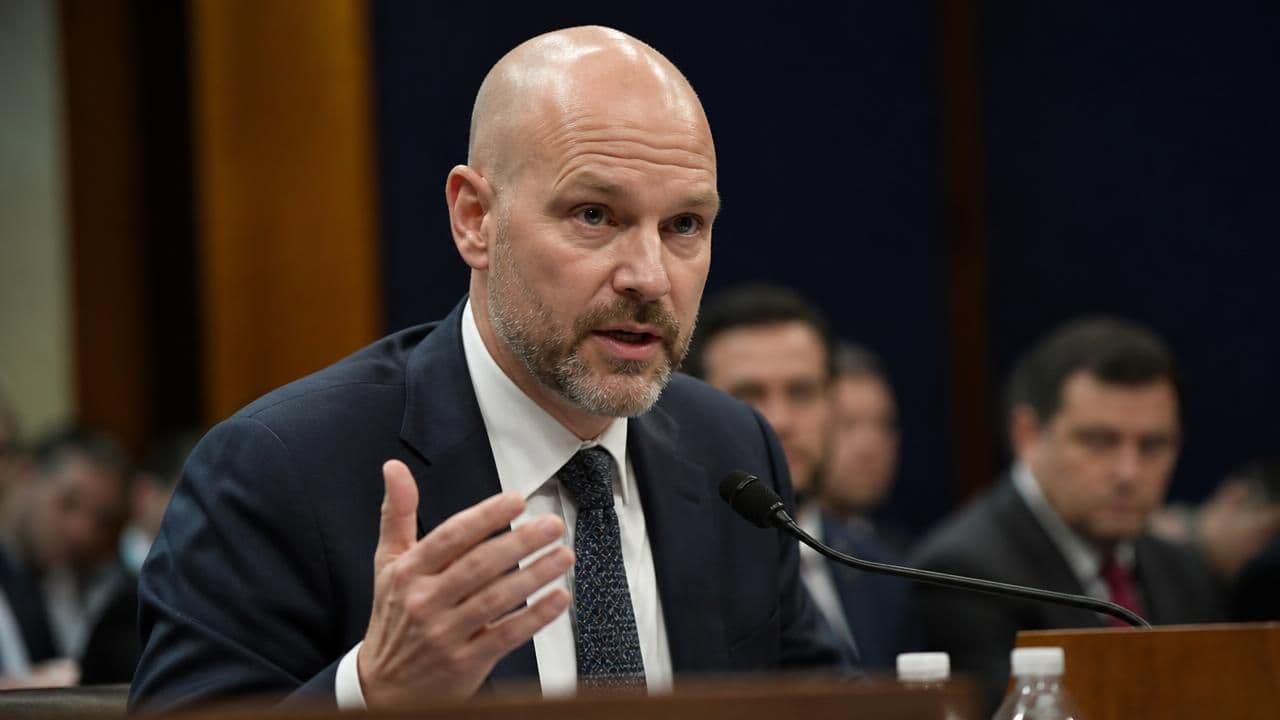
Federal Reserve officials are signaling that the tightening cycle is not over — but that the pace of it should be calibrated rather than rushed. Boston Fed President Susan Collins said in an interview with Bloomberg Television that additional interest-rate increases remain appropriate, and that a “steady, gradual” approach is the right way to bring inflation back toward the central bank's 2% target.
Her remarks were echoed by Cleveland Fed President Beth Hammack, who signaled support for a gradual rate-hike path, according to reports aggregated by MSN. Together, the two comments reinforce a broader message emanating from the Federal Reserve system: policy will likely tighten further, but incrementally, with officials keen to avoid either stalling the disinflation process or tipping the economy into an unnecessary downturn.
What Collins Actually Said
According to Bloomberg Markets, Collins argued that a gradual path for rate hikes “will be appropriate to lower inflation, as the labor market gains solid footing without adding to price pressures.” The logic is a familiar one inside the Fed: if hiring remains resilient without generating fresh wage-driven inflation, policymakers can afford to move in smaller increments and watch how the economy responds.
Separately, Seeking Alpha reported on Collins's comments regarding a 50 basis-point rate increase, framing her position as one in which “careful adjustment of policy is appropriate.” The phrasing is notable. It suggests the Boston Fed chief is not advocating for a pause, nor for the sort of front-loaded, jumbo hikes that characterized the most aggressive phase of the tightening cycle — but for a middle path.
“A steady, gradual path for interest-rate hikes will be appropriate to lower inflation, as the labor market gains solid footing without adding to price pressures.” — Susan Collins, President, Federal Reserve Bank of Boston
Two Officials, One Message
The convergence between Collins and Hammack matters because it hints at the shape of the debate inside the Federal Open Market Committee. Regional Fed presidents rotate in and out of voting status, but their public comments function as a real-time barometer of consensus. When officials from different districts — Boston and Cleveland — land on the same word, “gradual,” markets tend to read it as a signal rather than a coincidence.
The substance of that signal is threefold:
- More hikes are coming. Neither official suggested the terminal rate had been reached, and Collins explicitly backed additional increases.
- The increments should be smaller. The emphasis on gradualism implies a preference for conventional quarter-point or measured moves over outsized steps.
- The labor market is the swing factor. Collins's framing ties the pace of tightening directly to whether hiring continues to cool inflation rather than feed it.
How the Story Was Framed
The coverage itself reveals how differently financial media treat the same set of remarks. Bloomberg Markets led with the policy substance — the “steady, gradual” characterization of rate hikes — treating the story as a window into Fed thinking. Bloomberg's broader headline, “Fed Officials Back More Rate Hikes, Gradual Pace of Tightening,” widened the lens from one official to a collective stance.
The MSN aggregation layer, meanwhile, split the story into multiple discrete headlines: “more rate hikes are coming,” “gradual rate hikes best to manage economic risks,” and “backs gradual rate increases as inflation broadens.” Each emphasizes a slightly different angle — hawkishness, risk management, and inflation breadth respectively — a reminder that headline framing often determines which version of a story most readers encounter.
Seeking Alpha's contribution, by contrast, was almost entirely inaccessible to readers: the page returned an access-denied notice, meaning the “careful adjustment of policy” framing circulated largely as a headline and a snippet. That is a small but telling detail about modern financial news — the most market-relevant nuance is often locked behind a paywall, while the headline travels freely.
Why Gradualism Is Contested
The case for moving gradually rests on the idea that monetary policy operates with a lag. Officials cannot see the full effect of a rate increase for months, so each additional hike carries the risk of overshooting. Collins's reference to the labor market “gaining solid footing” implies she believes the economy can absorb higher borrowing costs without a sharp rise in unemployment — a soft-landing scenario that has been predicted, and doubted, repeatedly over the past two years.
The counterargument is that gradualism risks losing credibility if inflation proves sticky. Critics of a slow approach argue that a central bank seen to be moving too timidly may have to hike even further later, and in more painful fashion. Collins's wording — “careful adjustment” — attempts to bridge that gap by presenting gradualism not as timidity but as precision.
The Road Ahead
For markets, the practical takeaway is that the direction of policy remains upward, while the velocity is under active negotiation. Investors parsing Fed communications should watch three things: the language officials use about the labor market, whether “gradual” becomes a consensus term in subsequent speeches, and whether the broader inflation picture — which one headline described as “broadening” — shifts the debate from pace to destination.
What is clear from this week's remarks is that the Fed's most influential voices are not yet ready to declare victory. They are, in Collins's formulation, prepared to keep adjusting — carefully, and one step at a time.