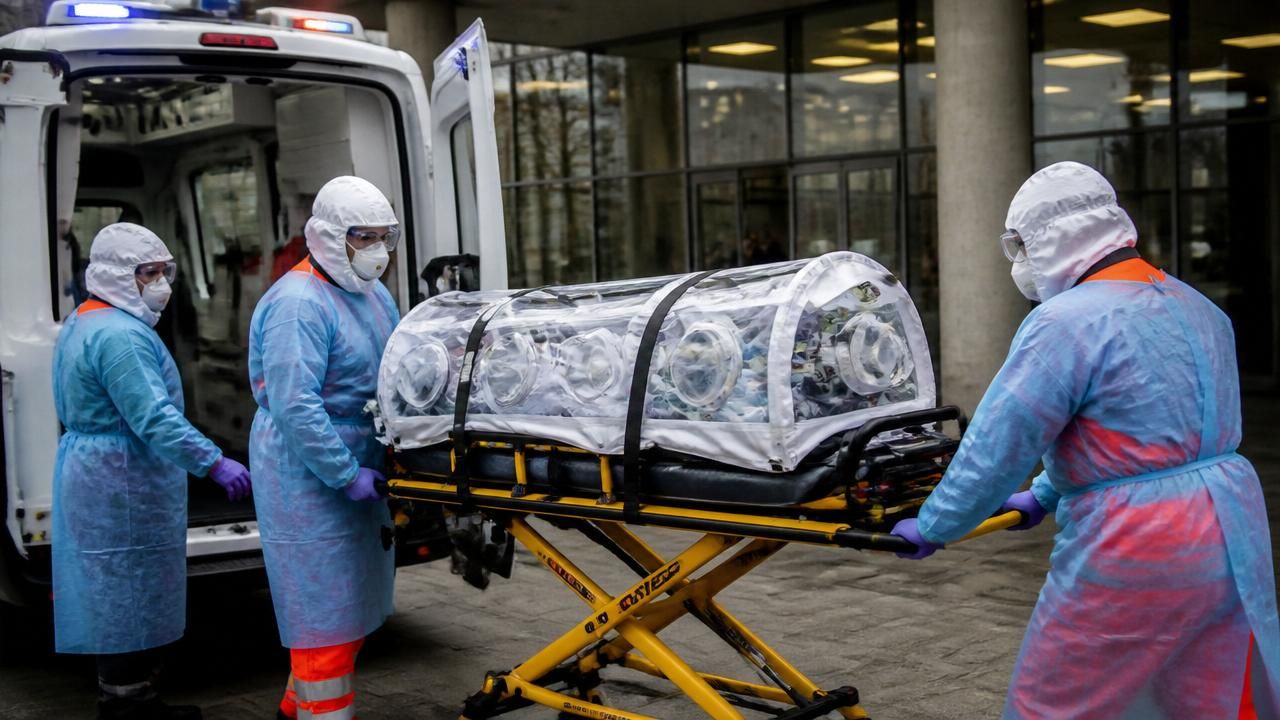
A US national infected with Ebola in the Democratic Republic of the Congo has arrived in Germany for specialized treatment, as the Trump administration moved to restrict travel from the outbreak zone. The patient, identified as a missionary doctor, was flown to Berlin on Monday and admitted to the isolation ward at Charité hospital, one of the world's leading facilities for treating highly infectious diseases.
Patient's Condition and Treatment
The patient, who has not been named publicly, was described as 'cautiously optimistic' upon arrival, according to family statements reported by People magazine. However, reports from other outlets, including Reuters and CNN, indicated the patient was 'barely strong enough to walk' upon boarding the medical evacuation flight. The German health ministry confirmed the patient is stable and not in critical condition, with family members testing negative for the virus.
This is the second American Ebola patient to be treated in Germany in recent weeks. The previous patient, also an aid worker, was successfully treated and discharged. Germany's specialized isolation units, equipped with negative pressure rooms and trained medical teams, are among the few in the world capable of safely managing hemorrhagic fevers like Ebola.
US Travel Restrictions
Simultaneously, the Trump administration announced it would block American citizens in the DRC from traveling to the United States on commercial flights, according to a White House official cited by Reuters. The move, reported by multiple outlets including Stat News and USA Today, aims to prevent potential spread of the virus. Critics argue the restrictions may hamper humanitarian efforts and stigmatize affected regions.
The US Centers for Disease Control and Prevention (CDC) confirmed the patient's transfer and is monitoring contacts. The agency has also issued travel advisories for the DRC and neighboring countries.
Outbreak Context and Global Response
The patient was infected with the Bundibugyo strain of Ebola, a less common variant that experts say is less understood and may not be fully covered by existing vaccines. The World Health Organization (WHO) has expressed concern about the 'scale and speed' of the current outbreak, which has spread to urban areas and crossed borders into Uganda. The WHO declared the outbreak a Public Health Emergency of International Concern in July.
In response, several African nations have heightened surveillance. Nigeria's National Centre for Disease Control (NCDC) activated emergency operations but confirmed no cases in the country. Kenya, where a US-linked Ebola treatment facility faces legal hurdles, has seen protests and political debate. The African Union secured $498.8 million in pledges for Ebola response.
Differing Perspectives
Coverage of the story varies by outlet. The Guardian and CNN emphasize the travel restrictions and their humanitarian implications, while People and local German media focus on the patient's personal ordeal. DW News highlighted Germany's preparedness, noting that 'Germany is among the few countries equipped to safely treat Ebola.' The Wall Street Journal and Reuters provide a more clinical, policy-oriented view, while African outlets like Channels TV and Tuko.co.ke focus on regional preparedness and political tensions.
'Germany is among the few countries equipped to safely treat Ebola - thanks to highly specialized isolation units and trained teams.' - DW News
Misinformation has also circulated, with Africa Check debunking a photo claiming to show Ebola patients arriving in Kenya from the US.
What's Next
The patient's prognosis remains guarded, with doctors monitoring for complications. The US travel restrictions are set to remain in place for the duration of the outbreak. Meanwhile, the WHO and global health partners continue to coordinate response efforts, including vaccination campaigns and contact tracing. The incident underscores the ongoing threat of Ebola and the importance of international cooperation in managing health crises.