Democrats won control of the House of Representatives in last week's midterm elections, and the party is already moving on two fronts: a legislative agenda built around health-care costs and a sprawling investigative program aimed at the agencies and officials of the outgoing administration. The first skirmish arrived Tuesday, not in the House but in the Senate Commerce Committee, where Democrats objected to advancing President Trump's nominee to fill an open Federal Communications Commission seat during what they call an unjustified lame-duck session.
The FCC Fight Comes First
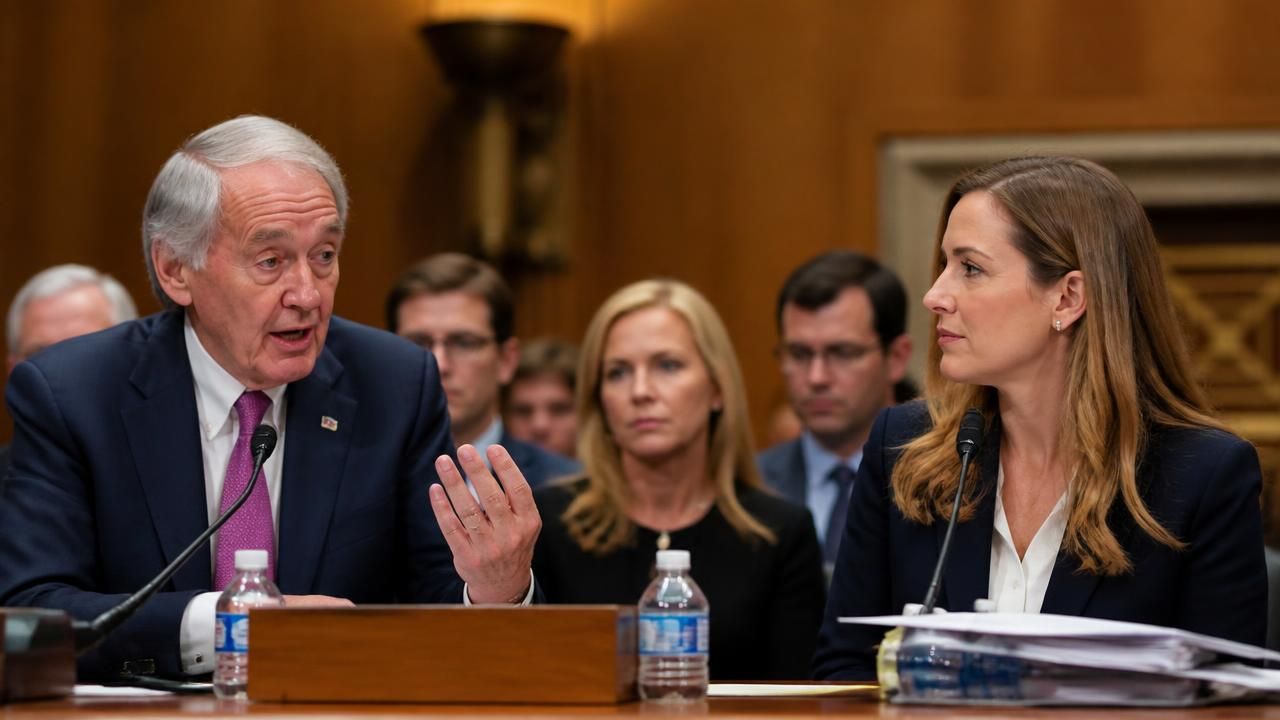
At the center of the dispute is Danielle Thumann Severs, an attorney and senior counsel to FCC Chairman Brendan Carr, whom Trump has nominated to fill an empty commissioner's seat. Senate Democrats on the Commerce Committee argued that confirming a new commissioner before they take power in January 2027 — and before the new Congress is seated — short-circuits the voters' verdict.
"After the American people last week overwhelmingly rejected the MAGA agenda, there is no justification for this committee to advance partisan nominees during the lame-duck period."
— Sen. Ed Markey (D-Mass.)
Thumann Severs faced pointed questions about whether she would support Carr's aggressive posture toward television broadcasters, an issue that has become a proxy for a broader debate over how far the federal government may go in pressuring media outlets. Democrats say the hearing was rushed; Republicans counter that filling an empty seat is routine and that delaying it politicizes the commission.
Carr in the Crosshairs
Markey's objection is only the opening move. Senate Democrats say they intend to use their majority next year to launch investigations into Carr's conduct at the FCC — a plan that would make the independent regulator one of the first targets of the new oversight regime. The threatened probes signal that telecommunications policy, long a sleepy corner of Washington, is now a frontline in the partisan conflict.
A Two-Track Agenda: Health Costs and Investigations
Beyond the FCC, Democrats are framing their domestic message around affordability, with health care at the top. According to reporting on the dueling midterm messaging, Democrats have emphasized the cost of care — premiums, drug prices, and household medical bills — while Republicans have trained their fire on fraud and program integrity. The contrast is deliberate: each party is describing the same health-care system through a different lens, one of pocketbook pain, the other of waste and abuse.
Alongside that legislative push, House Democrats are preparing a wide slate of investigations, according to outlines of the incoming majority's plans. The oversight portfolio is expected to encompass the administration's policy decisions and personnel, setting up months of hearings, document requests, and subpoenas.
Republicans Build a Defense Shield
House Republicans are not waiting to be investigated. They have launched a defensive plan intended to shield President Trump from the incoming Democratic probes, according to reporting on the GOP strategy. The approach — a familiar feature of divided government — involves counter-investigations, procedural maneuvering, and a coordinated communications effort designed to discredit the new majority's oversight as partisan theatre before it begins.
The result is likely to be a Washington consumed by parallel inquiries, in which each committee's work becomes evidence in the other side's case.
The AI Problem Democrats Haven't Solved
For all the ambition of the investigative agenda, critics argue Democrats have yet to articulate a coherent approach to the technology most likely to reshape the economy in the next decade: artificial intelligence. That critique — the subject of pointed analysis in The Atlantic — holds that the party's instinct to regulate is not matched by a working theory of what regulation should accomplish, leaving it reactive while the industry and the administration set the terms of debate.
The gap matters because AI governance touches nearly every item on the Democratic wish list, from health-care costs and labor markets to competition policy and consumer protection. Without a clear framework, oversight of AI could devolve into hearings without legislation.
Election Administration Enters the Fray
Even the mechanics of voting remain contested. Reporting has described an internal plan to deploy as many as 1,000 Department of Justice monitors to polling places — a proposal that reopens a long-running fight over federal involvement in election administration. Civil rights advocates generally support federal monitoring as a check on local abuses, while critics see it as potential intimidation depending on who is directing it. The dispute is a reminder that, in this cycle, the machinery of elections is itself a policy battlefield.
A Mandate — or a Referendum?
Both parties will claim the public's backing, and the polling is ambiguous enough to sustain both claims. A USA Today survey found that 44 percent of respondents said their midterm vote was essentially a vote against Trump — a striking figure that Democrats will cite as a mandate for aggressive oversight, and that Republicans will argue reflects a fragmented, negative electorate rather than an endorsement of any Democratic program.
That ambiguity is the defining feature of the moment. Democrats have the gavels, a message on health-care costs, and a list of targets headed by the FCC chairman. Republicans have the White House, a defensive strategy, and a competing narrative on fraud. What neither side yet has is proof that the voters wanted the fight now beginning — a conflict that will be waged in hearing rooms, on the airwaves, and across the regulatory agencies long before it is settled in the next election.