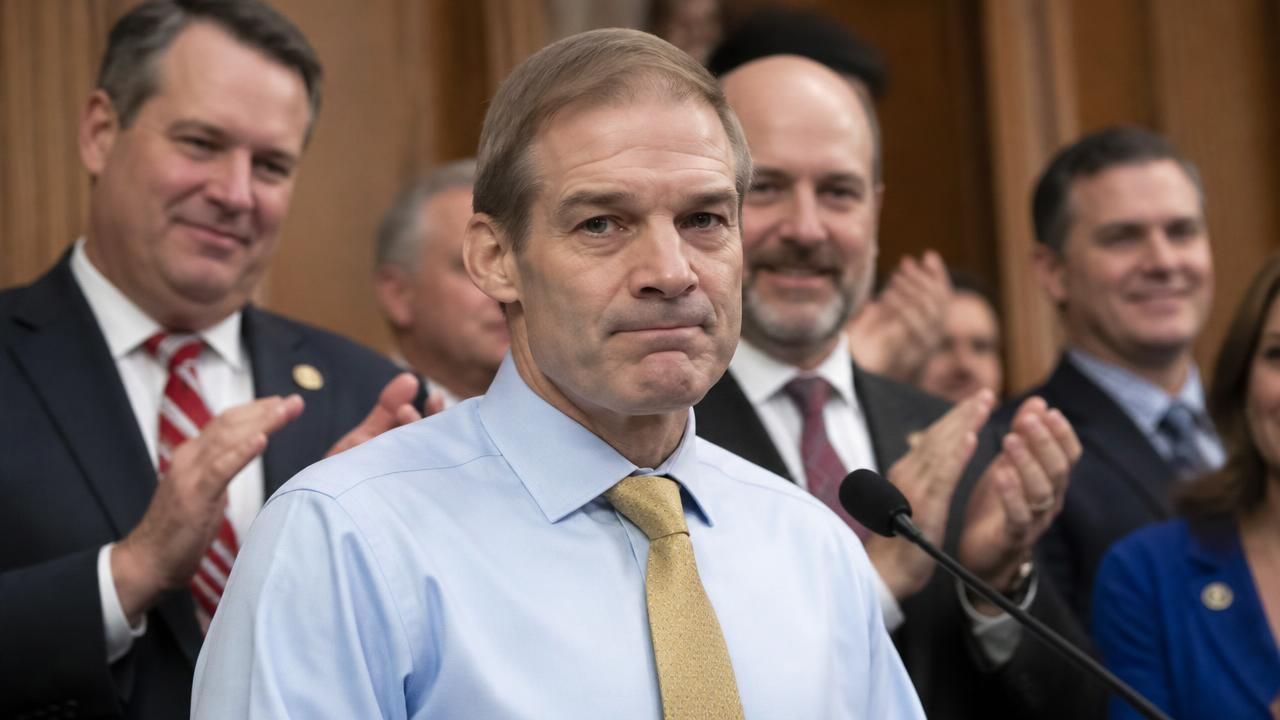
House Republicans elected Rep. Jim Jordan of Ohio as their next leader, elevating a close ally of Donald Trump and co-founder of the House Freedom Caucus to the top Republican post in the chamber as the party seeks to recover from steep midterm losses.
Jordan will serve as House minority leader in the next Congress, succeeding Rep. Mike Johnson, who said he is stepping down as the chamber's top Republican. WQOW, citing an AP source, reported that Johnson will not seek reelection as House GOP leader. The leadership vote came a week after Republicans suffered huge election losses, according to MSN, and amounted to a major shakeup in a conference still absorbing the scale of its defeat.
A Trump Ally Takes the Reins
NPR and Boise State Public Radio framed the result as a party looking to rebuild from the midterms. Their reports described Jordan as a close Trump ally and co-founder of the ultra-conservative House Freedom Caucus, a biography that places him at the center of the GOP's base-driven wing. That profile is both an asset and a liability for a conference trying to chart a path back to the majority.
NPR described Jordan as a close Trump ally and a co-founder of the ultra-conservative House Freedom Caucus, a signal of how the party's activist core has shaped its leadership choices.
Supporters say Jordan's combative style, fundraising reach and ability to energize conservative voters make him suited to lead in opposition. Critics warn that his selection signals a continued embrace of confrontational politics rather than a pivot toward swing-district outreach after a painful election cycle.
A Leadership Shakeup After Midterms
The vote follows Johnson's decision not to seek the top GOP post again. NPR reported that Johnson says he is stepping down as the chamber's top Republican. WQOW, citing an AP source, reported that Speaker Mike Johnson won't seek reelection as House GOP leader. The timing, one week after huge election losses, framed the contest as a rebuild rather than a routine leadership transition.
Different outlets emphasized different dimensions of the same story. Yahoo and MSN described Jordan as the minority leader for the next Congress. The Detroit News and MSN called it a leadership shakeup. CBS News and NBC News placed the vote in live updates alongside other congressional action. Local Ohio outlets, including the Springfield News-Sun and Dayton Daily News, framed it through Jordan's bid to lead a battered GOP and the possibility that Ohio's congressional delegation could look different after Tuesday. The varied framing reflected a story that is at once national, institutional and deeply local.
Contest and Trump's Role
Jordan did not win an uncontested race. The Gateway Pundit reported that Trump said he might endorse in the House minority leader election between Jordan and Rep. Steve Scalise. MSN reported that Jordan emerged as the favorite to lead House Republicans as GOP lawmakers called for new leadership. The final result made Jordan the conference's choice, but the pre-vote maneuvering exposed ideological and tactical divisions that will not disappear simply because the election is over.
Trump's potential involvement underscored his continued influence over Republican leadership contests. For Jordan, the association with Trump has been central to his political identity. For the broader conference, it raises questions about whether the party will use its time in the minority to confront the incoming Democratic majority, promote a governing agenda or prepare for the next election cycle.
Parallel Congress Action
The leadership vote did not unfold in isolation. CBS News live updates described the House GOP picking Jordan as leader while Hegseth faced an impeachment vote. NBC News reported that the House was voting on a Hegseth impeachment resolution as part of Trump administration live updates. The available excerpts did not provide full details of the resolution, but the simultaneous action underscored that the new leader will inherit a crowded and contentious congressional agenda.
For Republicans, the day combined internal leadership battles with external fights. The incoming minority leader will have to manage a conference that is still processing its losses while confronting a Democratic majority and a national political environment dominated by Trump.
What It Means for the GOP
As minority leader, Jordan will be responsible for unifying a bruised conference, countering the Democratic majority, shaping GOP messaging, fundraising and recruiting candidates. He will face pressure to reconcile Freedom Caucus-style conservatism with the needs of swing-district Republicans who survived the midterms. The party's losses have prompted calls for new leadership and introspection. Jordan's selection suggests the conference is betting on a base-first strategy rather than a wholesale reinvention.
The choice also matters beyond the House. Leadership elections shape the party's national image, its relationship with Trump and its preparations for the next campaign. Jordan's rise will be watched by donors, activists and potential candidates as a signal of what the GOP wants to be in opposition. Whether he can expand his appeal beyond the Freedom Caucus and unite the conference will determine how effective he is as minority leader.
For now, the immediate facts are clear: House Republicans have chosen Jordan to succeed Johnson as their leader in the next Congress. The vote came after midterm losses, followed a competitive internal contest and coincided with other high-stakes congressional action. The larger question, which the available reports leave open, is whether Jordan's election marks a fresh start for the GOP or another turn toward the confrontational politics that defined the Trump era.