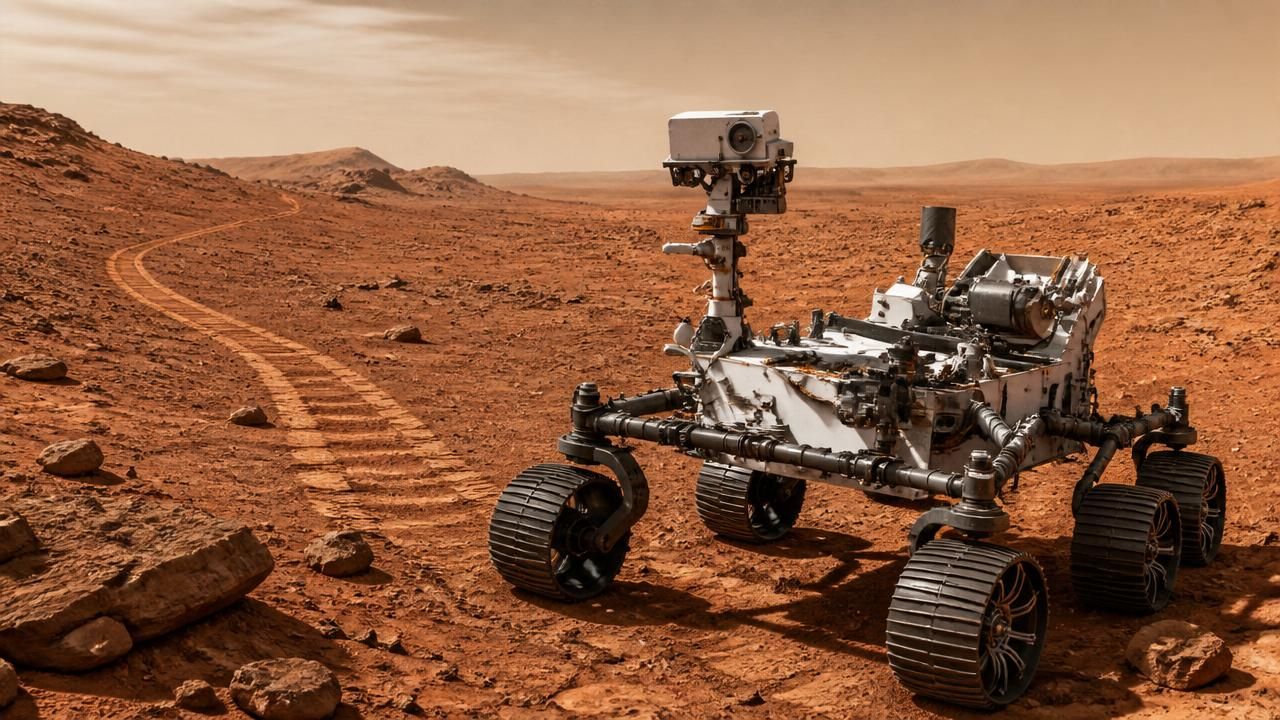
NASA's Perseverance rover has achieved a remarkable milestone on Mars, completing the equivalent of a full marathon by driving 26.2 miles (42.195 kilometers) across the Red Planet. The feat was accomplished in just five years and four months, reaching the distance on its 1,890th Martian day (sol). This places Perseverance's pace well ahead of the previous record holder, NASA's Opportunity rover, which took nearly 11 years to cover the same distance.
A Race Against Time and Terrain
Perseverance landed on Mars in February 2021, tasked with exploring Jezero Crater and searching for signs of ancient microbial life. The marathon milestone comes on the heels of the fifth anniversary of its landing, a testament to the rover's durability and the efficiency of its mission planning. According to NASA, the rover's route has been carefully charted to maximize scientific returns while navigating challenging terrain.
“Completing a marathon on Mars is an incredible achievement for the team, and it highlights the rover's ability to traverse long distances while conducting groundbreaking science,” said a NASA spokesperson.
Visible from Orbit: A Trail of Discovery
The trail left by Perseverance is now so extensive that it can be seen from orbit. The Mars Reconnaissance Orbiter (MRO) captured a striking image of the rover's path, showing a winding track across the Martian surface. This visual record not only celebrates the milestone but also serves as a map of the rover's journey, with each turn marking a site of scientific interest.
Scientific Payload and Discoveries
Throughout its marathon, Perseverance has collected dozens of rock and soil samples, which are slated for return to Earth by a future mission. The rover has also deployed the Ingenuity helicopter, which has flown dozens of sorties, scouting ahead and providing aerial perspectives. Among the key findings are evidence of ancient lakebed sediments and organic molecules, hinting at past habitable environments.
- Collected 30+ samples from diverse geological units.
- Detected organic compounds in multiple rock targets.
- Characterized the mineralogy of Jezero Crater's delta.
Differing Perspectives on the Milestone
While all sources celebrate the achievement, they frame it differently. Science Daily emphasizes the speed relative to Opportunity, noting that Perseverance completed the marathon in less than half the time. Mashable ties the milestone to the rover's fifth anniversary on Mars, highlighting the timing. Vozpopuli and other outlets focus on the visible trail from orbit, underscoring the mission's legacy. Some sources, like Yahoo and AOL, encountered technical errors, but the core story remains consistent.
Context and Historical Significance
The marathon milestone is more than a symbolic distance; it represents a sustained effort in one of the most hostile environments known. Opportunity's marathon took 11 years and 2 months, with the rover often pausing for long periods due to dust storms and power constraints. Perseverance, powered by a radioisotope thermoelectric generator (RTG), has been able to drive more consistently, though it still faces challenges like rugged terrain and communication delays.
“Every mile on Mars is hard-won,” said a former NASA engineer. “The fact that Perseverance has done it in five years shows how much we've advanced in rover technology and mission planning.”
Looking Ahead
Perseverance is not done yet. The rover is currently heading toward the rim of Jezero Crater, where it will explore ancient highlands and potentially collect more samples. The marathon milestone is a stepping stone toward even greater distances, as NASA plans for the Mars Sample Return campaign. With each sol, Perseverance continues to rewrite the record books and expand our understanding of the Red Planet.