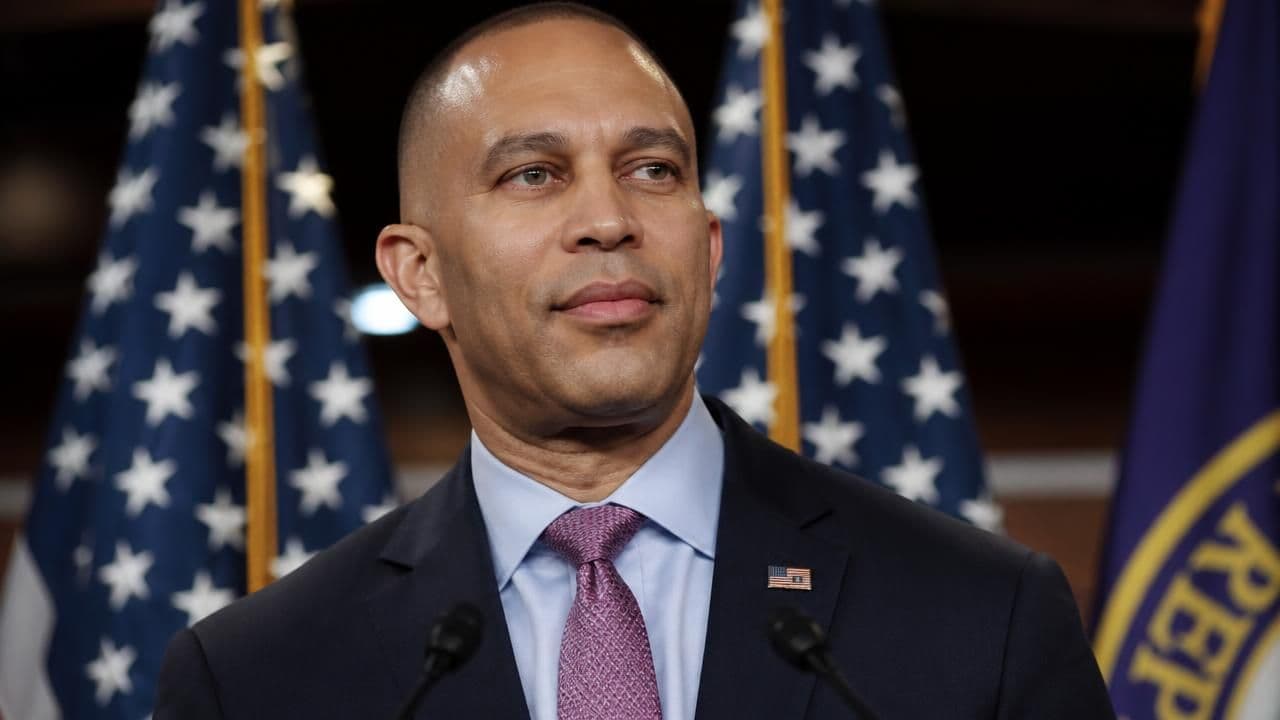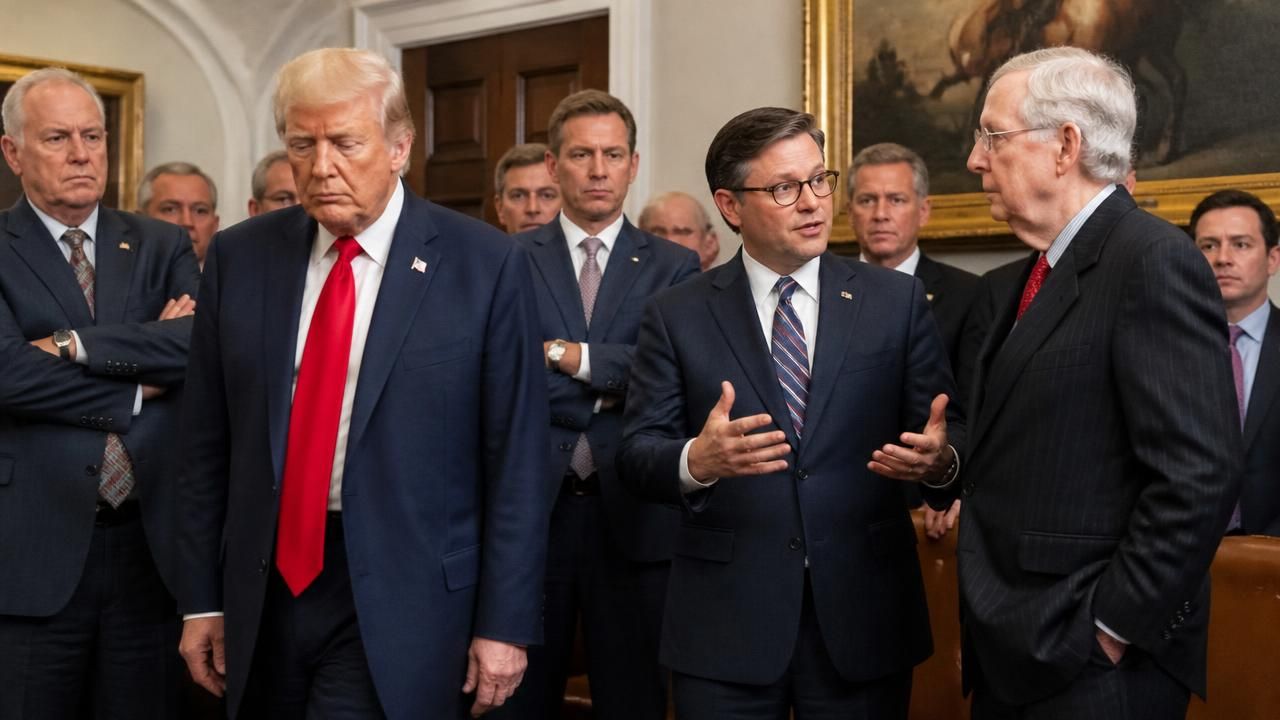
The Republican Party awoke this week to its most uncertain moment in years. Democrats cleared 250 House seats in a decisive power shift, seizing control of Congress and handing President Trump the kind of midterm repudiation that reorders a presidency. What followed was not a reckoning but a scramble — a party-wide search for someone to blame, conducted at full volume and, in the view of nearly every major outlet covering it, pointed everywhere except the Oval Office.
"After last week's midterm losses, the Republican Party entered its most uncertain moment in years," The New York Times reported, noting that some in the party have called for moderation and for cleaning house. The Times added the crucial caveat: that project "will be difficult with President Trump still in the White House."
The Scale of the Defeat
The numbers were unambiguous. The Times' live coverage recorded Democrats crossing the 250-seat threshold in the House — a margin that exceeds a simple rebuke and edges toward realignment. Combined with losses in Senate contests the president personally campaigned in, the result stripped Republicans of the chamber control they had used to shield the administration from oversight.
Bloomberg framed the outcome in the bluntest institutional terms, asking directly what a Democratic sweep of Congress means for Trump — a question that, for a president facing subpoena power, committee chairmen and an adversarial legislative agenda, is less about messaging than about survival. Politico's assessment was blunter still, describing a nationwide repudiation of the president:
"It's Armageddon." — Politico, on the scope of the Democratic sweep
The Atlantic's framing was more clinical and arguably more damaging: "Trump Is Closing From Behind." The headline captured a structural problem rather than a single bad night — a president whose coalition shrank even as his visibility and rally schedule expanded.
A Party That Won't Say the Name
The post-election debate inside the GOP has followed a consistent pattern, one captured across several outlets: intra-GOP sniping begins, and the party rushes to scapegoat anyone but Trump. Candidates, consultants and campaign chiefs have absorbed the blame. In one notable line of argument, the administration itself has pointed at Republican candidates — suggesting the losses were a failure of local execution rather than of the president at the top of the ticket.
That deflection faces an obvious obstacle. Trump remains the party's dominant figure, its chief fundraiser and its most prolific campaigner. He spent the final stretch rallying for embattled Senate seats, according to ABC's midterm briefing — a schedule that included a Halloween party detour, a detail that travelled widely and fed the complaint among Republicans that the president's priorities were elsewhere.
The irritation is not confined to the leadership. In South Carolina, Republicans mounted a write-in campaign — dubbed "Write-In Ralph" — to challenge Trump's own Senate pick, an extraordinary revolt against a sitting president's endorsement in a state that has been reliably friendly to him. Separately, Erika Kirk delivered what one broadcast segment described as a blunt message to conservatives after the losses, channelling Charlie Kirk's combative style and pressing the right on what it intends to do next.
Why It Matters Beyond Washington
Allies are already pricing in the consequences. The Financial Times devoted a transcript to what Trump's setback means for Britain, a sign that foreign capitals read the result as a weakening of the American president's capacity to deliver on trade, defence spending and diplomatic commitments. A president entering his final stretch with a hostile Congress is a diminished negotiating partner abroad and a diminished enforcer at home.
The risk profile is not only diplomatic. Writing in The Guardian, Simon Tisdall argued that Trump is now cornered — and that cornered presidents tend to lash out, warning that Iran is the likeliest target and setting out how to avert what he called a disaster. It is a reminder that midterm defeats rarely stay inside the domestic frame.
How the Story Is Being Framed
The coverage divides along a revealing line. Outlets close to the administration's perspective stress the tactical: candidate quality, turnout gaps, local failures. Outlets outside it stress the structural:
- The Times emphasises a party that wants to change direction but cannot, because its leader is not listening.
- Politico presents a national verdict rather than a set of local races.
- Bloomberg treats the result as a governing problem — oversight, investigations, stalled legislation.
- The Atlantic frames it as a slow erosion of standing that predates election night.
- The Guardian and FT look outward, to foreign policy and allies' contingency planning.
The common thread is a president described, in effect, as unpersuaded by his own result — continuing to campaign, continuing to blame others, continuing to command a base that has not abandoned him even as the broader electorate has.
What Comes Next
Three tests will define the months ahead. First, whether Republicans in Congress choose confrontation with the White House over a fight for the party's future. Second, whether Democratic committee chairs translate 250-plus seats into subpoenas, hearings and legislation that force the administration onto the defensive. Third, whether a cornered president turns outward — toward the kind of escalation Tisdall warns about — as the domestic arena closes in.
For now, the GOP's most immediate problem is a simple one. As the Times put it, Republicans are pointing fingers. The president does not appear to be listening.