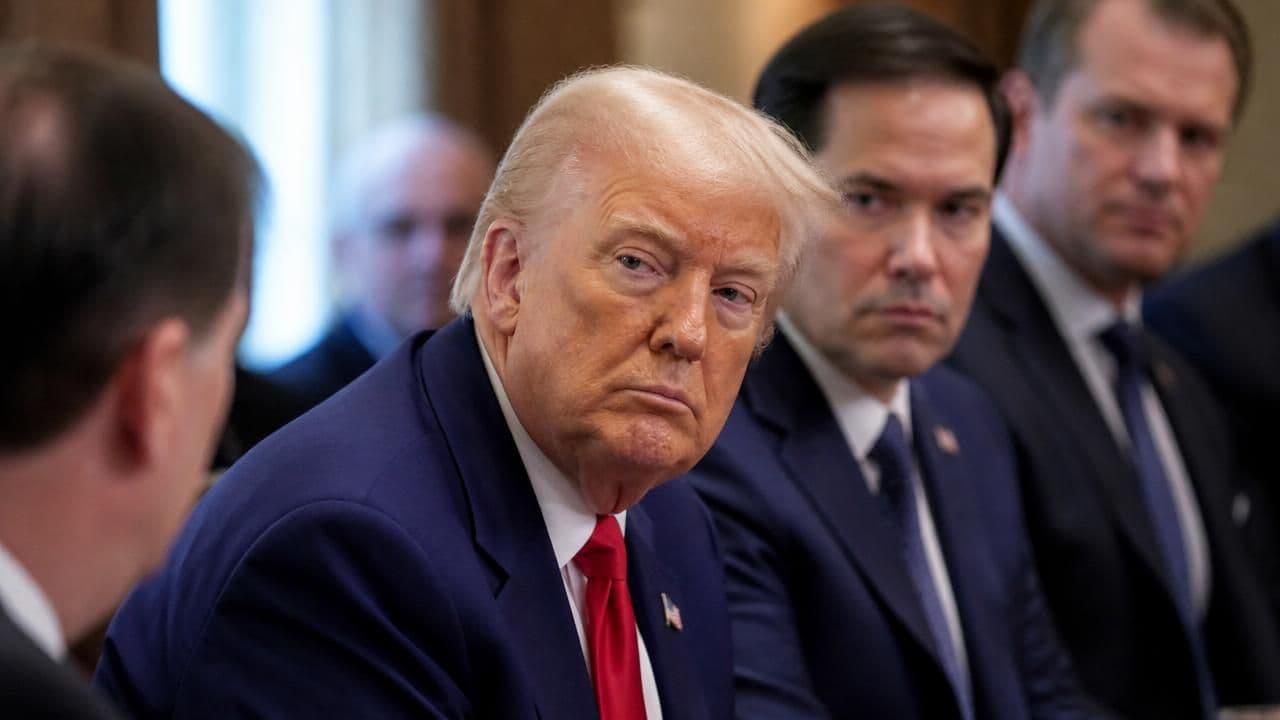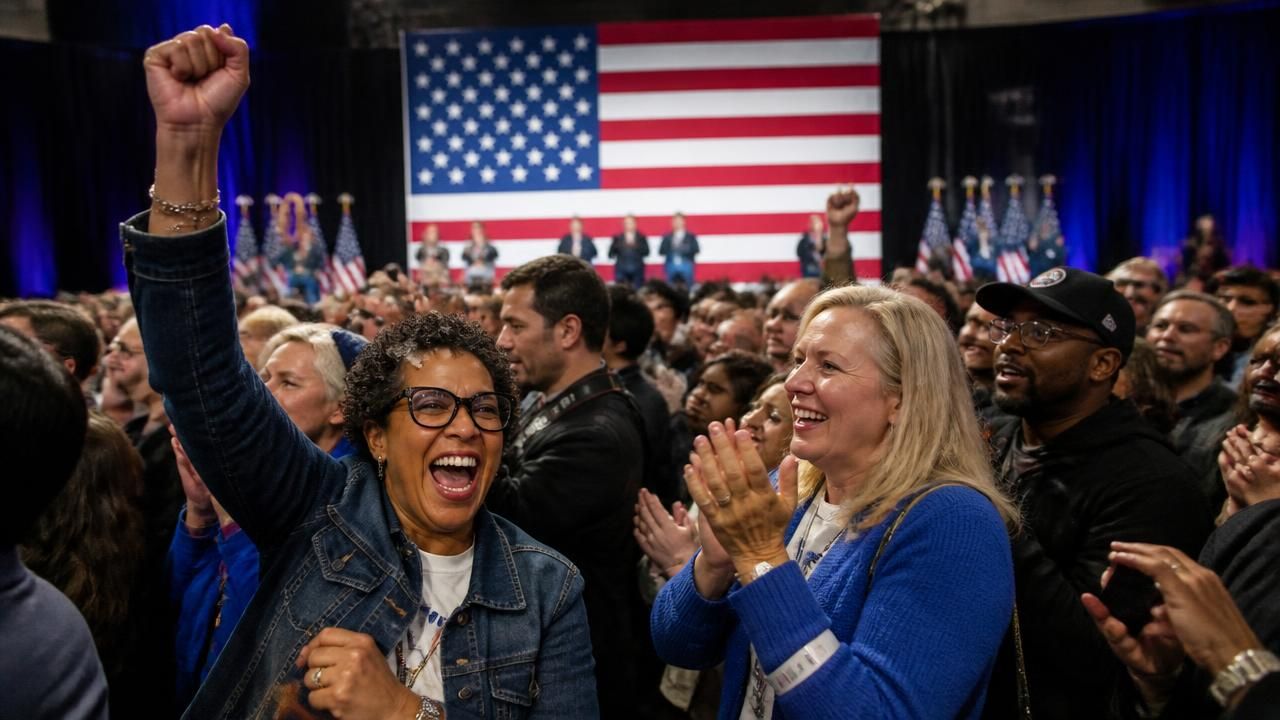
Democrats have won control of Congress in the 2026 midterm elections, a historic power shift that immediately reordered Washington and set up a collision with President Donald Trump over investigations, legislation and the remaining uncalled races. The result, reported in live coverage by NPR, CBS News, MSN, Yahoo and other outlets, gives Democrats the Senate and a congressional majority they have vowed to use as a check on the White House.
“We will use the majority to put up legislative razor wire against this president,” Senate Democratic leader Chuck Schumer said, according to CBS News, which reported that Democrats won Senate control and Schumer vowed “legislative razor wire” against Trump. The New York Times framed the night as Democrats projecting power while Republicans reeled in a reordered Washington, with Democrats promising to use their majority to check the president.
A reordered Washington
The scale of the Democratic victory extends beyond the Senate. DTN reported a historic midterm win for Democrats, including flipping Senate and governor seats. MSN’s live results page said Democrats took back Congress, while CBS News described Republicans grappling with stunning losses. NPR noted that Democrats have regained control of Congress, have a long list of investigations into Trump planned, and that not all races have been called — a crucial caveat because the outstanding contests could affect the size and shape of the Democrats’ majority.
The New York Times reported that Democrats vowed to use their majority to check Trump, a signal that oversight and investigations will be central to the new Congress. NPR’s coverage likewise pointed to a long list of planned investigations, suggesting that the Democratic majority will pursue a confrontational oversight agenda alongside its legislative priorities. The result does not give Democrats the White House, but it gives them subpoena power, committee gavels and the ability to block or shape Republican initiatives.
The Republican reckoning
Republicans are confronting a painful post-election reckoning. CBS News reported that the GOP was grappling with stunning losses, while conservative commentator Ben Shapiro described the outcome in blunt terms. “This is not an evening to remember,” Shapiro said, according to PrimeTimer, calling the midterms a “wipeout for Republicans” and saying there was “no way to sugarcoat that.”
The Iran war emerged as a central explanation and liability. The Hill reported that the midterms forced a reckoning on the Iran war, while the Rocky Mount Telegram reported that Vance blamed the Iran war for GOP midterm losses. That framing reflects a broader Republican debate over whether the party’s losses were driven by foreign policy, Trump’s political standing or local candidate quality. PBS’s Washington Week framed the midterms as a test of Trump’s political power, and the results suggest that test produced a significant rebuke.
The loss also reshapes the next presidential cycle. The Hill reported that the 2028 presidential race starts now, identifying six Democrats who just had a great night. For a party that spent the Trump era out of power in Congress, the midterms have suddenly produced a bench of newly ascendant figures and a fresh set of national expectations.
Races still outstanding
Not every result is final. NPR noted that not all races have been called, and local coverage highlighted several unresolved contests that could shape the final balance of power. In Connecticut, CT Insider reported that Democrats expanded control but key races remained unresolved. In California, Chargers Wire/USA Today provided live results, while the Daily News reported that incumbents cruised in Los Angeles County congressional races — with some glaring exceptions.
In Mississippi, Mississippi Today and The Daily Mississippian reported that voters may not know the outcome of a tight Senate race for a while. The Daily Mississippian noted that there is no recount and no runoff, leaving the final canvass and outstanding ballots to determine the result. In Florida, an MSN analysis argued that Angie Nixon could have won and that national Democrats failed her, a critique that points to internal party debates over resource allocation and candidate support.
Networks also faced the familiar election-night challenge of covering a fluid count. MSN’s coverage included a guide to what to watch for as networks covered midterm election night, while KMBC provided live updates on Election Day. The scattered unresolved races mean the full picture of the Democratic victory — and the exact margins in Congress — may take days or weeks to settle.
Markets and the world are watching
The political earthquake arrived alongside immediate economic and international signals. Stock Market Today reported that the Nasdaq edged higher as U.S. midterm voting began, a reminder that investors were watching the outcome for clues about spending, taxes, regulation and gridlock. Eurasia Review’s analysis noted that the world is watching America’s midterms, arguing that there is a cost either way — a recognition that U.S. foreign policy, trade and alliances could shift depending on the balance of power in Washington.
For Democrats, the victory is both an opportunity and a test. They must now govern with a narrow and still-developing majority, manage internal disputes exposed by races such as Florida’s, and decide how aggressively to confront Trump through investigations. For Republicans, the reckoning is already underway, with finger-pointing over the Iran war, Trump’s political strength and the party’s message. The 2026 midterms have not just changed who controls Congress; they have reset the political landscape heading into 2028.