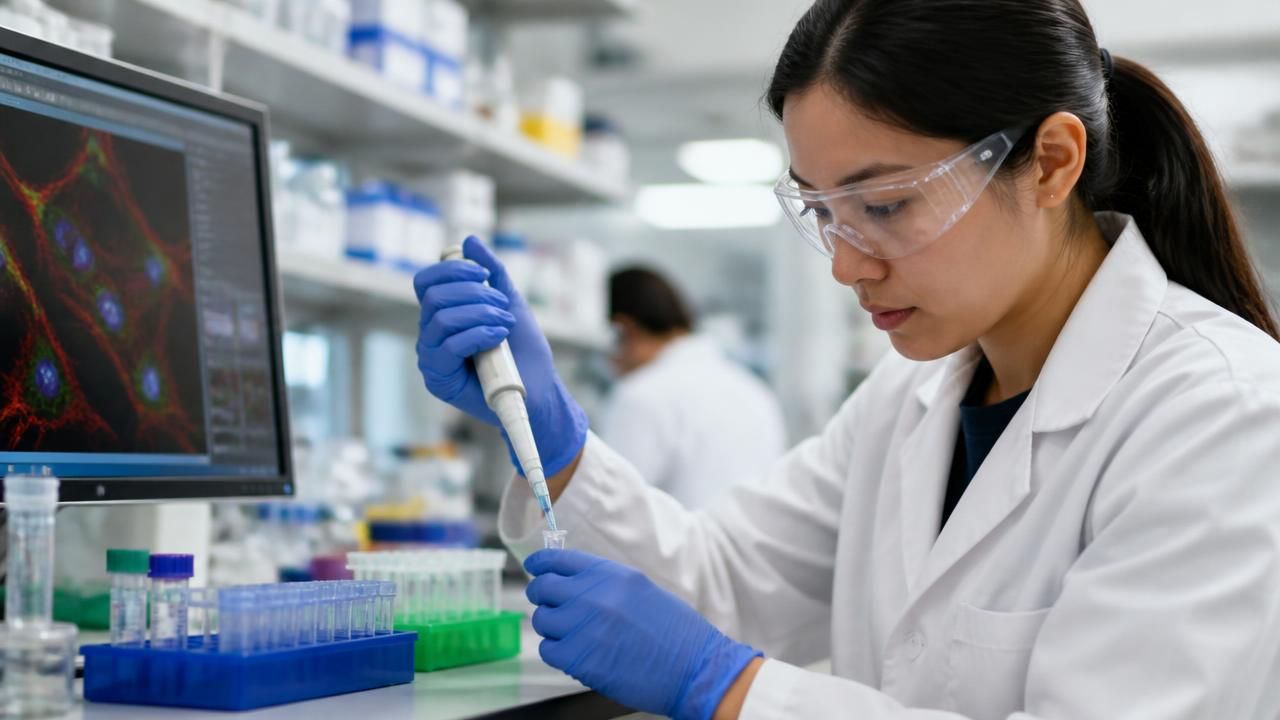
Scientists say they have identified a compound that converts a naturally occurring muscle-repair protein into a more potent form — unofficially dubbed “Super HGF” — that binds far more effectively to its cellular target and resists the kind of chemical wear-and-tear that accumulates with age. The finding, reported by ScienceDaily and amplified across health and lifestyle outlets this week, is being described as an unexpected twist in the long-running effort to understand why muscles lose their capacity to rebuild themselves as people grow older.
According to the research summary, the compound more than doubles the protein's ability to bind to a key receptor on the surface of muscle cells, while simultaneously shielding it from age-related chemical damage that normally degrades its performance. Early experiments in mice are said to support the approach, though the work remains firmly in the preclinical stage.
What Exactly Was Discovered?
Hepatocyte growth factor, or HGF, is a signaling protein that has long been a focus of regenerative biology. In skeletal muscle it acts as a kind of alarm bell: when muscle fibers are injured — through exercise, trauma or disease — HGF is released and rouses dormant stem cells, known as satellite cells, into action. These cells divide, fuse with damaged fibers and help rebuild tissue.
The problem is that this system weakens with age. Satellite cells become less responsive, HGF signaling dulls, and the chemical environment around the tissue grows more hostile, with oxidative stress and other modifications degrading proteins over time. The result is sarcopenia — the progressive loss of muscle mass and strength that affects an estimated 10 to 20 percent of people over 65 and is a major contributor to falls, frailty and loss of independence.
What makes the new finding notable is that it appears to address both halves of that problem at once: potency and durability. Rather than simply adding more HGF, the compound appears to chemically remodel the protein into a version that is both a stronger binder and a tougher molecule.
The compound reportedly more than doubles the protein's ability to bind a key receptor while protecting it from the chemical damage that normally accumulates with age.
The Exercise Connection
Coverage from Men's Journal framed the discovery around a complementary message: that exercise itself remains one of the most reliable levers for preserving muscle repair capacity. That framing reflects a broader consensus in geroscience — that pharmacological interventions, even promising ones, are likely to be most effective alongside physical activity rather than as a replacement for it.
Resistance training is well documented to activate satellite cells and improve muscle protein synthesis, and it improves the local chemical environment by reducing chronic inflammation and oxidative burden. In practical terms, a drug that enhances HGF signaling might be expected to work best in people who are still physically active — or, conversely, to help those who cannot exercise because of injury, illness or frailty.
Why Outlets Told the Story Differently
The same underlying study produced markedly different headlines. ScienceDaily, which published the item, led with the mechanistic angle — a compound, a receptor, a measurable doubling of binding affinity — reflecting its audience of researchers and science-literate readers. Men's Journal pivoted immediately to the practical: muscle aging, and the role of exercise. Aggregators such as MSN leaned into curiosity and intrigue, with headlines emphasizing how “stunned” observers were by an “age-defying” trick.
That gap is familiar in science communication. The same press release can be read as a molecular biology story, a fitness story or a near-miraculous anti-aging story, depending on the outlet's audience and incentives. The risk, researchers have long warned, is that the most breathless framing travels furthest — and “age-defying” is a phrase with a poor track record in the supplement aisle.
Mice Are Not People
The crucial caveat is the one buried in most coverage: the supporting evidence comes from early mouse experiments. Rodent models of muscle aging are imperfect proxies for humans, and a compound that improves receptor binding in a dish or a mouse does not automatically translate into strength gains in older adults.
Any eventual therapy would also face questions of delivery — how to get a stabilized protein to muscle tissue reliably — as well as safety, since HGF signaling is implicated in cell growth and has been studied in the context of cancer. Modulating a powerful growth pathway is not a step taken lightly.
What Comes Next
The immediate next steps are likely to include more detailed characterization of the compound's effects on muscle mass, fiber type and function in aging animals, and investigation of whether the benefit is sustained rather than transient. Only after that would human safety trials be considered — typically a multi-year process.
Still, the direction of travel is significant. Rather than targeting a single downstream symptom, the approach tries to restore the signaling environment that allows muscle to repair itself. If it holds up, that could make it relevant not only to ordinary aging but to conditions involving muscle wasting, including disuse atrophy and cachexia.
For now, the message for readers is the familiar one: the science is genuinely interesting, the results are preliminary, and the most proven intervention for aging muscle remains the one that requires a pair of shoes.