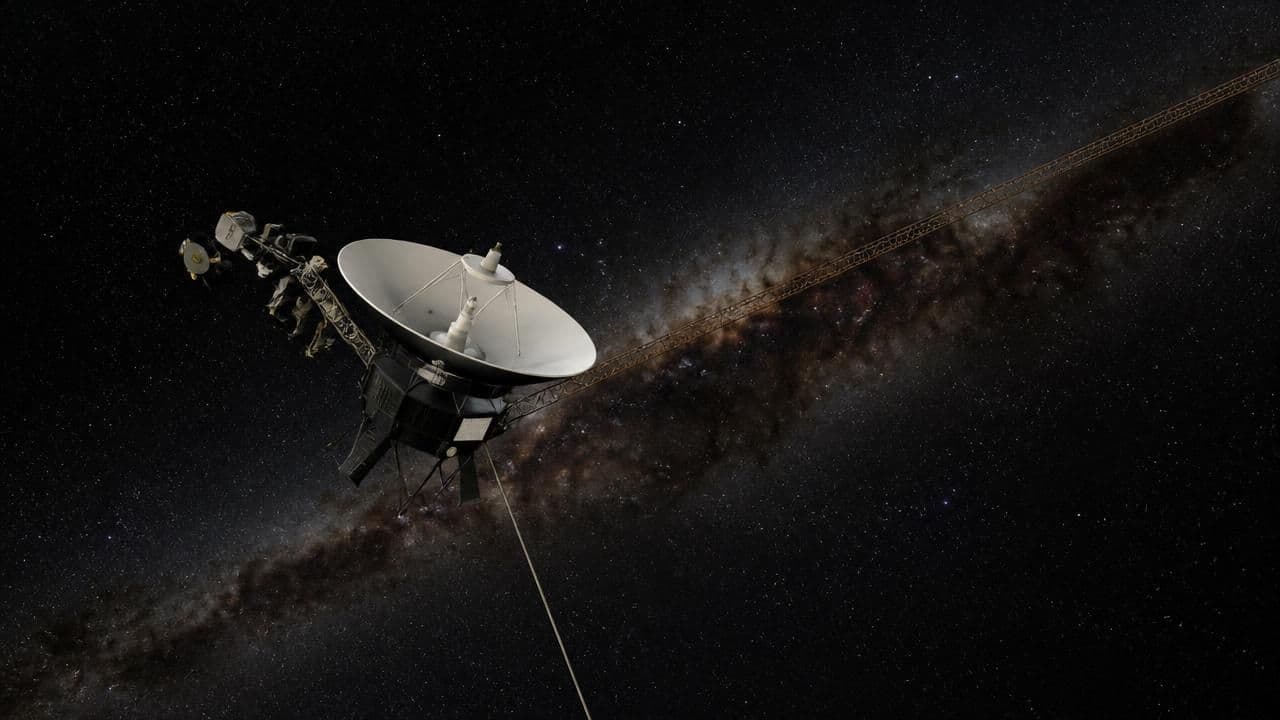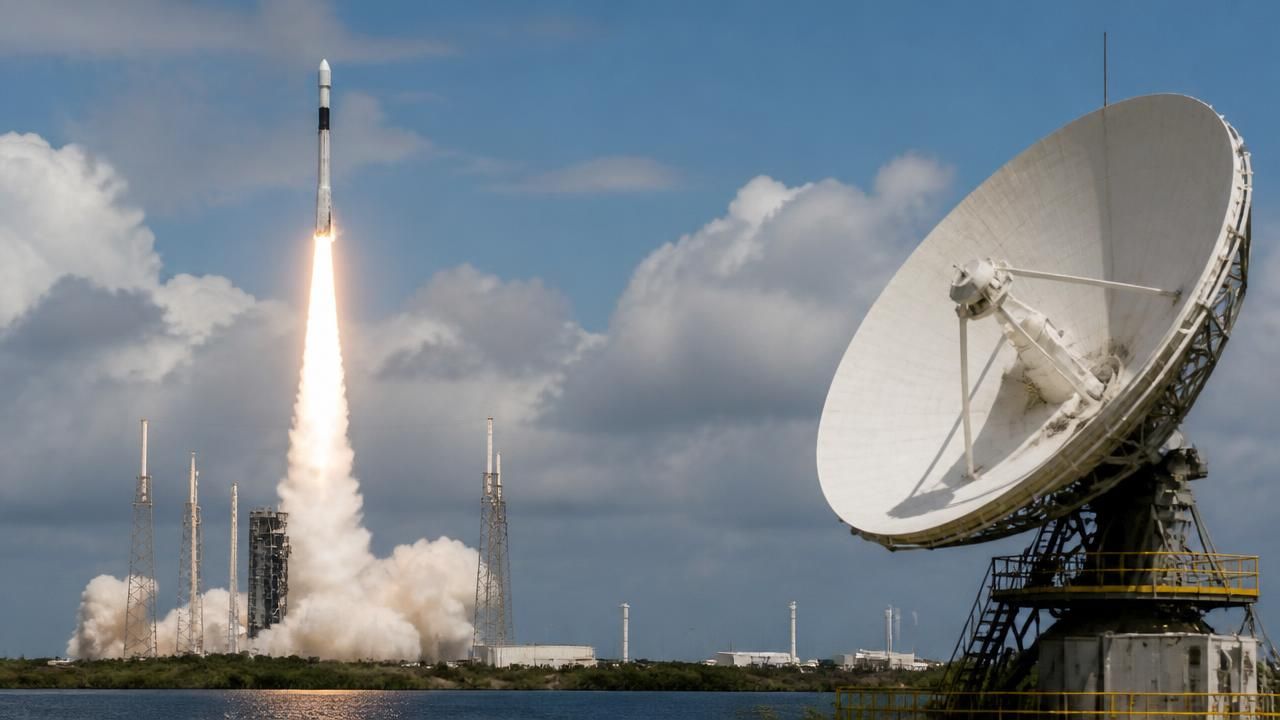
NASA has selected three companies to develop Ka-band space-relay concepts that can serve existing spacecraft without onboard modifications, a move that accelerates the agency’s shift from government-owned relay satellites to commercial services. The awards, announced Wednesday under the Next Space Technologies for Exploration Partnerships-3 Broad Agency Announcement Appendix E, went to Astranis Space Technologies Corp., Global Enterprise Solutions Inc. and Viasat Inc.
The contracts are firm-fixed-price with maximum potential values including all future options: $264.3 million for Astranis, $340.4 million for Global Enterprise Solutions and $460.9 million for Viasat—a combined ceiling of more than $1.06 billion. NASA said initial work runs from Nov. 4 through May 3, 2027, with priced options through 2029 and the possibility of additional funding to move from concept development and risk reduction to an in-orbit flight demonstration.
A commercial answer to an aging relay fleet
The work is facilitated through NASA’s SCaN (Space Communications and Navigation) program’s Communications Services Project and supports the agency’s decision to gradually retire the Tracking and Data Relay Satellite fleet and adopt commercial services for future missions. NASA wants end-to-end solutions that include space, ground, launch, operations and integration elements, with the agency acting as one customer in a broader commercial marketplace.
NASA said the work aims to ensure service continuity for existing spacecraft “without requiring modifications to their onboard systems.”
That requirement is central to the strategy. NASA cannot simply switch off TDRS and expect every mission to adapt; any commercial relay service must interoperate with spacecraft already designed around NASA’s government-owned infrastructure. The agency’s language also signals a cultural shift: rather than owning and operating dedicated relay satellites, NASA would buy capacity and services from companies that serve multiple customers.
Viasat’s Maxwell and Rocket Lab’s manufacturing role
Viasat’s award is the largest of the three, and it comes as the company advances its NASA-funded relay demonstration. SatNews reported that Viasat launched the Rocket Lab-built Maxwell satellite for NASA’s Communications Services Project. The launch gives the program a visible hardware milestone: Maxwell is intended to demonstrate commercial Ka-band relay services in orbit, a step beyond paper concepts. MSN also reported that Rocket Lab set another spacecraft milestone as Viasat advanced an $81 million NASA program.
The $81 million figure and Viasat’s $460.9 million maximum-value award reflect different layers of a phased contracting structure. NASA’s award covers initial concept work and risk reduction, with options that could lead to an in-orbit demonstration; the agency has not committed the full ceiling up front. The Maxwell launch, meanwhile, shows how commercial partners are already flying hardware while NASA evaluates how to fold such services into future mission operations.
Rocket Lab’s role is notable because it positions the company as a merchant supplier to the commercial space-relay market rather than only a launch provider. The company has been expanding into spacecraft manufacturing and components, and the Maxwell work adds a NASA-linked reference customer. For Viasat, the program offers a path to diversify beyond traditional satellite broadband and government communications.
Market reaction and competitive landscape
Investors read the news through public tickers. Stocktwits’ space-race weekly noted that Rocket Lab (RKLB) and Viasat (VSAT) beat SPCX with modest gains, while AST SpaceMobile (ASTS) and Planet Labs (PL) sank deeper. The mixed reaction underscores that NASA’s awards are significant but not a blank check: the contracts are options-heavy, the initial phase is concept and risk reduction, and revenue will arrive over years.
The award also sharpens competition in a nascent market for commercial space communications. NASA’s decision to retire TDRS gradually and adopt commercial services could create a broader customer base for relay providers, including other government agencies, commercial satellite operators and international partners. But the market still faces technical and regulatory questions: Ka-band links require precise pointing, spectrum coordination and ground-segment integration, and NASA must certify that commercial networks meet mission-assurance standards.
Why it matters
For NASA, the bet is about resilience and cost. TDRS has been a workhorse for decades, providing continuous communications for low-Earth-orbit missions, including the International Space Station and science spacecraft. Replacing that capability with commercial services could lower fixed costs and tap private investment, but it also means NASA must become a sophisticated buyer of services rather than an operator of dedicated infrastructure.
For the awardees, NASA’s business is a credibility marker. Astranis has focused on small geostationary satellites; Global Enterprise Solutions is one of the three awardees, though NASA did not detail its technical approach in the announcement; Viasat has deep satellite communications expertise and now a launched demonstration. The contracts give each a chance to prove end-to-end service—not just hardware—as NASA evaluates whether commercial relays can meet the agency’s needs.
The next milestones will be detailed design reviews, risk-reduction tests and, if NASA exercises options, in-orbit demonstrations. With the initial period running to May 2027 and options through 2029, the program is designed to bridge the gap between today’s TDRS-dependent operations and a future in which NASA buys Ka-band relay capacity from commercial providers.