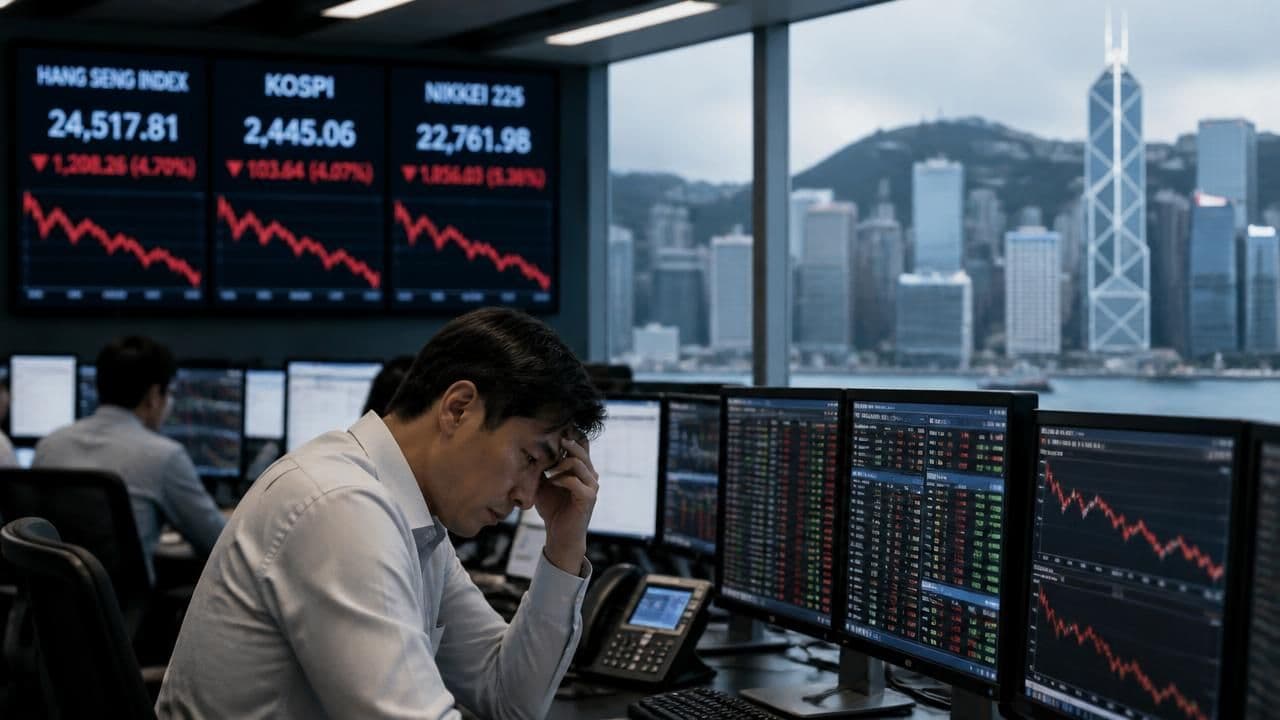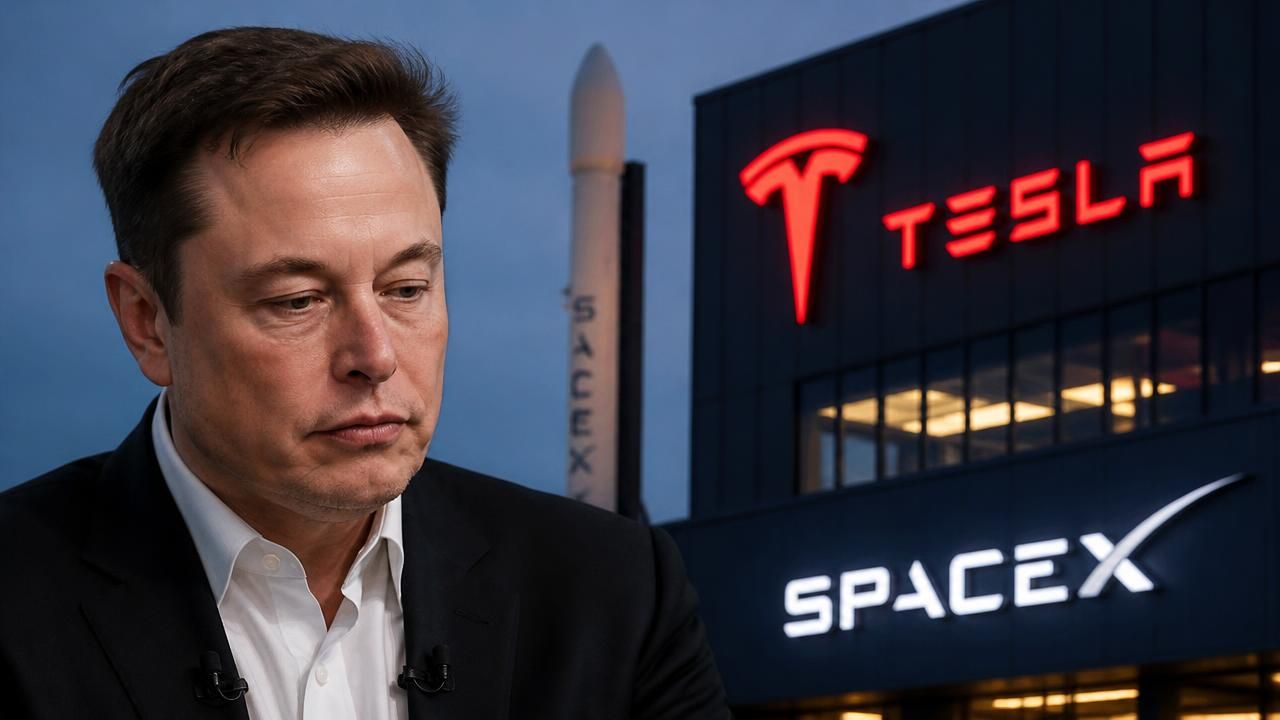
Shares of Elon Musk's two most valuable holdings came under pressure in after-hours trading on election night, as early US midterm results began pointing toward a decisive night for Democrats. Tesla Inc. and Space Exploration Technologies Corp. both fell in post-market trading as investors recalibrated the political risk attached to the world's most prominent corporate backer of Republican candidates.
The move, first reported by Bloomberg Markets, rippled through a broader technology complex. One market wrap described Dow futures falling alongside a tumble in tech names, with CoreWeave, SpaceX and Tesla all cited as casualties of the so-called "blue wave" trade. Yet the picture was not uniformly negative: separate pre-election coverage noted that Dow futures had been rising even as the broader market "still ailed," a reminder that election-night tape is noisy, thin and frequently contradictory.
What actually happened
The mechanics matter more than the headlines. The declines were recorded in after-hours trading, a venue characterized by light volume, wide spreads and outsized moves that often reverse by the following cash session. Bloomberg's framing was measured: as early results pointed toward a Democratic win, shares of "prominent Republican-backer Elon Musk's companies" dropped. Other outlets, aggregated on MSN, adopted a sharper register — one headline declared that "Elon Musk's Companies Take a Beating as Dems Surge on Election Night."
That divergence in tone is itself the story. Financial wire services treated the reaction as a marginal repricing of political risk; consumer-facing aggregators packaged it as a narrative of defeat. Neither framing is wrong, but only one is grounded in the thinnest of liquidity conditions.
Why Musk's companies are politically priced
Tesla and SpaceX are unusual among large-cap industrials in that their valuations have become entangled with the personal politics of their chief executive. Tesla depends heavily on federal electric-vehicle incentives, emissions-credit revenue and regulatory treatment of its driver-assistance software — all levers sensitive to which party controls Congress and the executive branch. SpaceX, meanwhile, derives the bulk of its revenue from NASA, the Department of Defense and the national security apparatus, making it acutely exposed to appropriations cycles and political goodwill.
For years, that exposure cut in Musk's favor. More recently, it has become a two-sided bet: any shift in Washington's posture toward the entrepreneur represents a measurable line item in the risk models of institutional holders.
The merger question hanging over both names
Complicating the election-night reaction is a structural question that has nothing to do with ballots: whether Tesla and SpaceX will ever combine. Prediction markets have reportedly priced odds above 50% for a Tesla-SpaceX merger in early 2027 — an extraordinary level for an event that would rank among the largest corporate combinations in history.
Not everyone is enthusiastic. Investor Gary Black has cautioned Tesla shareholders about merger risks, pointing to the market's reaction to the Marvell-Lumentum deal as an early warning. His argument, in essence: when a high-multiple acquirer absorbs a capital-intensive, lower-margin partner, the combined entity often trades at a discount to the sum of its parts, and shareholders of the acquiring company bear that re-rating.
Black's caution, as reported: the Marvell-Lumentum transaction offers an early warning of how the market may treat a Tesla-SpaceX combination — and Tesla holders should weigh dilution and valuation risk before celebrating the idea.
The logic deserves scrutiny. Marvell's acquisition of Lumentum was an optical-components deal in a cyclical semiconductor market; a Tesla-SpaceX tie-up would fold a rocket and satellite-broadband business into an automaker. But the underlying principle — that conglomerate discounts are real and acquirer shareholders often pay for them — travels well.
The competing narratives
- Bloomberg Markets: A clean political-risk read-through. Democratic momentum equals pressure on Musk-linked equities.
- MSN aggregations: A dramatic, personality-driven frame — "taking a beating" — that emphasizes conflict over mechanics.
- Market wraps: A muddier picture, with Dow futures rising even as tech sold off, suggesting sector rotation rather than a monolithic risk-off move.
- Prediction markets: A forward-looking signal on corporate structure that is largely orthogonal to election results.
What to watch
Three things will determine whether election night's after-hours dip becomes a trend or a footnote. First, the cash session: whether Tesla gives back the losses at the open. Second, the policy calendar: the fate of EV tax credits, emissions rules and NASA/DoD budget lines once the new Congress convenes. Third, the merger chatter: any formal signal from either company's board would dwarf election noise.
For now, the safest reading is the dullest one. Investors marked down politically exposed names on thin volume amid an uncertain vote count, while simultaneously maintaining a live market in a merger that may or may not happen four years from now. In a single night, the market managed to price both a politician and a corporate combination — two bets that, on the evidence available, remain unresolved.