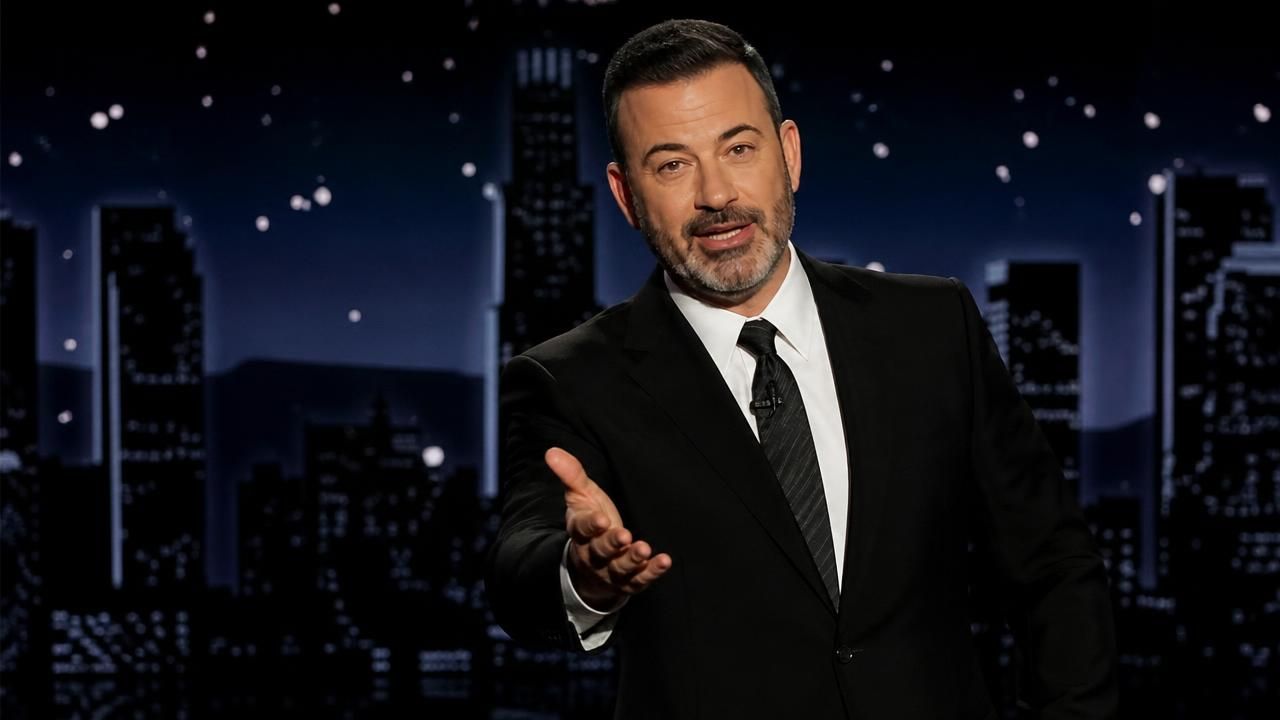
Jimmy Kimmel spent his latest monologue doing what late-night television has done for a decade: turning a presidential moment into a punchline. But the target this time was unusually specific — a speech delivered in front of the Lincoln Memorial Reflecting Pool, which Kimmel recast as the president's "Pettysburg Address."
The pun, a collision of "petty" and "Gettysburg," became the hook for a broadside that moved from the pool's costly renovation to the president's reported frustration over not receiving a Nobel Peace Prize. By the time the bit was over, Kimmel had deployed a blunt three-word label — calling the president a "petty little bitch" — that promptly became the headline across several outlets.
The Setup: A Speech by the Water
According to the New York Times' account, Kimmel opened by mocking the setting itself. "And where better to reassure the public that they are in good hands than in front of a pool you've repeatedly botched to the tune of $16 million?" Kimmel said, referencing the troubled, multi-million-dollar rehabilitation of the Reflecting Pool, a project that has drawn scrutiny over cost overruns and repeated setbacks.
The choice of backdrop was, for the White House, intended as a message of stability ahead of the midterm elections — a stately frame for a closing argument. Kimmel inverted it, treating the pool not as patriotic scenery but as a symbol of mismanagement. "Pettysburg" did double duty: a joke about the location and a verdict on the tone.
“And where better to reassure the public that they are in good hands than in front of a pool you've repeatedly botched to the tune of $16 million?”
— Jimmy Kimmel
The Second Target: The Peace Prize
The monologue's sharper turn came with the Nobel Peace Prize. According to both HuffPost UK and the Daily Mail, Kimmel devoted a substantial portion of the segment to the president's reaction to being passed over for the award, framing the response as a tantrum rather than diplomacy.
HuffPost UK led with the insult directly, headlining that Kimmel called Trump a "petty little bitch" for raging over the snub. The Daily Mail, in a headline visible even though its article page returned an access-denied error, took a similar approach but emphasized the profanity, describing a "foul monologue about president's Nobel Peace Prize tantrum" — an editorial choice that foregrounds language over argument.
MSN's aggregation ran the "Pettysburg Address" framing without the expletive, suggesting how the same seven minutes of television can be packaged as political satire, as culture-war provocation, or as straight news depending on the outlet.
How the Coverage Diverged
- The New York Times focused on the wit — the Reflecting Pool quip and the "Pettysburg" conceit — and treated the segment as a notable late-night intervention before the midterms.
- HuffPost UK led with the insult, centering the president's Nobel frustration and Kimmel's harshest language.
- The Daily Mail stressed the "foul" nature of the monologue and the word "tantrum," emphasizing shock value.
- MSN kept the framing cleaner, highlighting the "Pettysburg Address" joke and its midterm timing.
The divergence matters. Late-night monologues now circulate as primary political content, chopped into clips, quoted in fundraising emails, and cited as evidence of incivility or of accountability depending on the audience. The same joke can be a gaffe, a rallying cry, or a data point.
Context: Late Night as Political Arena
Kimmel's monologue is the latest installment in a long-running, mutually reinforcing feud between the president and network late-night hosts. Trump has repeatedly attacked the genre on social media, and in recent years the White House has suggested that broadcast comedians deserve regulatory scrutiny — an extraordinary escalation in the ordinarily performative relationship between presidents and punchlines. Kimmel, in turn, has made the president a nightly fixture.
There is a substantive story buried under the comedy. The Reflecting Pool renovation has genuinely been a headache: a landmark that has drawn public criticism for its condition, algae, and price tag. A president speaking in front of a troubled national monument invites exactly the symbolism Kimmel exploited. Likewise, the Nobel Peace Prize discussion — fueled by the president's own claims about diplomatic achievements — has become a recurring feature of his public commentary and, by extension, of the commentary about him.
Why It Travels
With midterms approaching, both parties are competing for attention rather than persuasion. A late-night clip reaches audiences far larger than most congressional floor speeches and travels faster than any policy paper. The White House's event was designed to project competence; the resulting dominant image, at least online, was a comedian calling the president petty.
That is not to say the exchange changed minds. Late-night political humor has become increasingly personalized and, critics argue, increasingly partisan — a dynamic that cuts both ways. Audiences who already view the president as undisciplined found confirmation; audiences who view Kimmel as a partisan bully found their own. The middle ground that once made Johnny Carson and even Jay Leno broadly palatable has largely eroded.
What remains is a familiar cycle: the president delivers a speech, a host dismantles it, the clip goes viral, and the response becomes its own story. In the Pettysburg Address, Kimmel found a phrase that captured the mood of the moment — a president seeking solemnity, and a comedian insisting on something smaller.