Apple posts record iPhone quarter without a standard iPhone 18
Apple reported a record-breaking quarter for iPhone sales on Monday even though its September refresh did not include a standard iPhone 18. According to the company's fourth-quarter earnings report, iPhone revenue reached $57.58 billion, a 17 percent increase from the same period a year earlier. The result gave Apple a September-quarter record for its most important product line and underscored how thoroughly the company's fortunes remain tied to premium smartphones.
Apple had a record-breaking quarter for iPhone sales — despite not releasing a standard model during its latest refresh.
The disclosure was covered across outlets with different emphases. The Verge focused on the product puzzle: how Apple set a sales record while skipping the mainstream model that traditionally anchors its fall lineup. MSN framed the results as John Ternus' first Apple earnings, noting that iPhone sales hit a record but that there was also a worry. Another MSN headline emphasized the same central fact — record iPhone sales despite no new standard model — while The Times of India described an iPhone sales record for the September quarter without a standard iPhone 18. Together, the coverage points to a quarter defined less by a single hero device than by pricing, mix and timing.
The Pro-only refresh
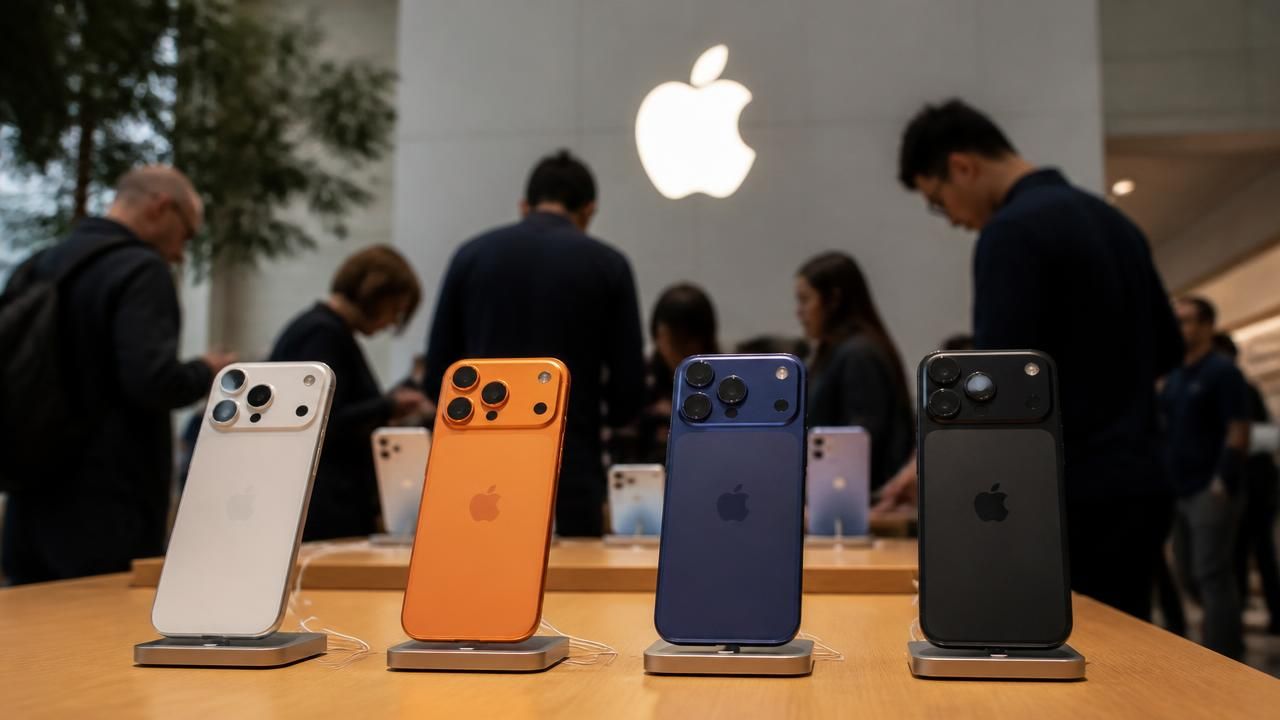
Apple launched its iPhone 18 lineup in September, but the initial wave consisted of the pricier iPhone 18 Pro and iPhone 18 Pro Max. The company did not release a standard iPhone 18 during that refresh, a break from the usual pattern in which a lower-priced mainstream model helps broaden the upgrade pool. Instead, Apple leaned on its highest-end devices and on consumers willing to pay more for premium cameras, displays and performance.
That strategy appears to have worked at the revenue level. The 17 percent year-over-year jump in iPhone revenue suggests that higher average selling prices and a richer Pro mix offset any potential volume weakness from the missing standard model. Apple also raised prices across older models at the same time, a move that can lift revenue from customers who choose previous-generation devices rather than the newest Pro handsets. The combination — a Pro-only launch, higher prices on older inventory and a loyal installed base — produced a record September quarter.
Why the mix matters
For Apple, iPhone revenue is not simply a function of how many phones it sells. It is also a function of which phones people buy. A quarter weighted toward Pro and Pro Max models can generate more dollars per unit, even if overall unit sales are flat or modestly lower. That dynamic helps explain how Apple can post a record without a standard iPhone 18. It also explains why investors and analysts watch average selling prices and product mix as closely as they watch unit shipments.
The approach carries risks. If growth depends too heavily on price increases and premium buyers, Apple may have less room to expand its customer base during a period of longer smartphone upgrade cycles. Rivals continue to crowd the midrange and premium Android market, and regulators in several regions have scrutinized app store and hardware pricing practices. The record quarter is strong evidence of Apple's pricing power, but it does not erase questions about how long that power can be stretched.
The iPhone Duo looms outside the numbers
Apple also used the September period to unveil its first folding phone, the iPhone Duo. The device is significant because it marks Apple's entry into a form factor that competitors have pursued for years. But the earnings report does not include preorder sales for the iPhone Duo, meaning the record quarter was achieved without any contribution from Apple's most closely watched new hardware category. The foldable's commercial performance will show up in future periods, and its reception could shape Apple's product roadmap for years.
That timing matters. The iPhone Duo gives Apple a potential new premium tier and a fresh reason for customers to upgrade. But foldables remain a small share of the overall smartphone market, and their durability, software optimization and price points are still being tested. Apple's decision to enter the category later than some rivals fits its familiar pattern: wait, refine and then market a polished version. The question is whether the Duo can become more than a niche halo product.
Ternus takes the spotlight
The quarter was also notable as John Ternus' first Apple earnings, according to MSN's framing. Ternus, a longtime Apple hardware executive, has been a central figure in the company's product development. Treating the report as his first earnings signals that Apple's leadership transition and product strategy are being watched together. The record iPhone revenue gives him a strong opening data point, but the accompanying worry suggests that the market will not judge the company on revenue alone.
MSN did not elaborate on the specific concern in the excerpt, but the structure of the quarter points to several possible pressures. One is the reliance on Pro models and price hikes rather than a broad-based unit upgrade cycle. Another is the absence of the iPhone Duo from current results, which leaves future growth dependent on an unproven category. A third is the broader device market, where like other device makers Apple is navigating softer demand, longer replacement cycles and intense competition. The record is real, but it is not a guarantee of smooth sailing.
What the record says about Apple
The strongest takeaway is that Apple's iPhone business remains remarkably resilient. A September quarter without a standard iPhone 18 could have been a vulnerability. Instead, it became a demonstration of pricing power and brand strength. The company sold a more expensive mix, raised prices on older models and still set a revenue record. That is a testament to the loyalty of its installed base and the perceived value of its premium devices.
Yet the same result invites scrutiny. A record built on higher prices can be harder to repeat once those price increases are annualized. A record built on Pro buyers may not reach the same broad audience as a launch that includes a mainstream model. And a record that excludes the iPhone Duo leaves the foldable's promise untested. For now, Apple can claim a clear win. The next few quarters will show whether it is a durable strategy or a premium quarter that borrowed from the future.