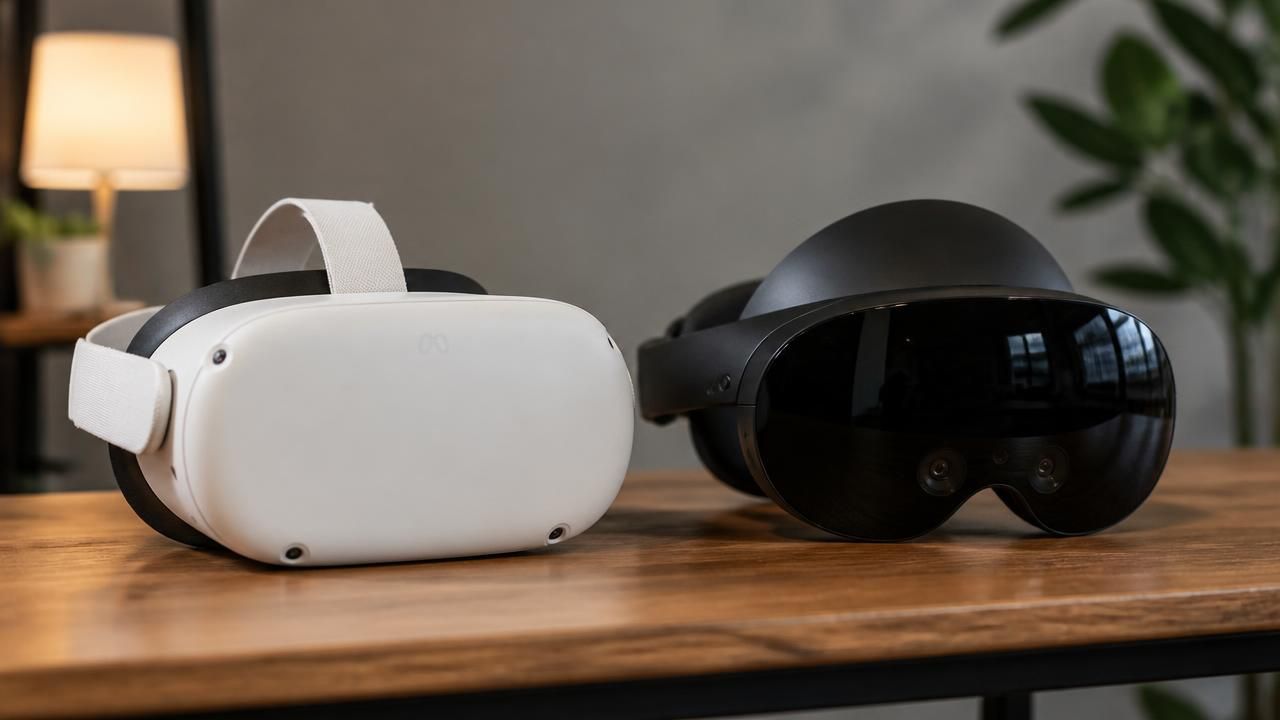
Meta is formally drawing the curtain on the two headsets that defined its first decade in consumer virtual reality. The company confirmed this week that the Quest 2 and Quest Pro will receive their final operating system update — build v213 — by March 2027, closing out a support cycle that began when the Quest 2 launched in October 2020.
The announcement, first reported by The Verge and quickly picked up by outlets including UploadVR, MSN, UA.NEWS and Phandroid, amounts to a staggered retirement rather than a hard cutoff. Security patches and critical bug fixes will continue to ship through the end of 2027, and developers will be able to submit apps supporting the two headsets until December 2027.
The wind-down, step by step
- By March 2027: Final full OS update (v213) is delivered to Quest 2 and Quest Pro.
- Through the end of 2027: Meta continues security patches and critical bug fixes only — no feature updates.
- December 2027: Last date for developers to submit apps that support Quest 2 or Quest Pro.
- Spring 2027: Meta's next-generation VR glasses are expected to launch, per The Verge.
The timing is not accidental. Meta framed the sunset as preparation for its next hardware chapter, describing the Quest 3 and Quest 3S as “now the baseline for Meta VR gamers.” In practice, that sentence is the real headline: everything Meta ships from here is designed against the capabilities of its newer, mixed-reality-capable hardware.
“Quest 2 and Quest Pro laid the fou[ndation]…” Meta said in its announcement, a nod to the unusual role the two devices played — one as the mass-market workhorse, the other as a costly, commercially bruising experiment.
A workhorse and a cautionary tale
The Quest 2 arrived at $299 in 2020 and became the headset that pulled consumer VR out of the enthusiast niche. Meta has never disclosed unit sales, but third-party analysts have long pegged it as the best-selling standalone VR device ever shipped — a position it held through 2023 and into 2024. Its install base is precisely why developers are now being given a two-year runway rather than a sudden cutoff.
The Quest Pro charted a different course. Launched in late 2022 at $1,499 with eye- and face-tracking pitched at enterprise “metaverse” collaborators, it was discounted to $999 within months and never found a mass audience. Its discontinuation as a platform target closes a chapter in which Meta tested whether premium-priced productivity VR could work. The answer, empirically, was no.
What it means for developers
For studios, the announcement sets a hard commercial deadline. Titles built specifically for Quest 2's older chipset and limited passthrough capabilities must be submitted by December 2027, and any live-service game still supporting the device will need a migration plan toward Quest 3-class hardware.
Phandroid's coverage emphasized that framing, urging developers to act soon rather than treating the date as distant. The practical squeeze is familiar from console generations: studios must decide whether to maintain a dual-target build, ship a final Quest 2 patch and move on, or drop the older hardware entirely — each with different consequences for review scores and user goodwill.
UploadVR, which tracks the VR developer ecosystem closely, framed the move as a straightforward “winding down” of support rather than a surprise, reflecting how Meta has sequenced previous platform retirements.
The hardware calendar is moving too
The sunset lands alongside a broader reshuffling of Meta's product timeline. The Gadgeteer reports that the next flagship headset — referred to in coverage as the Quest 4 — has been pushed to 2027, with prototypes under the internal “Pismo” name reportedly cancelled. Those claims have not been confirmed by Meta, and should be treated as reported rather than established fact.
What Meta has said on the record is that new VR glasses are slated for spring 2027 — hardware that will presumably carry forward the Horizon OS lineage that v213 concludes for older devices.
Why it matters
Platform retirements are the clearest signal a hardware maker can send about where it believes the market is heading. By declaring the Quest 3 and 3S the baseline, Meta is telling developers that mixed reality, color passthrough and the newer Snapdragon silicon are now the assumed floor — not the ceiling.
It also resets expectations for the installed base. For years, Quest 2 compatibility was the cheapest way to reach the largest possible audience. From 2028 onward, that audience will be defined by hardware that costs more and does more, which raises the stakes on Meta's ability to sell the next generation at a price consumers will accept.
For owners, the near-term impact is modest: existing headsets will keep working, apps will keep launching, and security updates continue into 2028. But the message is unambiguous. The headset that made VR mainstream has been given an end date — and Meta is already building for what replaces it.