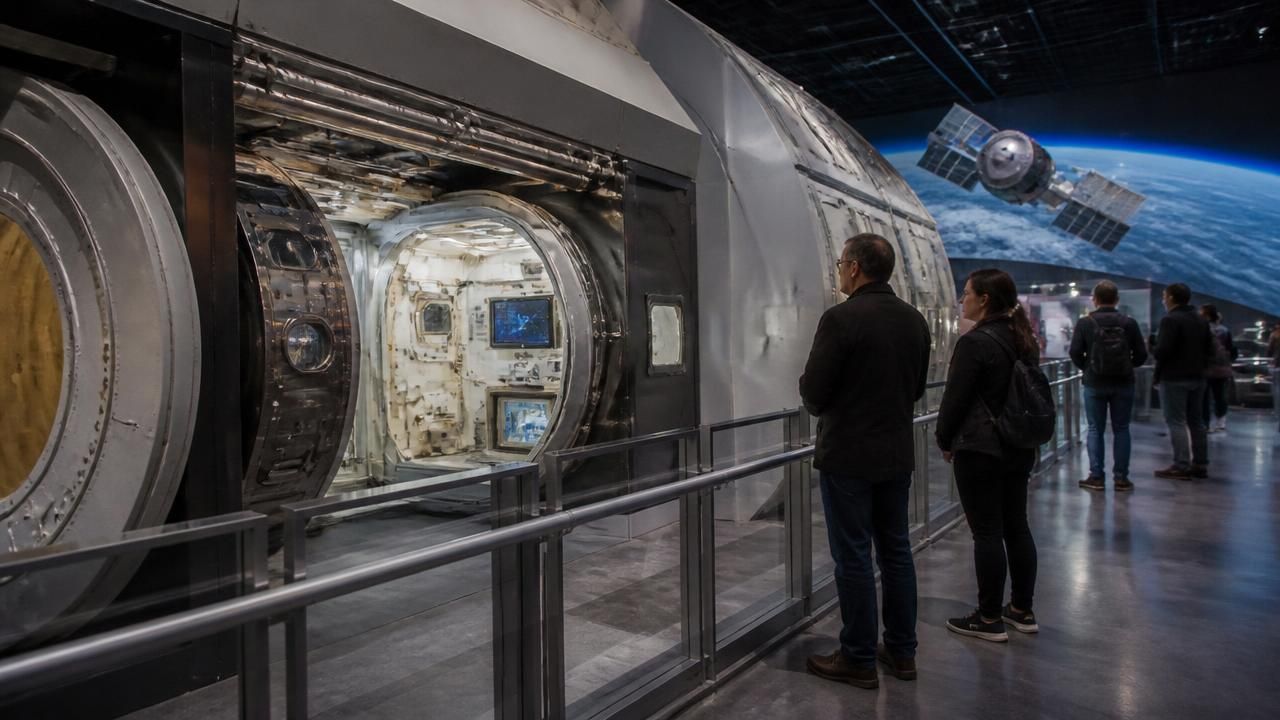
After seven years of construction, reinstallation and curatorial rethinking, the Smithsonian’s National Air and Space Museum has completed the renovation of its flagship building in Washington, D.C., a project that cost nearly $1 billion and now culminates in the opening of its final two galleries. The last of those spaces, the spaceflight exhibition At Home in Space, debuted on Oct. 30, according to Ars Technica, which was given a virtual tour of the gallery.
The Smithsonian’s own announcements framed the moment as the completion of a multi-year transformation. Two official release titles describe the opening as completing the renovation and as the museum’s “seven-year transformation.” Local coverage from WUSA9 similarly emphasized that the Air and Space Museum was opening its final two galleries after years of renovation, while a syndicated MSN headline put the news in simpler terms: “National Air and Space Museum launches 2 new exhibits.”
A gallery about living in orbit
At Home in Space is not a conventional rockets-and-heroes exhibit. According to Ars Technica, curator Jennifer Levasseur guided a virtual tour and described the gallery as the story of long-duration spaceflight in recent decades. “Welcome to ‘At Home in Space!’” Levasseur said. “This is the story of long-duration spaceflight in the last few decades. We generally call it ‘reaching orbit.’”
The exhibition’s title and framing point to a shift in how the museum presents space exploration: from episodic missions to the sustained human presence in low Earth orbit, and from national competition to the routines of living and working in space. The Smithsonian described the gallery as devoted to “establishing a spacefaring civilization,” a phrase that places the International Space Station era, commercial spaceflight and future long-duration missions in a longer historical arc.
Why the renovation mattered
The National Air and Space Museum is one of the Smithsonian’s most visible public institutions, and its flagship building has long been a gateway for visitors to aviation and space history. The renovation was not merely cosmetic: it involved years of work and a budget of nearly $1 billion, according to Ars Technica, and it has been rolled out gallery by gallery. The opening of the final two galleries means the building can now be experienced as a completed project rather than a work in progress.
That matters for visitors, educators and the Smithsonian’s broader mission. Museums shape public understanding of technology and science, and the Air and Space Museum’s treatment of spaceflight has to balance historic artifacts with contemporary developments. By ending the renovation with an exhibition about long-duration spaceflight, the museum is signaling that the story of space exploration is no longer only about reaching the Moon or winning a Cold War race. It is also about the systems, habits and infrastructure that make ordinary life possible off Earth.
Different headlines, one milestone
The coverage reflected different audiences. The Smithsonian’s institutional releases emphasized completion, transformation and the opening of the final two galleries. Ars Technica focused on the curatorial argument inside At Home in Space, including Levasseur’s explanation of long-duration spaceflight. WUSA9’s headline stressed the local visitor angle — the final two galleries after years of renovation — while MSN’s headline reduced the news to the launch of two new exhibits. Those are not conflicting accounts so much as different entry points into the same event.
The differences matter because they show how a major cultural project is communicated. For the Smithsonian, the story is institutional: a seven-year project, a nearly $1 billion investment and the completion of a flagship renovation. For science and technology outlets, the story is intellectual: what the new gallery says about the past, present and future of living in space. For local and syndicated outlets, the story is practical: what is new for visitors and when they can see it.
The bigger picture
The opening comes at a moment when spaceflight is being reshaped by commercial companies, renewed government lunar plans and a growing debate about how far human settlement should extend. A gallery called At Home in Space inevitably raises questions about what “home” means beyond Earth: Is it a laboratory, a workplace, a destination or a permanent community? The exhibition does not need to answer those questions to be useful. Its role is to give visitors a framework for thinking about them.
- What happened: The Smithsonian’s National Air and Space Museum opened its final two galleries, including At Home in Space.
- Where: The museum’s flagship building in Washington, D.C.
- When: The spaceflight gallery debuted on Oct. 30, capping a seven-year renovation.
- How much: Nearly $1 billion.
- Why it matters: The museum now presents long-duration spaceflight as part of a broader story about establishing a spacefaring civilization.
For visitors, the practical effect is straightforward: a museum that has been under renovation for years is now fully open in its renewed form. For the Smithsonian, the completion is a reputational and institutional milestone. For the public understanding of space, the deeper effect may be the framing itself. By treating long-duration spaceflight as a story of “reaching orbit” and making a home there, the museum moves the narrative beyond firsts and toward the less dramatic, more consequential work of sustaining human presence in space.