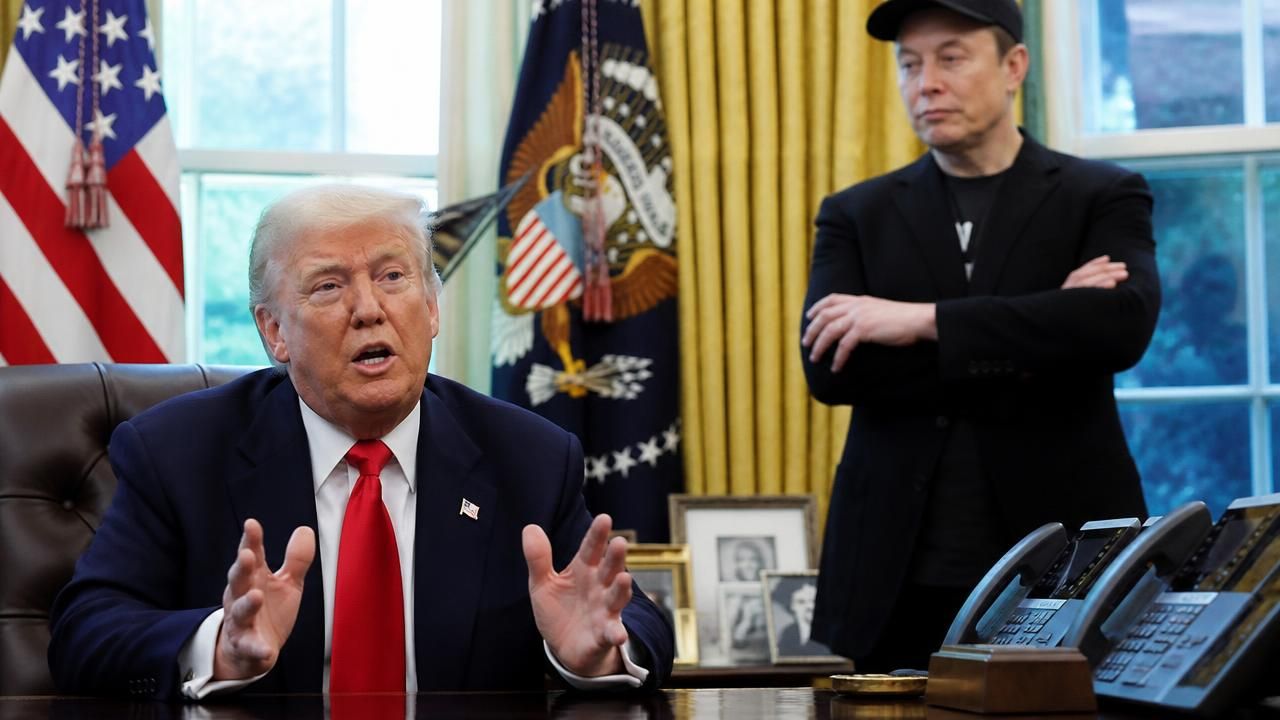
President Trump said he is prepared to issue preemptive pardons to members of his staff, allies and Elon Musk should Democrats win control of Congress in the 2026 midterms, an extraordinary public acknowledgment that his administration is already bracing for the possibility of Democratic-led investigations.
“We just have to protect those people,” Trump said in an interview when asked about the prospect of inquiries into allies and administration officials, according to The New York Times. The remarks, first reported as an exclusive by The New York Post and amplified across a wave of aggregators including MSN, Hoodline and People, mark the first time the president has explicitly floated using the clemency power as a defensive tool before any charges have been filed.
What Trump Actually Said
Across the various accounts, the core of the president's message was consistent: if Democrats take the House or Senate next November, he would consider pardoning officials and outside allies who might otherwise face subpoenas, hearings or criminal referrals. Trump singled out Musk — the Tesla and SpaceX chief executive who spent heavily on the president's behalf in 2024 and who has led the so-called Department of Government Optimization, more commonly known as DOGE — as someone he would be willing to protect.
The president also used the interview to tease vetoes, framing the prospect of a divided government as a fight he intends to win rather than a gridlock scenario to be managed. That pairing of clemency threats with veto threats is unusual in its bluntness, and it reflects a White House already thinking past the midterms to the possibility of a hostile committee gavel.
“We just have to protect those people.”
Why Musk Is at the Center of the Story
The emphasis on Musk is not incidental. The billionaire's role in the administration has been among the most scrutinized of the second term: his team's work at DOGE touched federal agencies, contracts and personnel in ways that have already generated litigation and oversight demands from Democratic lawmakers. His web of companies — SpaceX, Tesla, Starlink, xAI and others — holds or depends upon billions of dollars in federal contracts, creating a dense set of potential conflicts that Democratic committee chairs have signaled they intend to probe.
The framing across outlets varied sharply. The New York Times led with the constitutional and institutional stakes, treating the comments as a disclosure about the president's intentions toward the rule of law. The New York Post presented them as a straightforward, exclusive expression of loyalty from a president to his allies. Tabloid and aggregator coverage — People, Hoodline and a cluster of MSN syndications — foregrounded the name recognition of Musk, with headlines such as “Trump Says He Might Pardon Musk If Democrats Win” and “Trump vows to protect Elon Musk if Dems take back Congress.” The substance was identical; the framing ranged from constitutional alarm to celebrity-adjacent political gossip.
The Strange and Shallow History of Preemptive Pardons
Preemptive pardons are rare but not unprecedented. Gerald Ford's 1974 pardon of Richard Nixon covered offenses that had not been charged, a decision that remains the most cited example. More recently, President Biden issued a series of preemptive pardons in his final hours in office — to family members and to public officials including Dr. Anthony Fauci and members of the House committee that investigated January 6 — arguing that they could face unjustified prosecution. Critics in both parties objected at the time; the precedent, once established, has proven convenient for whoever holds the pen.
Trump has his own history with the power: he issued sweeping pardons and commutations for defendants in the January 6 cases on his first day back in office, and has used clemency repeatedly to reward political allies.
Legal Questions and Political Risks
Legal scholars have long debated how broad a preemptive pardon can be and whether it extends to state crimes, which the president cannot reach. A pardon does not erase the underlying conduct, and recipients historically lose the Fifth Amendment right against self-incrimination on the pardoned matters — meaning a pardoned witness could be compelled to testify about others. That cuts both ways: a preemptive pardon may shield an aide from prosecution while making that aide easier to force into a hearing room.
Politically, the move is a double-edged sword. For Trump's base, the comments amount to a promise of loyalty to people facing what it views as partisan persecution. For Democrats and many centrist voters, a president openly promising pardons before any investigation begins looks like an admission that there is something to investigate — and hands campaign ad material to candidates running against his administration.
What to Watch
- Whether the White House formally names any aides or allies who would be covered by a future pardon.
- How Democratic congressional candidates respond on the campaign trail, particularly in competitive districts where oversight and corruption messaging resonates.
- Whether Republican members of Congress echo the president's framing or distance themselves from explicit clemency talk.
- The scope of Musk's federal contracts, which will likely be the first target of any Democratic committee.
For now, the story is less about a pardon list than about a governing posture: an administration that assumes it will be investigated, and a president who says he is ready for it.