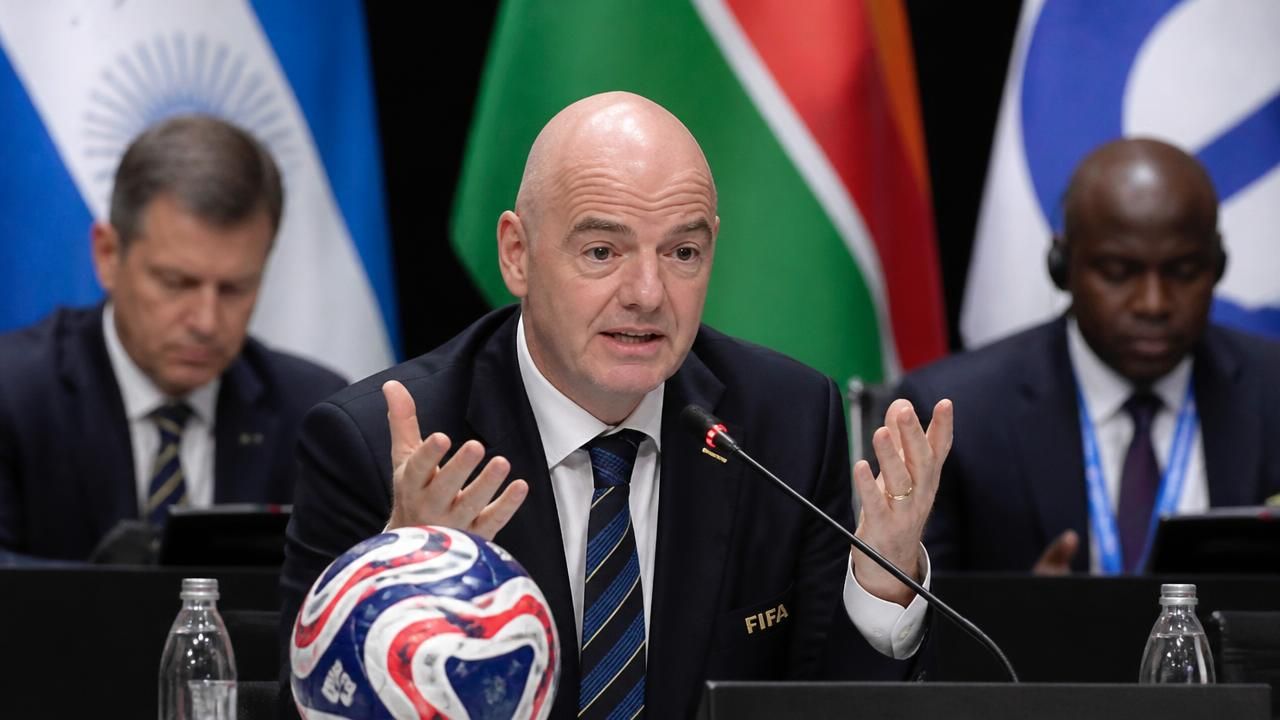
FIFA has told members of its governing Council that they will be granted access to documents relating to Gianni Infantino's failed plan to sell off stakes in the World Cup to private investors, according to the BBC, Reuters and The New York Times — a concession that came as the FIFA president faced his critics at a tense Council meeting and apologised for the furore the proposal provoked.
The move follows a formal request from UEFA, European football's governing body, which had emerged as the most vocal opponent of a plan that member associations say was drawn up with almost no consultation. According to the BBC, the FIFA Council was informed that members would be able to view some of the papers connected to the aborted transaction, ending — at least in part — a standoff that has dominated the organisation's internal politics for weeks.
A deal conceived in secret, abandoned in public
At the centre of the row is a proposal to create a separate commercial vehicle holding the rights to FIFA's flagship tournament and to sell a minority stake in that entity to outside investors. The idea was pitched as a way to unlock long-term capital and guarantee revenue far beyond the next cycle of broadcast and sponsorship deals. The 2026 World Cup, co-hosted by the United States, Canada and Mexico, is expected to be the most lucrative in the tournament's history, and any structure that pledges a share of future earnings to private backers would bind FIFA for decades.
Critics inside the governing body saw something else: a strategic asset being pledged to financiers without a mandate, and a decision taken by a small circle around the president rather than through FIFA's own committees. UEFA's opposition hardened as the details became public, and the plan was ultimately scrapped. But the argument did not end there. It moved on to who knew what, when, and who would be allowed to see the paperwork.
An apology — and an unresolved paper trail
At the Council meeting, Infantino apologised for the turmoil, pledged a "culture of dialogue" with member associations and acknowledged that the episode had damaged trust, according to reports from Fox59, News4JAX and the Journal Gazette. It was a striking admission from a president who has generally treated criticism as noise to be managed rather than answered.
Infantino told the meeting he wanted to build a "culture of dialogue" with FIFA's members, conceding that the handling of the sell-off proposal had caused damage the organisation now needed to repair.
Not everyone left satisfied. SFGate reported that the meeting, billed as a showdown, ended with critics of the president still unhappy, suggesting that an apology without a full accounting may not be enough to close the matter.
Two versions of the same story
The coverage itself reveals how contested the facts remain. The wire services and the BBC framed the story as a concession: FIFA yielding to pressure and releasing documents. UK-based reporting, by contrast, led with the accusation. MSN carried the headline that FIFA was "still refusing to share World Cup sell-off papers," attributed to the chair of the English Football Association — a direct contradiction of the document-access agreement reported elsewhere.
The most likely reading is that both things are partly true, and that the dispute is now about scope rather than principle. Access to "some documents" is not the same as full disclosure; redactions, confidentiality clauses covering prospective investors and the sheer volume of material can turn transparency into a negotiation of its own. For a member association seeking accountability, a controlled viewing of selected files is a very different proposition from a public release.
- The concession: Council members will be able to view documents tied to the abandoned private investment plan, following a UEFA request.
- The apology: Infantino expressed regret for the uproar and promised a more consultative style of leadership.
- The sticking point: The FA chair has publicly maintained that FIFA is still withholding papers, indicating that the terms of access remain unresolved.
- The stakes: Any future commercial structure for the World Cup would commit revenue streams for a generation.
Why it matters beyond FIFA
Football politics has been here before. The corruption crisis of 2015 that brought down Sepp Blatter's presidency was, at its core, a governance failure: decisions taken in closed rooms, with too little oversight and too much money at stake. Infantino was elected promising a break with that culture, and the sell-off episode has allowed critics to argue that the change was stylistic rather than structural.
The practical stakes are considerable. FIFA distributes billions of dollars to its 211 member associations each cycle, and many smaller federations depend on those payments. A president who can quietly restructure the financing of the World Cup without consulting the Council is a president with significant leverage over the associations that elect him. That explains why the demand for documents has become a proxy for a larger argument about who controls FIFA.
The next phase will be determined by what the papers actually show, and by whether Council members treat the disclosure as a settlement or as the opening of an inquiry. UEFA, whose clubs and leagues generate much of the value that FIFA sells, has made clear it intends to keep pressing. Infantino's promise of dialogue will be tested not by the apology but by whether the documents arrive complete — and whether the next big idea is discussed with his members before it is discussed with investors.