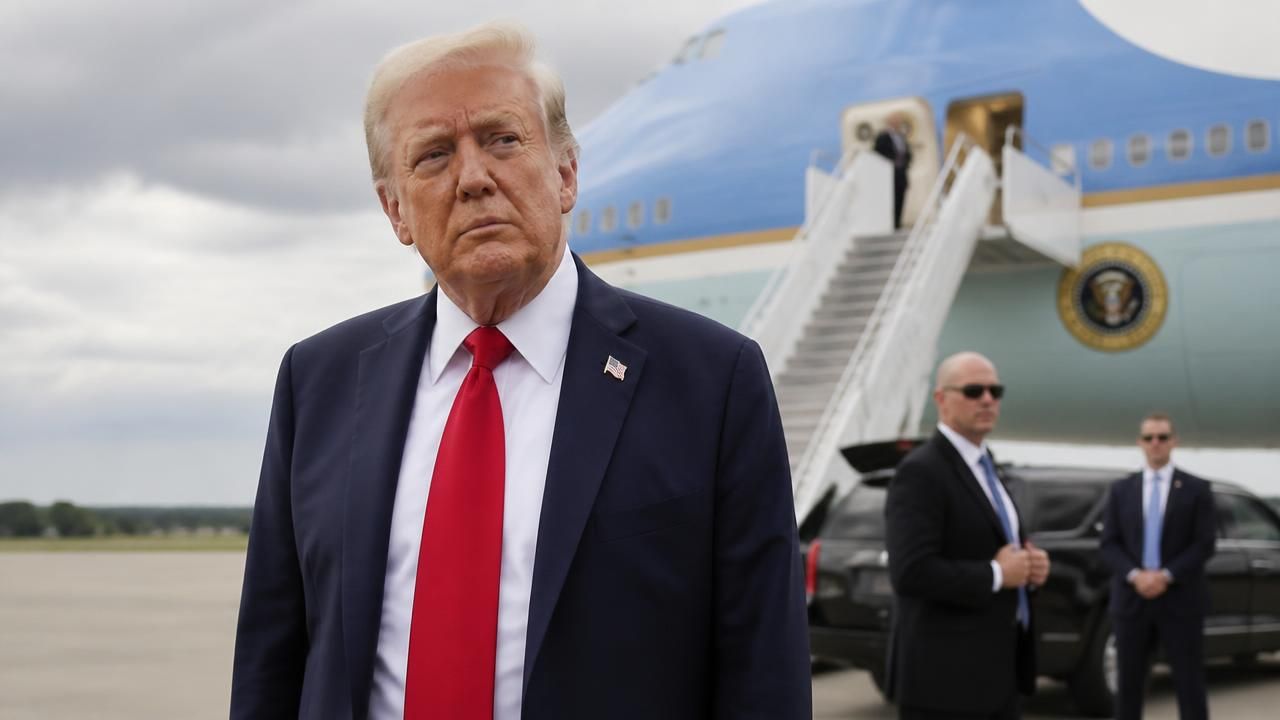
With roughly two weeks until voters cast ballots in the midterm elections, President Trump is entering the final stretch of the campaign in an increasingly defensive posture — buffeted by new polling that shows his standing with the public at its weakest point of his presidency, by fresh signs of internal disorder in the West Wing, and by a Republican Party openly debating whether his involvement helps or hurts its candidates.
The converging storylines, reported across outlets including The New York Times, CNN, NBC News, CNBC and USA Today, paint a portrait of a White House operating under siege conditions as it tries to stave off the kind of midterm rebuke that has historically punished the party holding the presidency.
A polling picture that keeps darkening
The most concrete marker of trouble arrived in the form of new survey data. The New York Times reported that Trump's approval rating had hit a new low two weeks before the midterms, while a CNBC survey — flagged in coverage aggregated by MSN — found his approval on the economy, long billed as his strongest suit, at an all-time low.
That economic finding is especially significant because it undercuts the central argument of the president's closing message. For much of his tenure, Trump's advisers have pointed to consumer sentiment and stock market performance as evidence that his stewardship of the economy justified another two years of unified Republican control. A erosion of confidence on that specific metric removes what strategists have described as his most durable shield.
The broader public mood appears no more forgiving. One poll described Americans as "anxious, pessimistic and deeply unhappy with Trump" heading into the election — a combination that is historically toxic for an incumbent party, because it fuses personal disapproval with a generalized sense of national drift.
Inside a White House under strain
The New York Times reported that the White House has been "rocked by turnover and anxiety over the midterms," with the president tightening his inner circle, lashing out at critics, holding meandering rallies, and consuming a steady diet of news clips and what one aide described dismissively as "A.I. slop" — a reference to algorithmically generated or synthetic political content.
"As Trump faces down the midterms, a grim mood takes over the White House."
Separately, MSN reported that a "power struggle" had erupted inside the administration as midterm losses loom — a dynamic familiar to veterans of previous administrations, in which internal factions begin positioning for influence the moment external fortunes sour.
The portrait matters beyond palace intrigue. Midterm campaigns are, above all, exercises in message discipline, and a president described by his own aides as combative, insular and distracted is a president whose closing argument risks being drowned out by his own improvisations.
The warning that frames the final stretch
CNN, in an analysis headlined "Why Trump's latest election warning is impossible to ignore," argued that the president's recent rhetoric about the integrity of the election carries particular weight this cycle — not merely as a closing message, but as a preview of how he may respond to an unfavorable result.
That framing reflects a shift in how much of the press is covering the story. Where earlier coverage centered on the horse race — which chamber might flip, which incumbents were vulnerable — recent reporting has increasingly focused on the institutional stakes: whether a president who questions electoral outcomes in advance will accept them afterward, and what that means for the legitimacy of the results in the eyes of his supporters.
CNN's framing is echoed in its accompanying analysis declaring that conditions are "getting no better for Trump one week from midterms" — a judgment that treats the race less as a competition over policy than as a referendum on the president himself.
A party divided over its own standard-bearer
USA Today's coverage posed the question plainly: is Trump doing more harm than good for the GOP in the midterm homestretch? It is a question Republican strategists have answered differently depending on which district they are defending. In safely red territory, the president remains a fundraising draw and a turnout engine. In the suburban battlegrounds that decide majorities, his approval numbers are a liability that candidates have spent months trying to manage.
The president, for his part, has opted for the opposite of distance. NBC News reported that he held rallies in Montana and Arizona as part of a Western midterm tour — a schedule that reflects both his preference for large-scale events and his belief that personal campaigning can move voters his party's institutional messaging cannot reach.
Historical headwinds
The structural math has never favored the party in power. Since the modern midterm era began, the president's party has lost House seats in nearly every election cycle, with rare exceptions following national crises. Presidents from both parties have seen their approval sag in the second year of their term, and the 2018 and 2022 cycles both demonstrated how sharply a president's standing can shape turnout on the other side.
What is different this cycle is the volume of the signal. Turnover, internal power struggles, depressed economic confidence and a closing argument focused on the legitimacy of the election itself are converging at once — a combination that gives both parties a clear, if opposing, story to tell in the final fortnight.
What to watch
- Turnout among independents and suburban voters, the bloc most responsive to approval-rating erosion.
- Whether the economy remains a Republican talking point if confidence numbers keep sliding.
- The president's post-election posture, which CNN and others now treat as a first-order story rather than a hypothetical.
- Staffing moves inside the White House, where a power struggle is already underway.
For now, the president's advisers are betting that rallies and a tightening inner circle can replicate the coalition that put him in office. The polls, the mood inside the building, and his own party's nervousness suggest that bet is riskier than it has ever been.