Researchers have built and successfully tested a three-dimensional thermal cloak that can conceal complex objects from infrared cameras while simultaneously shielding them from extreme heat and cold — a feat that has eluded engineers for more than a decade of work on two-dimensional thermal cloaking.
The work, reported by a University of Illinois team and publicized this week through Science Daily and other outlets, marks the first demonstration of a thermal cloak that works in three dimensions, meaning it can hide an object from thermal imaging from virtually any viewing angle rather than only along a single plane.
Redirecting heat, not blocking it
The device's central trick is counterintuitive. Conventional insulation — think of a foam cup or a firefighter's blanket — works by resisting the flow of heat. A thermal cloak does something fundamentally different: it takes the heat that would otherwise strike an object and steers it smoothly around the object and out the other side, so that the heat never appears to have encountered anything at all.
That distinction matters for two reasons. First, it means the object's thermal signature can be suppressed, since an infrared camera detects the temperature contrast between an object and its surroundings. Second, because the heat is not accumulating in a barrier but flowing around the target, the cloaked object can be protected from temperature extremes without the bulk and weight that conventional insulation demands.
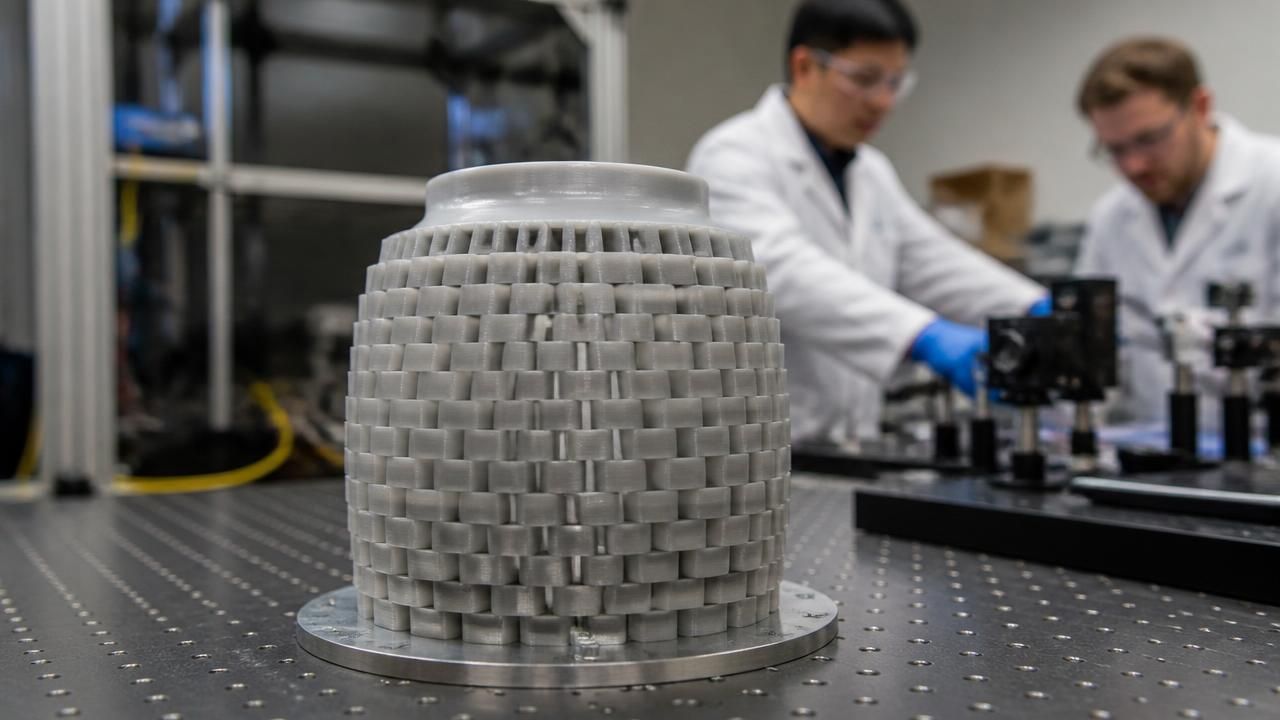
Instead of blocking heat, the device guides it around an object, making the object appear invisible to thermal imaging from virtually any direction.
The cloak was fabricated using 3D-printing techniques, which is significant in itself. Thermal metamaterials have historically required painstaking, expensive microfabrication. Additive manufacturing suggests the designs could eventually be scaled, customized and produced at practical cost — the reason several outlets led their coverage with the 3D-printing angle rather than the physics.
Why three dimensions is the hard part
Thermal cloaking is a descendant of the broader field of transformation optics, which in 2006 produced the first theoretical blueprints for invisibility cloaks that bend electromagnetic waves around a region of space. Researchers soon realized the underlying mathematics — coordinate transformations that compress a region of space into a thin shell — applied just as well to heat diffusion as to light.
By the early 2010s, teams had demonstrated two-dimensional thermal cloaks: flat, ring-shaped structures that could hide a disk from heat flowing across a surface. Those proofs of concept were widely covered but limited. A 2D cloak only works for heat moving in a plane and only for an observer looking down at that plane. Real-world objects — a component inside a server rack, a drone in flight, a battery pack — are three-dimensional, and so are the heat flows and the cameras that observe them.
Extending the design to three dimensions requires a material whose thermal conductivity varies continuously in every direction, with anisotropic properties tuned point by point through the cloak's volume. That is a demanding materials problem, and it is why the Illinois demonstration is being described as a first.
Where it could matter
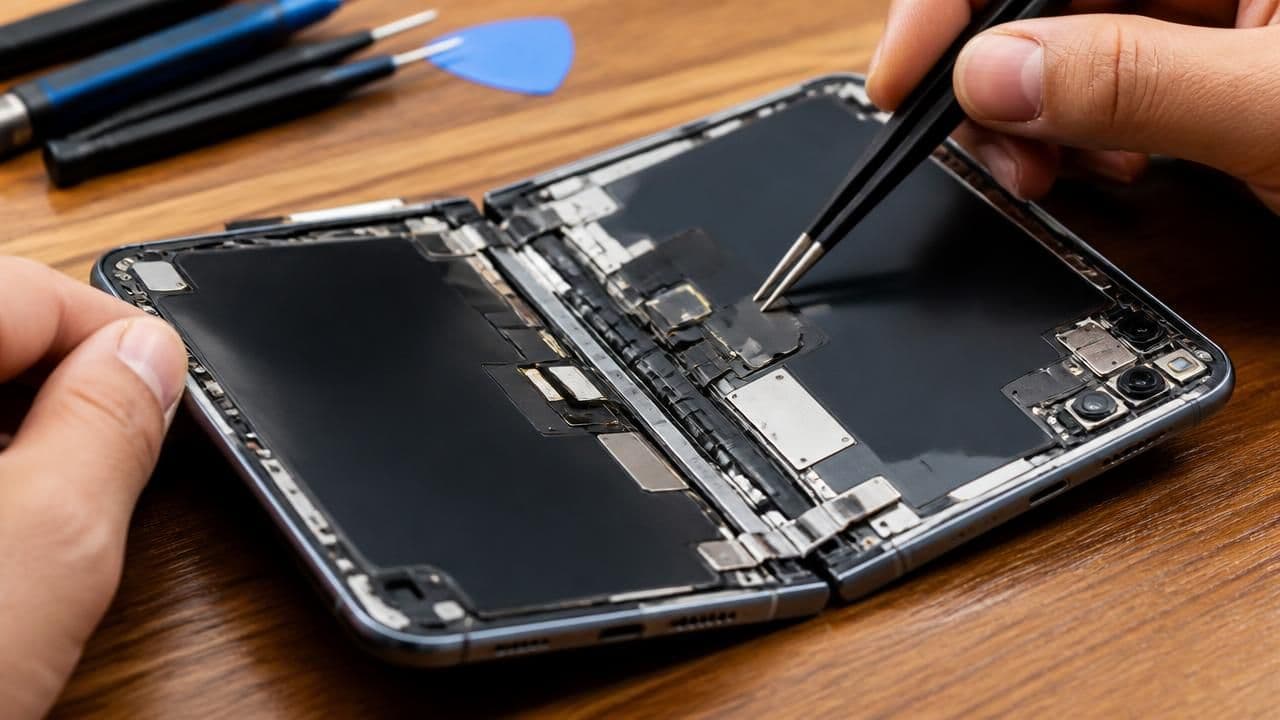
- Electronics cooling. Rather than merely insulating hot chips, a cloak that guides heat could route thermal energy away from sensitive components and toward heat sinks, potentially reshaping how densely packed devices are designed.
- Thermal protection. Spacecraft, sensors and industrial equipment face temperature extremes that a redirecting cloak could moderate without heavy insulation.
- Stealth and sensing. Suppressing an object's infrared signature has obvious defense applications, and the same principle cuts both ways — a cloak that hides thermal emissions is also a tool for managing them.
- Energy efficiency. Better heat management typically translates into lower cooling loads, a meaningful consideration for data centers and buildings.
How the story was framed
The coverage diverged in emphasis. Science Daily foregrounded the device's versatility and its potential to "transform electronics cooling, thermal protection, and stealth technology." MSN's science verticals leaned on the manufacturing story, headlining a "3D-printed invisibility cloak," while a second MSN headline hedged more carefully — objects become "almost invisible," not perfectly so. The Yahoo headline stressed provenance and priority: the "first-ever 3D thermal cloak," credited to the University of Illinois.
That gap between "invisible" and "almost invisible" is worth taking seriously. Thermal cloaking is never perfect in practice: material properties can only be approximated, and any mismatch between the cloak and its surroundings produces a residual signature. The cloak also has to be designed for a specific background temperature profile; change the environment and the illusion can degrade. And a passive cloak that redirects heat must itself be made of something, which means it can be detected by other means even when infrared fails.
What comes next
The obvious next questions are quantitative: how wide a temperature range can the cloak tolerate, how large an object can it conceal, and how much does performance fall off as the viewing angle departs from ideal? The Illinois team's demonstration establishes feasibility; engineering optimization and cost reduction are the work that remains.
Still, the direction of travel is clear. Thermal metamaterials have moved in roughly fifteen years from flat laboratory curiosities to free-standing three-dimensional devices that can be printed. If the manufacturing path proves as tractable as the physics now appears, the practical consequence may arrive first not in stealth but in something far more mundane — keeping electronics cool.