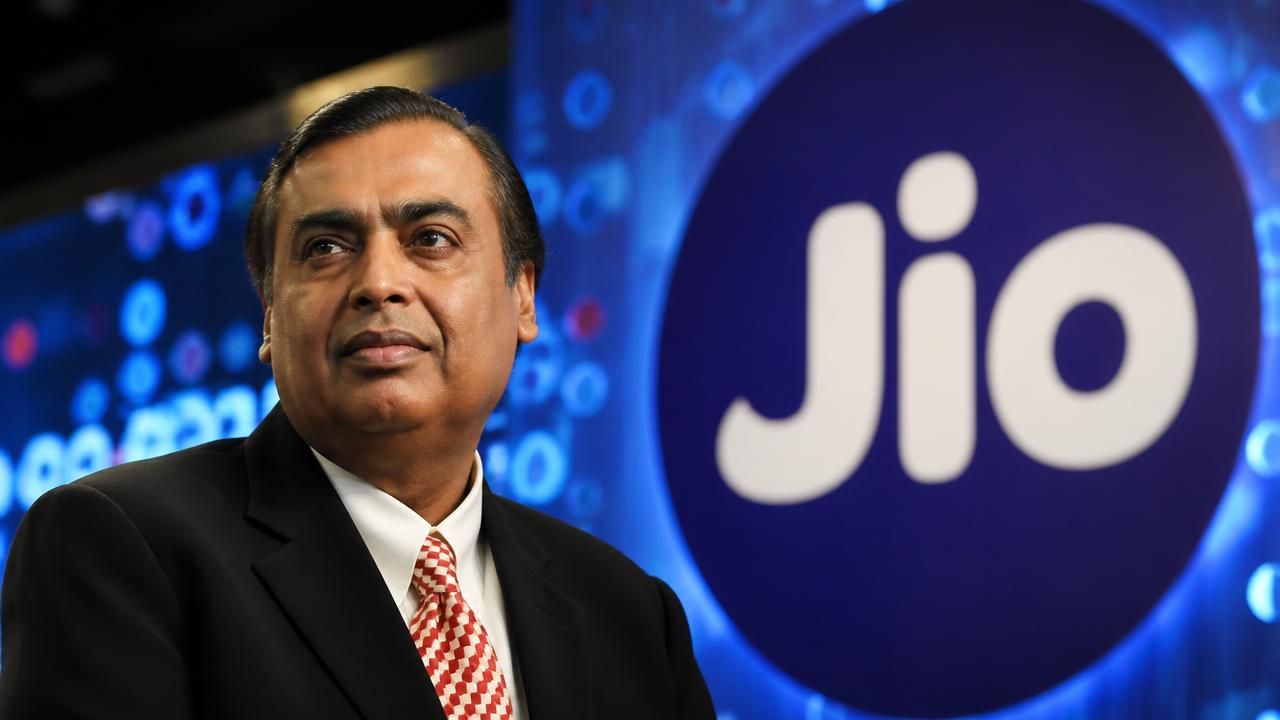
Mukesh Ambani's Jio Platforms Ltd. pulled off what few issuers in any market could attempt this month: it raised $3.1 billion in India's largest-ever initial public offering, and it did so while the broader Indian equity market was in the middle of a weeklong selloff. The sale was fully subscribed within hours of opening, and by the end of the first day bids had topped 13 times the shares on offer, according to Reuters.
The offering's performance is being read across trading desks as much more than a single company's success. It is a test of whether India's domestic capital pool — institutional, retail and foreign — is deep enough to absorb mega-issuance even when sentiment in the secondary market has turned defensive. On the evidence of day one, it is.
A record sale in a falling market
Bloomberg's markets coverage framed the result as a direct contradiction of the prevailing mood, noting that the $3.1 billion offering "drew strong demand, particularly from institutional investors, as the country's biggest-ever share sale defied the drag of a weeklong selloff in Indian equities." That contrast — a record-breaking subscription against a backdrop of falling benchmarks — is the central tension in how the story is being told.
Other outlets led with speed. Bloomberg's headline report said simply that the Jio IPO had been "fully subscribed within hours," while MarketScreener described the book as "oversubscribed within hours in record Indian sale." MSN's coverage, aimed at a retail audience, put the emphasis on the crowd: "Investors flood to Jio IPO on day one of India's largest offering."
Anchor demand sets the tone
The institutional bid is the decisive data point. Yahoo Finance, citing sources, reported that Jio drew roughly $25 billion in bids from anchor investors — a figure that, if accurate, dwarfs the $3.1 billion the company set out to raise and explains why the retail and non-institutional portions were able to fill so quickly.
Anchor allocations in Indian IPOs are typically locked in a day before the public book opens, and they function as a signal to the rest of the market. A book that large tells retail investors and domestic mutual funds that the largest institutions have already done their diligence and are willing to take size. It also reduces the risk of a weak listing, which has been a recurring concern for large Indian issuers in recent years.
"Jio's Record IPO Draws Strong Demand, Defying India Market Rout" — Bloomberg Markets
Why Jio matters to the Indian market
Jio Platforms is the digital services arm of Reliance Industries, and it sits at the center of India's consumer internet economy. Its telecom business, launched in 2016, reset data pricing across the country and forced consolidation among rivals. The platform now spans broadband, cloud, media and consumer applications, and has attracted roughly $20 billion in foreign investment since 2020 from backers including Meta and Google — a precedent that informed the anchor demand for the public listing.
For Reliance, the IPO is a milestone in a long-running effort to have the market price its digital assets separately from its refining and petrochemicals businesses. For Indian capital markets, it is a proof point: the country can now host a listing of genuine global scale on its own exchanges.
September: India's IPO record month
The Jio sale did not happen in isolation. MSN's second report — "India brushes off stock struggles to set IPO record in September" — places the offering inside a broader pipeline. Indian exchanges have been absorbing a wave of issuance even as secondary-market indices have struggled, a divergence that suggests investors are treating primary-market opportunities as separate from the macro picture.
That divergence is unusual. Historically, a weeklong equity selloff tends to freeze the IPO market as issuers postpone and bankers cut price ranges. Jio's result implies investors are willing to look past short-term index weakness when the asset on offer is perceived as a category leader.
The risks behind the headline
- Pricing pressure: A 13-times oversubscription can push the listing price to the top of the range and beyond, leaving less upside for later buyers.
- Post-listing supply: Large institutional allocations create a pool of shares eligible for sale after lock-up periods expire.
- Market context: If the equity selloff deepens, a strong IPO book does not guarantee a strong trading debut.
- Concentration: A single mega-issue can absorb liquidity that smaller issuers in the pipeline were counting on.
What to watch
The allotment and listing will determine whether day-one euphoria converts into durable valuation. Bankers will also be watching the non-institutional and retail portions, which typically fill later than the anchor book and are a better gauge of genuine household demand. And the rest of September's pipeline will show whether Jio is an exception or the leading edge of a sustained primary-market boom in India — one that could continue even while the secondary market struggles to find its footing.