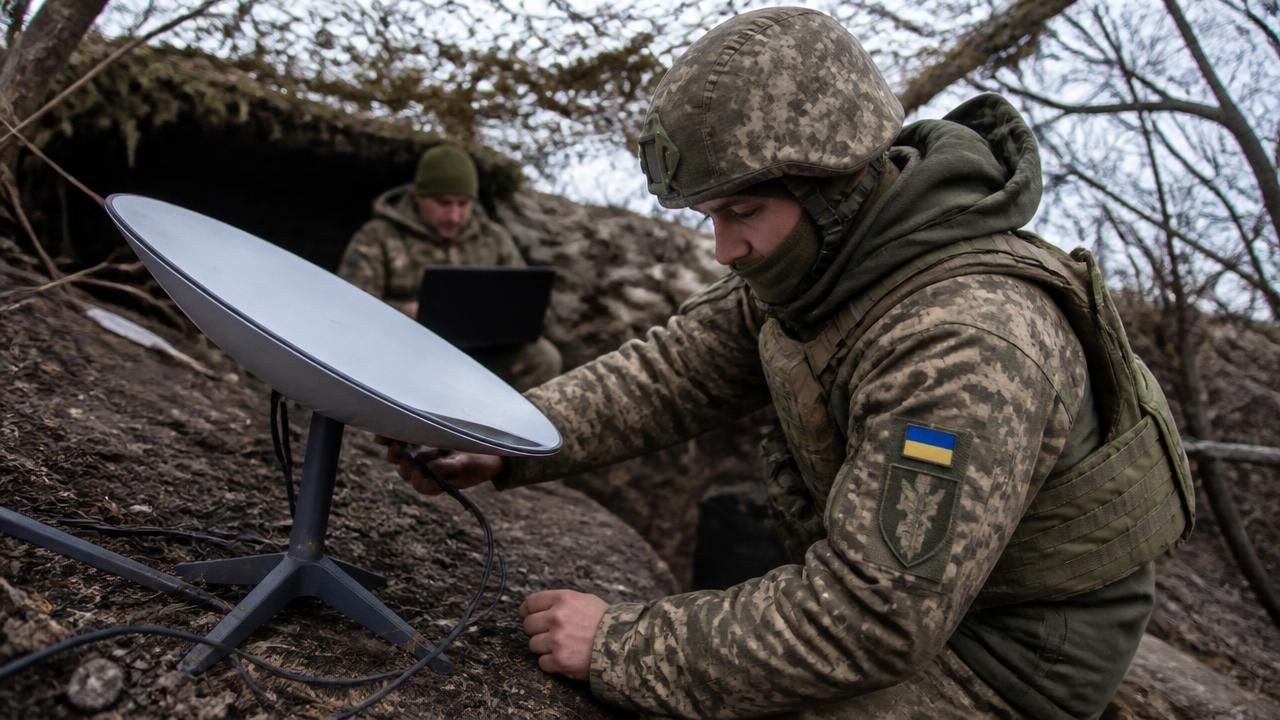
For three years, a compact white dish has been as essential to Ukraine's defense as artillery: Elon Musk's Starlink constellation carried the broadband links that kept command posts talking, air-defense crews tracking Russian missiles, and drone operators flying missions far beyond the front line. This week, that dependency became a liability. Surprise disruptions to Starlink service in Ukraine degraded military operations, triggered a flurry of high-level diplomacy in Washington, and forced Kyiv and its European partners to confront an uncomfortable question — how do you fight a war when a single foreign billionaire controls the connection?
A dish that became frontline infrastructure
Starlink is the world's largest communications satellite network, capable of delivering high-speed internet and data streams to any user or vehicle equipped with a relatively compact terminal. That portability is precisely what made it transformative for Ukraine: terminals run on vehicle batteries or small generators, can be set up in minutes, and are hard for Russia to knock out permanently.
“Starlink currently offers some of the best satellite coverage available, with virtually no competitors when you consider the combination of cost, availability, and ease of use,” the head of hardware R&D at Ukrainian defense firm BlueBird Tech told Ars Technica, speaking anonymously for security reasons. “In practical terms, the main limitation is the need to position the antenna so it can receive signals from the satellites.”
Beyond voice and data, Starlink has expanded the Ukrainian military's ability to remotely control and guide drones — both for air defense against Russian attack drones and cruise missiles and for long-range strikes on Russian targets. Each disruption therefore translates directly into lost sorties, delayed targeting, and degraded situational awareness.
The disruption — and the blame
Reports of the slowdown and service interruptions spread quickly across outlets with sharply different framings. Technology-focused coverage at Ars Technica emphasized reliability and policy: Starlink has become “increasingly unreliable due to Musk's political inclinations,” it reported, framing the outage as the moment Ukraine and Europe must plan for a future without it. Progressive outlet Crooks and Liars was blunter, describing Musk as “playing politics” with satellites in a way that disrupted Ukrainian military operations. Aggregated coverage on MSN and Yahoo focused on the practical fallout, including reports that Russian forces struck a Starlink data center in Ukraine — a reminder that the network's ground infrastructure is itself now a target.
Washington's muddled response
The diplomatic scramble that followed exposed how thoroughly a private company has been woven into Western security policy. The Wall Street Journal reported that President Trump asked Musk to lift the slowdown in Ukraine's service; the New York Times reported that Trump urged Musk to reverse limits on Ukraine's military internet use. Trump subsequently said publicly that Musk had restored Ukraine's Starlink access amid the war with Russia.
Yet Secretary of State Marco Rubio undercut the idea of government control entirely, telling reporters that Ukraine's access to Starlink is “a decision for Elon Musk.” That admission is remarkable: the communications backbone of a U.S.-backed war effort is, by the chief diplomat's own account, a discretionary call made by a private citizen and major defense contractor with shifting political views.
Starshield and the military gap
Complicating matters is Starshield, SpaceX's separate, government-oriented line of hardened satellites built for national-security customers. Starshield is designed for secure, encrypted military use and is procured through contracts rather than commercial retail — meaning Ukraine's access to the more resilient tier is a matter of U.S. government decisions, not battlefield need.
That gap has real operational consequences. Ukraine's military intelligence chief, Kyrylo Budanov, has argued that Ukraine needs expanded Starlink access specifically to strike Russian missile sites — targets that require high-bandwidth, low-latency links to coordinate drone swarms and long-range strikes. In other words, the difference between the commercial and military tiers is not a matter of convenience but of reach.
The hunt for alternatives
As CNBC reported, Musk's clash with Ukraine has accelerated demand for Starlink alternatives — and revealed how few credible ones exist. The candidates, none ready to replicate Starlink's combination of price, coverage, and simplicity, include:
- Europe's IRIS² constellation, a multi-billion-euro EU secure-connectivity project that remains years from full operational capability.
- GEO operators such as Eutelsat/OneWeb, which offer coverage but with higher latency and bulkier, costlier terminals.
- National military satcom from the U.S. and European allies, limited in capacity and rarely available at the tactical edge.
- Ukrainian domestic efforts, which remain nascent and dependent on Western components.
Europe's broader push for “strategic autonomy” in space has been discussed for years; the Starlink episode converted it from a talking point into an urgent procurement problem.
What happens next
The episode crystallizes a structural risk for every Western military: critical infrastructure has been privatized faster than governments can govern it. Kyiv's immediate task is redundancy — stockpiling terminals, diversifying bearers, and hardening ground stations against Russian strikes. Washington's task is harder: deciding whether access to battlefield communications should remain a CEO's prerogative. For now, Ukraine fights on with a network it cannot control, hoping the next disruption comes at a convenient moment — and knowing it probably won't.