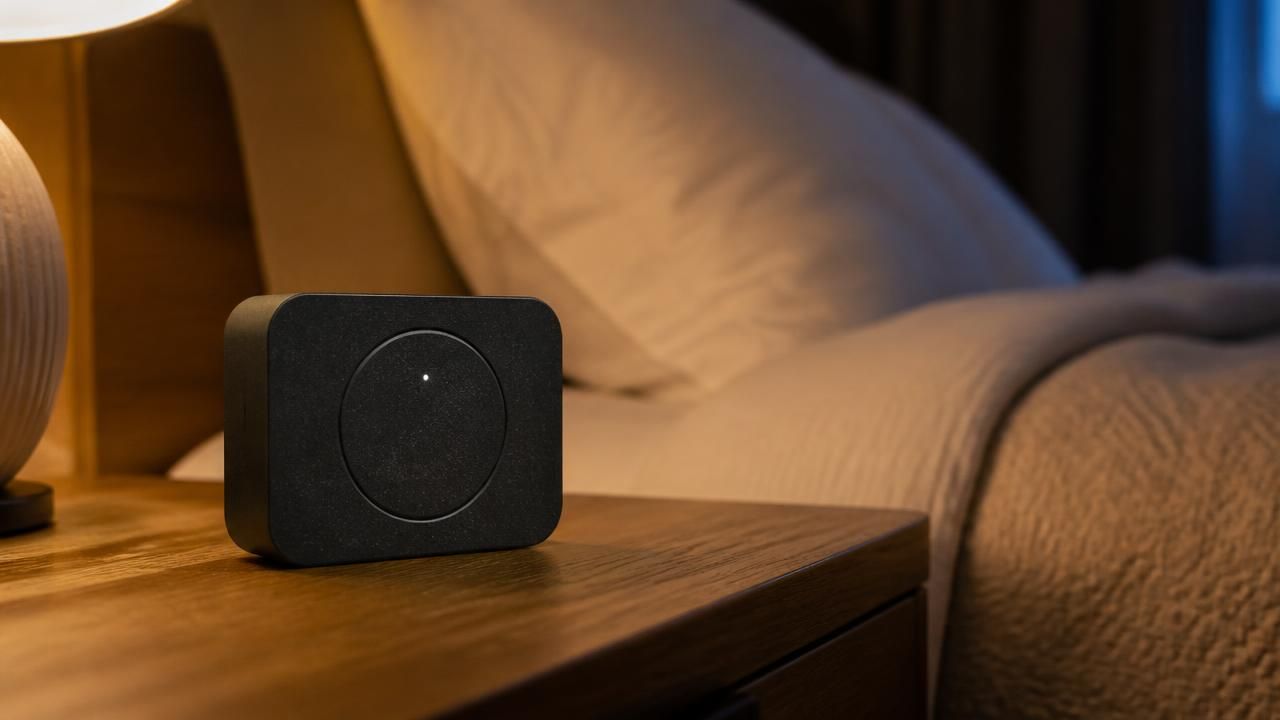
Brick, the company behind a $59 gadget designed to stop people from opening distracting apps, has launched a new device aimed squarely at bedtime doomscrolling. The $129 Brick Night is bigger than the original Brick and more than double the price, but it adds a key convenience: it can automatically activate when a user enters a bedroom or another designated room, rather than requiring the phone to be tapped against the device.
The launch, reported by The Verge, places Brick at the center of a growing consumer-tech category: hardware designed to create friction between people and their phones. The original Brick works by requiring a physical tap, making it a deliberate obstacle to app use. The Brick Night instead uses Bluetooth and a location-based zone, allowing users to set an area of up to 25 feet by 25 feet where selected apps are blocked. It runs on two CR2477 batteries.
How the Brick Night works
According to The Verge, the Brick Night does not render the entire phone inaccessible. Users can choose specific apps to block, just as they can with the original Brick. The shift is in activation: instead of tapping the phone against the device, the new model uses Bluetooth to detect when the user enters the preset zone and automatically kicks in.
“Instead of requiring you to tap your phone against the device, like the OG Brick, this version uses Bluetooth to automatically kick in when you enter your bedroom,” The Verge reports.
That design choice targets a specific behavior pattern. Doomscrolling often happens in bed, where people are tired, alone with their phones and less likely to perform an extra manual step. By automating the block at the bedroom threshold, Brick is trying to remove the moment of choice that often precedes late-night scrolling.
A premium price and a pricing puzzle
The Brick Night’s $129 price is a significant jump from the $59 original. But coverage across outlets shows some confusion around Brick’s pricing. The Verge describes the original Brick as a $59 gadget. TheStreet and Yahoo Finance, meanwhile, carried a personal-essay-style headline claiming that Brick’s “$71 app blocker” cured doomscrolling. The discrepancy is not explained in the supplied excerpts and may reflect a bundle, taxes, regional pricing or a different SKU. What is clear is that the new Night model is positioned as a premium version of an already niche product.
Consumer coverage has framed Brick less as a gadget review and more as a self-improvement tool. TheStreet and Yahoo Finance promoted the device through a first-person cure narrative, emphasizing the promise of breaking a doomscrolling habit “for good.” That framing reflects how digital-wellbeing products are often marketed: not merely as accessories, but as interventions.
Deals, alternatives and a broader debate
Cosmopolitan took a different angle, highlighting the device as a Prime Day bargain. Its headline promised that the app-blocking device finally stopped doomscrolling and was 25% off for Prime Day. That commerce-driven framing shows how quickly a behavioral-health gadget can become a seasonal deal item.
Fox News, by contrast, broadened the story into a general question about phone addiction: “Is everyone bricking their phone to stop doomscrolling?” Its coverage pointed readers toward built-in tools such as iPhone Screen Time and Android’s digital-wellbeing features. That is a useful counterpoint. Many of the functions Brick offers—app limits, downtime schedules and focus modes—are already available for free on modern smartphones. Brick’s argument is that physical hardware and location-based friction are more effective than software settings that are easy to override.
MSN’s coverage placed Brick within a wider roundup of “10 useful apps and gadgets that can replace doomscrolling,” suggesting that the market is filling with alternatives: meditation apps, screen-time trackers, dumbphones, lock boxes and other tools designed to reduce compulsive phone use. Brick’s new device is therefore both a product launch and a signal about consumer demand for ways to manage attention.
What the launch says about digital wellbeing
The Brick Night arrives as public concern about screen time remains high, particularly among parents, professionals and people who feel their sleep is being eroded by late-night phone use. But hardware-based solutions also invite skepticism. A Bluetooth zone can be convenient, but it depends on battery life, signal reliability and user compliance. A person can simply leave the bedroom, disable Bluetooth or keep the phone outside the zone. And the device does not address the algorithmic design, social pressure or emotional triggers that make doomscrolling compelling in the first place.
Still, Brick’s bet is that friction works. The original Brick made app-blocking a physical ritual. The Night model makes it environmental: the room itself becomes the trigger. For users who have tried and failed with screen-time settings, that shift may be worth the premium. For others, the $129 price and the availability of free built-in tools may make the Brick Night a hard sell.
What is clear is that the conversation has moved beyond simple willpower. Across the coverage, the story is framed as part product launch, part habit hack, part deal and part public-health question. Brick’s new device may not solve doomscrolling for everyone, but it has given the debate a new piece of hardware—and a new bedtime ritual—to argue about.