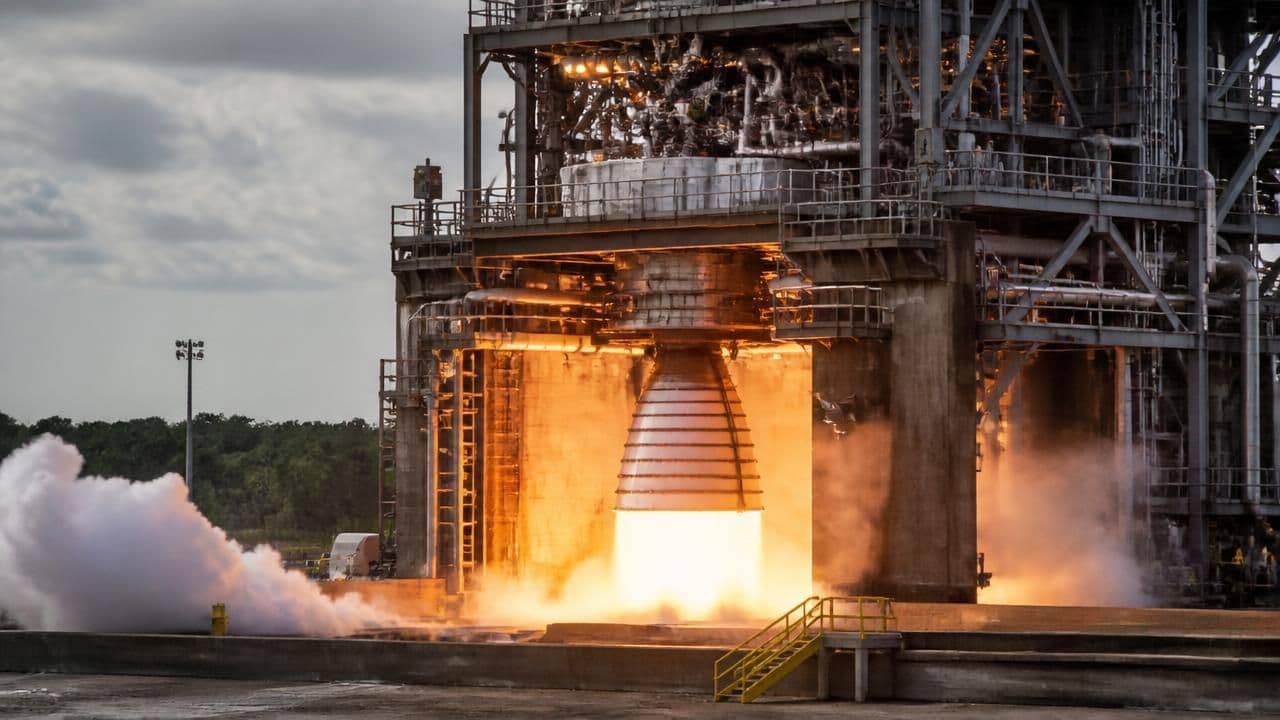
PASADENA, Calif. — NASA's Jet Propulsion Laboratory this year marks 90 years since a small group of Caltech graduate students and rocket enthusiasts conducted the lab's first rocket-propulsion tests in the Arroyo Seco on Halloween 1936, an experiment that helped launch JPL and, eventually, much of American space science.
The anniversary has drawn attention from the lab's official NASA home, local Pasadena coverage and Chinese-language outlets, each framing the milestone differently. NASA's official retrospective, headlined NASA JPL Looks to Next 90 Years of Innovation, Exploration, emphasizes a century-scale mission portfolio and the next wave of exploration. Pasadena Now framed the celebration around JPL opening its doors to the public for its 90th anniversary. Chinese portal 163.com marked the anniversary as a global science milestone, reflecting JPL's international reach.
Interstellar probes. Lunar drones. Helicopters on Mars.
That three-line summary from NASA's anniversary article captures the scope of JPL's ambitions. Ninety years after students and friends carried out their first rocket firing in a dry riverbed along which JPL would rise, the lab is not only celebrating historic firsts but also preparing for missions that could reshape planetary science and exploration.
From Army contractor to NASA powerhouse
JPL began as a contractor for the U.S. Army. In 1958, it launched America's first satellite, Explorer 1. Unlike the Soviet Union's Sputnik, which simply orbited Earth, Explorer 1 became the first spacecraft to conduct science: an onboard Geiger counter discovered the protective radiation belts encircling Earth, now known as the Van Allen belts. That same year, JPL joined part of the newly formed NASA.
Within six years, in 1964, JPL sent the first U.S. mission to the Moon, Ranger 7. The lab went on to lead the first planetary flyby, the first probe to visit all four gas giants, the first infrared telescope, and the first rovers to roll on Mars. Those achievements are not isolated technical triumphs; they established JPL as a central node in NASA's science and exploration architecture, managed by Caltech for the space agency.
The lab's official anniversary account lists a long line of historic firsts and ties them directly to current and future missions. Perseverance and Europa Clipper are presented as inheritors of that legacy, while future concepts such as SkyFall and MoonFall are named as part of the next chapter. The message is clear: JPL's past is a foundation, not a finale.
Why the milestone matters
JPL's 90-year history tracks the broader arc of American space science. Explorer 1 turned a Cold War satellite race into a scientific enterprise. Ranger 7 demonstrated that close-up lunar imaging was possible. The Voyager probes, which visited all four gas giants, transformed understanding of the outer solar system. Infrared astronomy opened new windows on dust, stars and galaxies. Mars rovers turned the red planet into a laboratory for geology, climate history and the search for past habitability.
The lab's public profile has also changed. Ingenuity, the small helicopter that flew on Mars, became a global symbol of innovation, proving that powered flight is possible in another world's thin atmosphere. NASA's anniversary piece explicitly links that achievement to future helicopters on Mars, lunar drones and even interstellar probes. The juxtaposition is deliberate: the same institutional culture that produced a Halloween rocket test in 1936 is being asked to produce technologies for the next 90 years.
Different outlets, different frames
The official NASA and JPL framing is mission-centered. It emphasizes engineering firsts, scientific discovery and the lab's role in national space policy. Local coverage from Pasadena Now emphasizes community and access. Its headline about JPL opening doors for the 90th anniversary celebration points to a public open-house moment, a reminder that the lab's work is rooted in a specific place and workforce. Chinese-language coverage from 163.com treats the anniversary as a global science story, highlighting JPL's name recognition beyond the United States.
Those frames are complementary rather than contradictory. NASA needs JPL to deliver missions and remain a source of scientific authority. Pasadena needs JPL as a civic institution and employer. International audiences see JPL as a benchmark for robotic exploration. Together, the coverage shows that a 90th anniversary is both a bureaucratic milestone and a cultural one.
The next 90 years
JPL's future portfolio, as described in NASA's anniversary account, includes interstellar probes, lunar drones and helicopters on Mars. The lab is also preparing for next-generation moonwalk simulations, underwater and otherwise, to support human and robotic exploration. Perseverance and Europa Clipper are already in operation or in development, while SkyFall and MoonFall are named as future missions. The breadth is notable: JPL is not choosing between planetary science, lunar exploration and technology demonstration. It is pursuing all three.
The challenge is familiar. Federal budgets are constrained, launch schedules are demanding, and scientific priorities compete. Yet JPL's institutional advantage has long been its ability to turn basic research into flight hardware. The 1936 Arroyo Seco tests were improvised, dangerous and modest. The lab they spawned now manages spacecraft across the solar system.
As JPL looks to its next 90 years, the anniversary is less a victory lap than a strategic statement. The lab is telling NASA, Congress, the public and international partners that its legacy of firsts is meant to continue. For Pasadena, the celebration is a chance to see the lab up close. For the world, it is a reminder that some of the most ambitious exploration begins with a small group of students testing rockets in a dry riverbed.