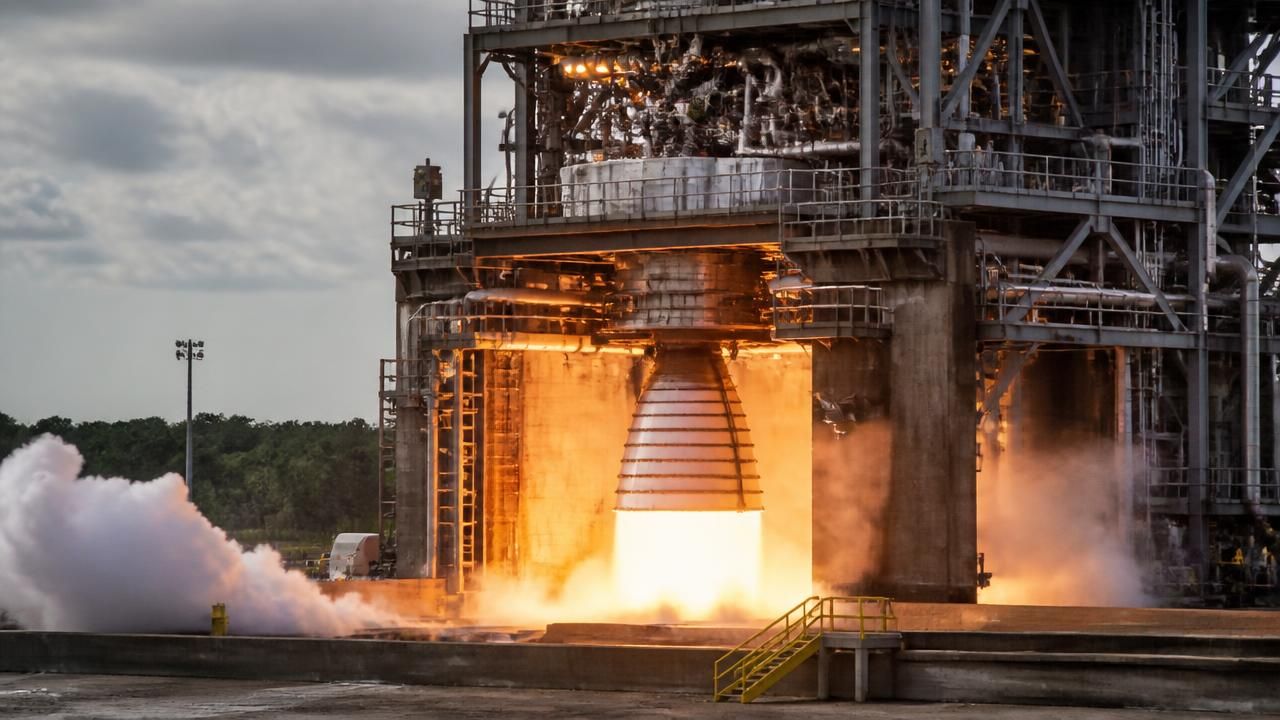
NASA lit a developmental RS-25 engine for nearly eight and a half minutes on Oct. 21, running the hardware through a full launch-duration burn at the agency's Stennis Space Center near Bay St. Louis, Mississippi — a test program officials cast as a critical step toward the Artemis missions that will carry astronauts back toward the Moon.
The hot fire of engine No. 10001 on the Fred Haise Test Stand ran for 500 seconds, the same span the four RS-25 engines fire during liftoff of NASA's Space Launch System (SLS) rocket. Operators also throttled the engine up to the 111% power level, the thrust setting required of the new-production engines that will push SLS and the Orion spacecraft toward orbit.
A launch-duration burn on the Gulf Coast
The test's headline number is its duration. A 500-second burn on the stand is designed to mirror, as closely as ground hardware can, the conditions an engine faces from ignition on the pad through the climb to space. According to NASA, the firing matched the burn time RS-25 engines experience during an SLS launch, giving engineers a full-duration data set rather than a partial one.
Local coverage emphasized the test's geography: the firing took place in Hancock County, Mississippi, home to Stennis and the stand renamed in 2016 for Fred Haise, the Mississippi-born Apollo 13 astronaut. For the Gulf Coast region, the test is both a technical milestone and a reminder of the center's role in the deep-space program.
"Test teams fired the developmental engine for almost eight-and-a-half minutes (500 seconds), the same amount of time RS-25 engines fire during launch of NASA's SLS rocket." — NASA test release
Why 111% matters
The RS-25 is one of the most storied engines in American spaceflight, a hydrogen-fueled, oxygen-burning powerhouse originally designed for the Space Shuttle. At 111% of its original rated power level, each engine produces roughly 512,000 pounds of thrust; four of them, combined with two solid rocket boosters, generate the 8.8 million pounds of thrust that lifts SLS off the pad.
Running to that power level is not merely a stress test. NASA said the main objectives included acceptance testing of RS-25 flight components — the formal process by which hardware is cleared for an actual mission. Developmental engines like No. 10001 serve as pathfinders for the production line, allowing engineers to validate manufacturing changes, instrumentation and control software before committing to flight hardware.
The distinction matters because the Artemis engines are not simply refurbished Shuttle leftovers. NASA has contracted with Aerojet Rocketdyne, now part of L3Harris, to build new RS-25 engines using modern fabrication methods — including components produced with additive manufacturing — while retaining the basic architecture of the legacy design. The 111% power level is a hallmark of the SLS-era specification, higher than most Shuttle-era operations, and each new engine must demonstrate it repeatedly.
Heritage hardware, a new production line
The test also underscores an unusual feature of the Artemis program: it is flying an expendable, heritage-derived rocket at the same time that a new commercial launch sector is maturing around it. SLS uses engines descended from Shuttle hardware, but unlike the Shuttle — whose engines were recovered and reused — each SLS core stage flies with four RS-25s that are expended with the vehicle.
That reality has made the engine production line a pacing item for the program. Every successful acceptance test reduces the risk that a manufacturing or performance issue surfaces late in the integration flow, when a rocket is already stacked or a launch window is already tight.
The wider Artemis campaign
The Stennis firing lands amid a broader surge of Artemis-related activity. Aggregated coverage this week also pointed to NASA involvement in testing Blue Origin's New Glenn rocket and to RS-25 hardware arriving at Kennedy Space Center in Florida — the logistics chain that moves engines from test stands and factory floors to the Vehicle Assembly Building.
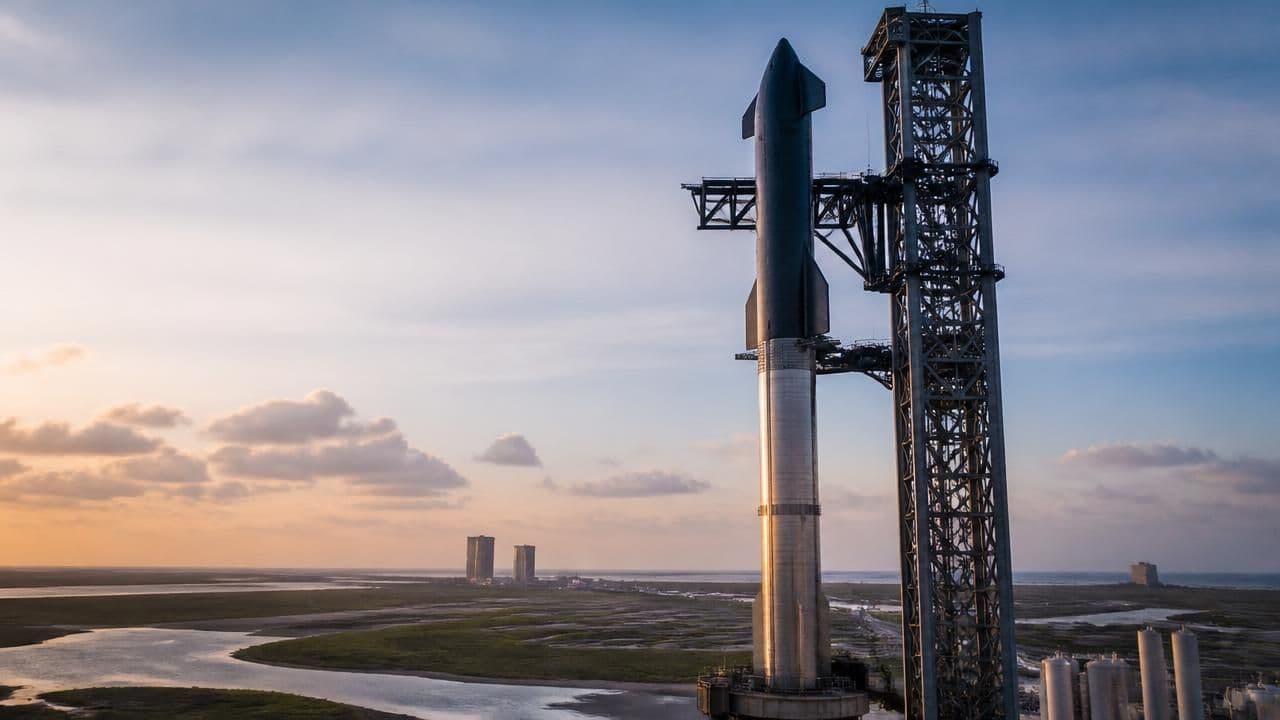
New Glenn represents a parallel track: a heavy-lift commercial vehicle that NASA has increasingly eyed for cargo and, eventually, crew-related roles. The juxtaposition is instructive. SLS remains the agency's own deep-space transport, while vehicles like New Glenn and SpaceX's Starship form a growing ecosystem of alternatives that policymakers, and successive presidential administrations, have scrutinized for cost and cadence.
The Artemis architecture itself has shifted repeatedly. Artemis II, a crewed lunar flyby, and Artemis III, which aims to return astronauts to the lunar surface, depend on the SLS-Orion stack working as designed, along with commercial landers. Each engine test feeds that critical path.
What comes next
NASA has not detailed the full results of the Oct. 21 firing, and hot fires are routinely followed by weeks of data review. Engineers will examine performance curves, thermal data and instrumentation readings to confirm the engine met acceptance criteria across the full throttle range.
For Stennis, the work continues: the center is built around the repetitive, unglamorous business of firing engines until the numbers are right. For the Artemis program, the stakes are the same as they have been since the first SLS launch — proving that hardware designed decades ago and rebuilt for a new era can be trusted with people aboard.