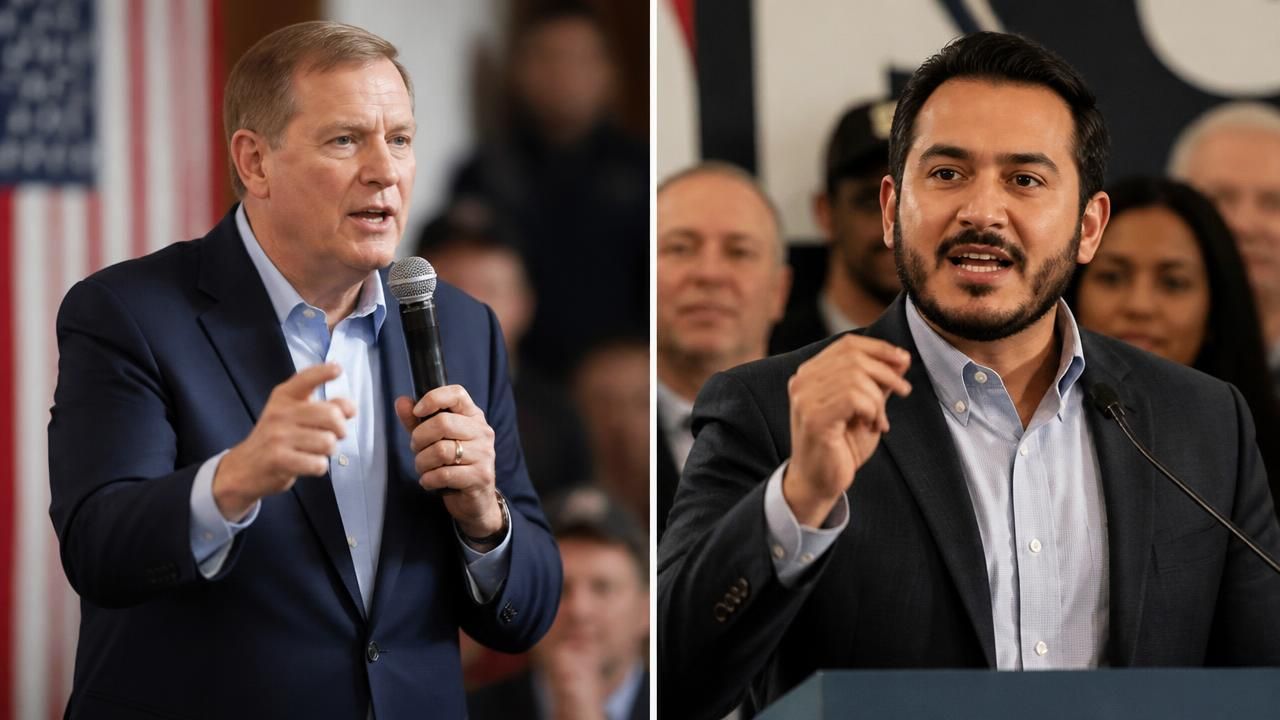
The American Israel Public Affairs Committee has intervened in the final stretch of Michigan’s Senate race, making a last-minute donation to boost Republican Mike Rogers against Dr. Abdul El-Sayed, a Democrat and vocal critic of Israel. The move, first reported by The New York Times, is notable both for its timing and for AIPAC’s usual alignment with Democratic candidates.
But the donation is only one strand of a broader political knot. Reports from MSN describe a public feud between Sen. Bernie Sanders and AIPAC over the last-minute support for Rogers, a rupture between Rogers’s campaign and AIPAC that is roiling the race, and a separate announcement that AIPAC will no longer endorse or directly give to candidates. Together, the developments show a pro-Israel lobbying giant recalibrating its electoral strategy while a key Senate contest becomes a proxy fight over Israel policy, party loyalty, and money in politics.
The Michigan Flashpoint
At the center is Michigan, a battleground state with a significant Arab American and Muslim population and a Democratic coalition sensitive to U.S.-Israel policy. El-Sayed, a physician and former Detroit health director, has built a national profile as a progressive critic of Israel. AIPAC generally supports Democrats, according to the Times, but it has spent heavily against El-Sayed. Its general election spending on Rogers’s behalf comes after initial concerns from the Rogers campaign, the Times reported, adding a twist to an already unusual alliance.
“AIPAC generally supports Democrats, but it has spent heavily against Dr. Abdul El-Sayed, a vocal critic of Israel.” — The New York Times
The Rogers campaign’s early concerns are central to the MSN report describing a “Mike Rogers-AIPAC rupture” roiling the race. The exact source of the friction is not fully detailed in the summaries, but the phrase suggests that the Republican’s operation was not initially eager for the group’s embrace. That friction matters because AIPAC’s last-minute donation could cut both ways: it may give Rogers a financial boost, but it also hands El-Sayed and his allies a ready-made argument that the Republican is being backed by a group Democrats increasingly criticize.
Sanders Enters the Fray
Sen. Bernie Sanders, the Vermont independent and longtime critic of AIPAC’s influence in Democratic politics, escalated the dispute over the last-minute Rogers donations. The MSN report on the Sanders feud does not provide his exact remarks, but the framing places the episode within a longer fight between progressives and the pro-Israel lobby. For Sanders and his allies, AIPAC’s spending against El-Sayed and its late support for Rogers illustrate what they see as the group’s willingness to intervene against Democrats who challenge its agenda.
For AIPAC’s defenders, the group is exercising the same free-speech and political-support rights as any other advocacy organization. They argue that candidates’ positions on Israel are fair game and that pro-Israel voters deserve to know where contenders stand. The clash in Michigan therefore reflects a larger Democratic divide over Israel, one that has intensified since the Gaza war and become a litmus test in primaries and general elections alike.
AIPAC Changes Course
The race is unfolding alongside a significant institutional shift: AIPAC will no longer endorse or directly give to candidates, according to the MSN report. The change, if fully implemented, would mark a departure from the group’s traditional model of endorsements and direct contributions. It could push more of its electoral activity into independent expenditure vehicles or affiliated groups, though the report does not specify how AIPAC will structure its future involvement.
The timing is striking. Just as AIPAC makes a last-minute donation in Michigan, it signals that direct candidate support will no longer be part of its official playbook. That apparent contradiction may reflect a broader effort to adapt to a changing political and legal environment. Direct endorsements and donations can invite scrutiny and backlash; outside spending can be less directly tied to the group’s brand. But the shift also risks confusing allies and opponents alike about how AIPAC will wield influence in future races.
How the Story Is Being Framed
Different outlets are emphasizing different angles. The New York Times focuses on the anomaly of AIPAC, a group that generally backs Democrats, spending heavily against El-Sayed and then making a last-minute donation to Rogers. The MSN report on Sanders frames the story as a progressive backlash and a feud between the Vermont senator and the lobby. The “rupture” report centers on Rogers’s campaign and its uneasy relationship with AIPAC, suggesting that the Republican-AIPAC alliance is not as smooth as it appears. And the report on AIPAC’s decision to stop endorsing and directly giving to candidates widens the lens to the group’s national strategy.
Each frame captures part of the story. Michigan is the immediate battlefield, but the underlying questions are national: How much influence should AIPAC have in Democratic primaries and general elections? How should candidates navigate Israel policy when their coalitions are divided? And what happens when a lobbying group tries to change its tactics while still trying to shape outcomes?
What Comes Next
- Money and message: AIPAC’s last-minute donation to Rogers may matter less for its size than for its symbolic value. El-Sayed’s campaign can use it to mobilize supporters who are skeptical of AIPAC’s influence.
- Rogers’s balancing act: The Republican must decide whether to welcome AIPAC’s support or distance himself from a group that is unpopular with parts of the electorate. The reported rupture suggests that calculation is already underway.
- Sanders’s role: Sanders’s feud with AIPAC keeps the story alive in progressive media and could encourage other Democrats to speak out.
- AIPAC’s next move: The decision to stop endorsements and direct contributions will be watched closely. If AIPAC shifts spending to outside groups, its influence may persist even as its official footprint shrinks.
For Michigan voters, the immediate choice is between Rogers and El-Sayed. For the broader political system, the Michigan race is a test case: it shows how foreign policy, identity, money, and party discipline can collide in a single Senate contest. The outcome will not settle the debate over AIPAC’s role, but it will shape how both parties talk about it in the next election.