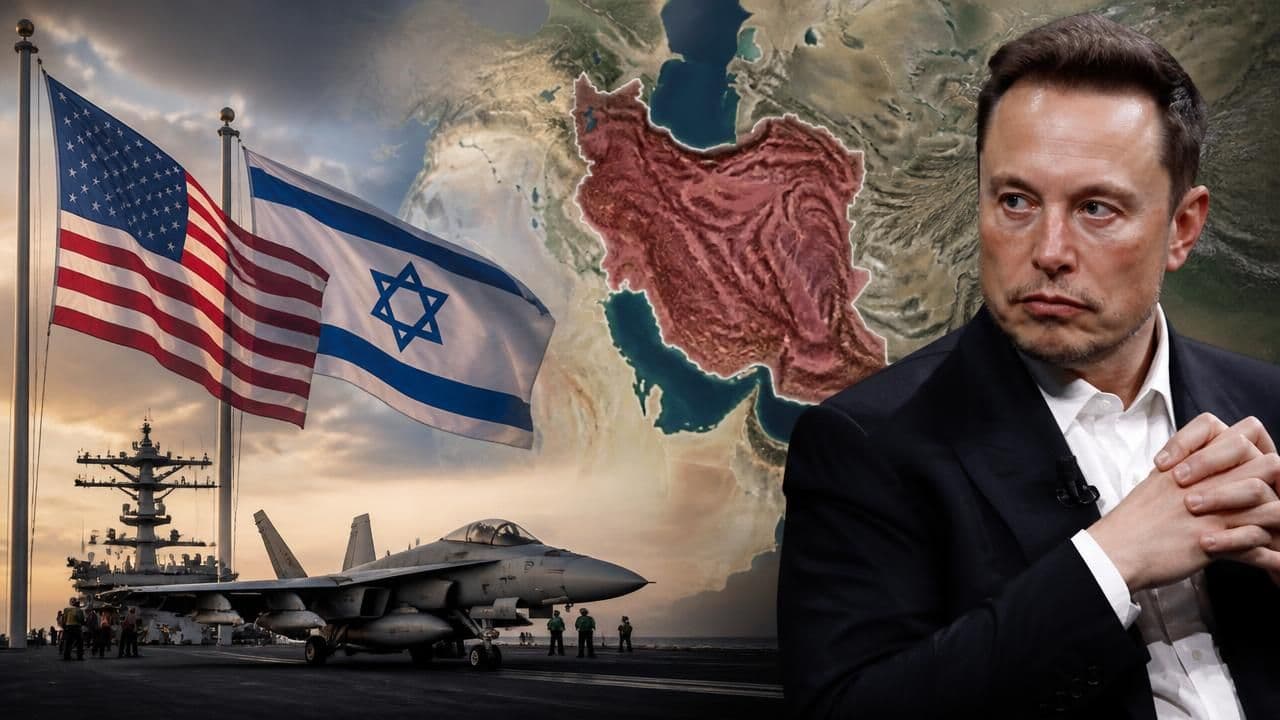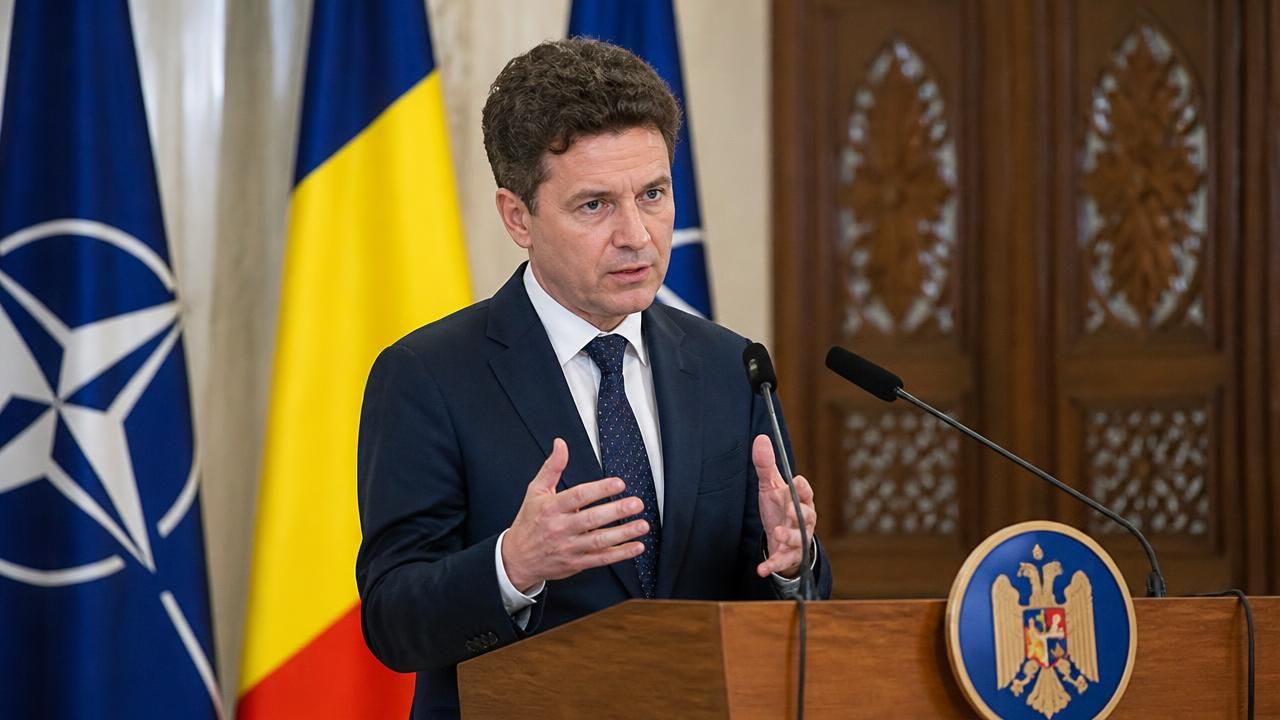
Romania's president has accused Moscow of deliberately widening the war in Ukraine rather than seeking a way out of it, warning that Europe was unprepared for the hybrid campaign now spilling across its eastern flank. In remarks reported by Bloomberg, President Nicușor Dan said recent drone attacks on ships in Romania's Black Sea territory were "not incidental," and that he believes Russia is looking to "escalate" the conflict and provoke European countries into a reaction.
The intervention puts Bucharest at the center of a widening debate among NATO allies over how to respond to a campaign that mixes military force with cyberattacks, sabotage and airspace violations — a blend of tactics the Romanian leader said the continent had not been built to counter.
"Collateral damage" on NATO's doorstep
Romania shares a long land border and a maritime frontier with Ukraine, and since Russia's full-scale invasion in February 2022 it has repeatedly found debris from drones and missile fragments on its soil. What has changed, according to Dan, is the character of the incidents: attacks near Romanian waters that appear aimed at shipping rather than merely straying off course.
The Black Sea has become one of the war's most consequential theaters. Ukraine's unconventional naval campaign — using sea drones and missiles — forced Russia's Black Sea Fleet to relocate much of its strength away from occupied Crimea, allowing Kyiv to reopen a grain export corridor that had been shut down in 2023. That commercial revival has depended on a fragile insurance and shipping market, with war-risk premiums for vessels calling at Ukrainian ports functioning as a daily barometer of escalation.
Attacks on vessels near Romanian territory therefore carry an economic signal as much as a military one. Any incident that pushes underwriters to reprice Black Sea risk — or that persuades shipowners to avoid the corridor altogether — flows straight through to grain prices, freight rates and the export revenues Ukraine depends on to sustain its war effort and its budget.
Testing the alliance's response
Coverage of the drone strikes, including reports aggregated by MSN, framed them as a probe of NATO's willingness and ability to respond — a test of deterrence conducted just below the threshold of Article 5. The alliance has reinforced air policing over Romania, deploying additional fighters and radar assets, and Romania hosts a regional F-16 training hub for Ukrainian and allied pilots. But the incidents highlight a gap between peacetime air policing and a sustained, ambiguous campaign that rarely presents a clear target.
Dan's assessment that Europe was not prepared for Russia's hybrid approach echoes warnings from military planners who have argued that cyber intrusions, disinformation and infrastructure sabotage are designed to exhaust political will without triggering a collective defense clause.
"Russia is looking to escalate the war and provoke European countries," President Nicușor Dan said, describing recent drone attacks against ships in Romania's Black Sea territory as not incidental.
Kyiv's counter-framing: end the war, not manage it
From Kyiv's perspective, the debate over how to manage Russian pressure misses the central point. President Volodymyr Zelenskyy has insisted that Russia's war on Ukraine "must be brought to an end," a formulation that pushes allies toward stronger security guarantees and continued arms deliveries rather than a strategy of absorbing and containing each new provocation.
The two emphases — Bucharest's call for preparedness and Kyiv's call for resolution — are not contradictory so much as different vantage points on the same problem. Romania wants NATO to harden its eastern defenses and treat hybrid attacks as strategic rather than incidental. Ukraine wants the material and political support that would make escalation costly enough for Moscow to stop.
A spiral with no off-ramp
The New York Times framed the moment as "a spiral of escalation for Russia and Ukraine, with no end in sight," capturing a dynamic familiar to analysts of the conflict: each side's response becomes the other's justification. Deep strikes on Russian energy infrastructure invite reprisals against Ukrainian ports and power grids; Western permission for longer-range attacks prompts threats of retaliation against NATO members.
That logic has financial consequences well beyond the region. European natural gas prices remain acutely sensitive to Black Sea and pipeline news, defense budgets across the continent are on a multiyear upswing that is reshaping sovereign borrowing plans, and emerging-market investors are pricing Romanian assets with a closer eye on security risk than at any point since the Cold War's end.
- Shipping and insurance: War-risk premiums for Black Sea voyages are the fastest-moving indicator of whether the grain corridor stays open.
- Energy: European gas and LNG markets react to any hint of infrastructure targeting or transit disruption.
- Defense spending: Romania and its neighbors are among the NATO members accelerating procurement, supporting European defense order books.
- Sovereign risk: Sustained security tension raises the borrowing costs of frontline states and tests investor appetite for their debt.
What to watch
Three signals will indicate whether Dan's warning is borne out. First, whether drone and missile incidents near Romanian waters continue and whether any strike hits a vessel flagged to a NATO country. Second, whether the alliance moves beyond condemnation to measures such as additional rotational deployments or a formal consultation under Article 4. Third, whether commercial insurers keep writing Black Sea cover at stable rates — a quiet but decisive vote on whether the market believes the spiral is contained.
For now, the official positions diverge in tone but converge on one point: Moscow shows no sign of seeking an exit, and Europe's test is whether its response can be fast, coordinated and costly enough to change that calculation.