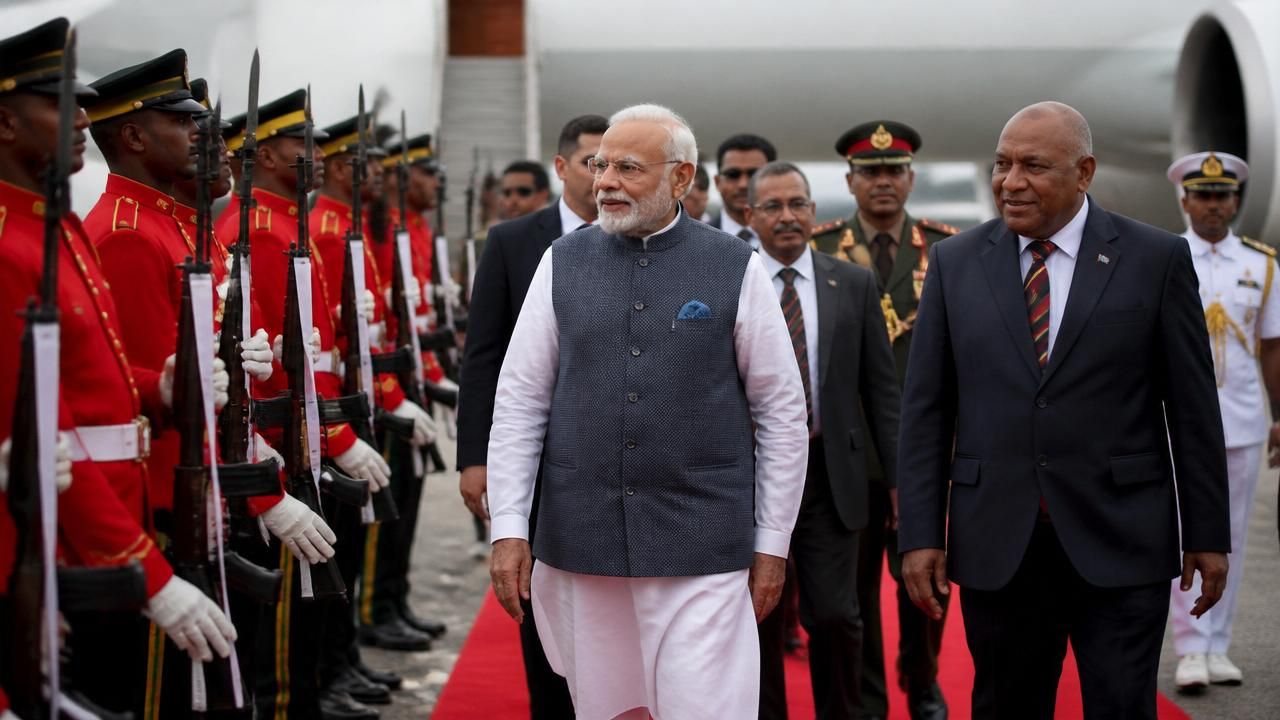
Indian Prime Minister Narendra Modi concluded a three-nation tour of the Indo-Pacific this week, using diplomacy, defense deals, and economic incentives to strengthen India's partnerships in a region increasingly shaped by China's assertiveness and uncertainty over US engagement. From missiles and uranium to critical minerals and sports diplomacy, the trip underscored India's ambitions as a key player in the region.
Strategic Tour Across the Pacific
Modi's itinerary included stops in Indonesia, Papua New Guinea, and Fiji—nations that, while diverse, share a common interest in maintaining a free and open Indo-Pacific. In Indonesia, Modi delivered a strong message directed at Beijing, stating that India is a strong advocate of a free Indo-Pacific, according to a report on MSN. This statement came amid heightened tensions following China's provocative missile test, which drew warnings from officials, as reported by inkl.com.
The tour also featured a focus on critical minerals, with India seeking to secure supplies of rare earth elements essential for green technology and defense. Bloomberg Markets highlighted that Modi used the trip to deepen India's partnerships as regional powers strengthen ties amid China's growing influence and uncertainty over US engagement.
Defense and Energy Cooperation
In Papua New Guinea, Modi announced a defense cooperation agreement that includes the supply of missiles and uranium for peaceful purposes. This move is seen as a counterbalance to China's increasing military presence in the Pacific. The Japan Times noted that the tour aimed to reshape regional dynamics, with India positioning itself as a reliable partner.
Fiji, meanwhile, became a focal point for sports diplomacy, with India offering to build a cricket stadium and support for rugby. Such gestures are part of a broader strategy to build soft power in the Pacific islands, many of which have been courted by China with infrastructure loans.
Economic Reforms and 'Make in India' Challenges
On the economic front, Modi announced plans to cut India's Goods and Services Tax (GST) as part of ongoing reforms, according to a Bloomberg report. However, the same outlet also highlighted that US and China challenges are undermining Modi's 'Make in India' factory incentives. The initiative, aimed at boosting domestic manufacturing, faces headwinds from global trade tensions and competition from other manufacturing hubs.
Despite these challenges, India's mutual fund industry continues to attract investors, with numerous funds listed on The Economic Times showing strong performance. For instance, the DSP Large Cap Fund and the Motilal Oswal Nifty Smallcap 250 ETF have seen significant inflows, reflecting investor confidence in India's growth story.
Domestic Politics and Regional Elections
Back home, Modi's ruling Bharatiya Janata Party (BJP) suffered a setback in Karnataka assembly by-polls, where the opposition Congress party swept the elections, according to reports from The Economic Times. This loss could impact Modi's political capital as he pushes forward with his economic and foreign policy agenda.
Broader Geopolitical Context
The tour comes at a time when the Indo-Pacific region is witnessing a realignment of powers. The US, under the Biden administration, has been strengthening alliances, while China continues to expand its influence through the Belt and Road Initiative. Modi's visit to Fiji, in particular, was seen as a response to China's growing footprint in the Pacific, where Beijing has signed security pacts with the Solomon Islands.
Experts note that India's approach is multifaceted, combining hard power (defense deals), economic incentives (trade agreements), and soft power (cultural exchanges). As one analyst put it,
India is trying to offer an alternative to China's model of engagement—one that is less debt-trap inducing and more transparent.
Implications for the Future
The success of Modi's tour will be measured by concrete outcomes, such as trade agreements and investment flows. The coming months will show whether India can sustain this momentum. For now, the message is clear: India is stepping up as a major player in the Indo-Pacific, ready to shape the region's future alongside the US, Japan, Australia, and others.
Key Takeaways
- Modi's three-nation tour focused on defense, energy, and sports diplomacy.
- India is positioning itself as a counterbalance to China's influence in the Pacific.
- Domestic economic challenges, including 'Make in India' hurdles, persist.
- Political setbacks in Karnataka may test Modi's domestic standing.
As the region evolves, India's role will be crucial in determining whether the Indo-Pacific remains free, open, and inclusive.