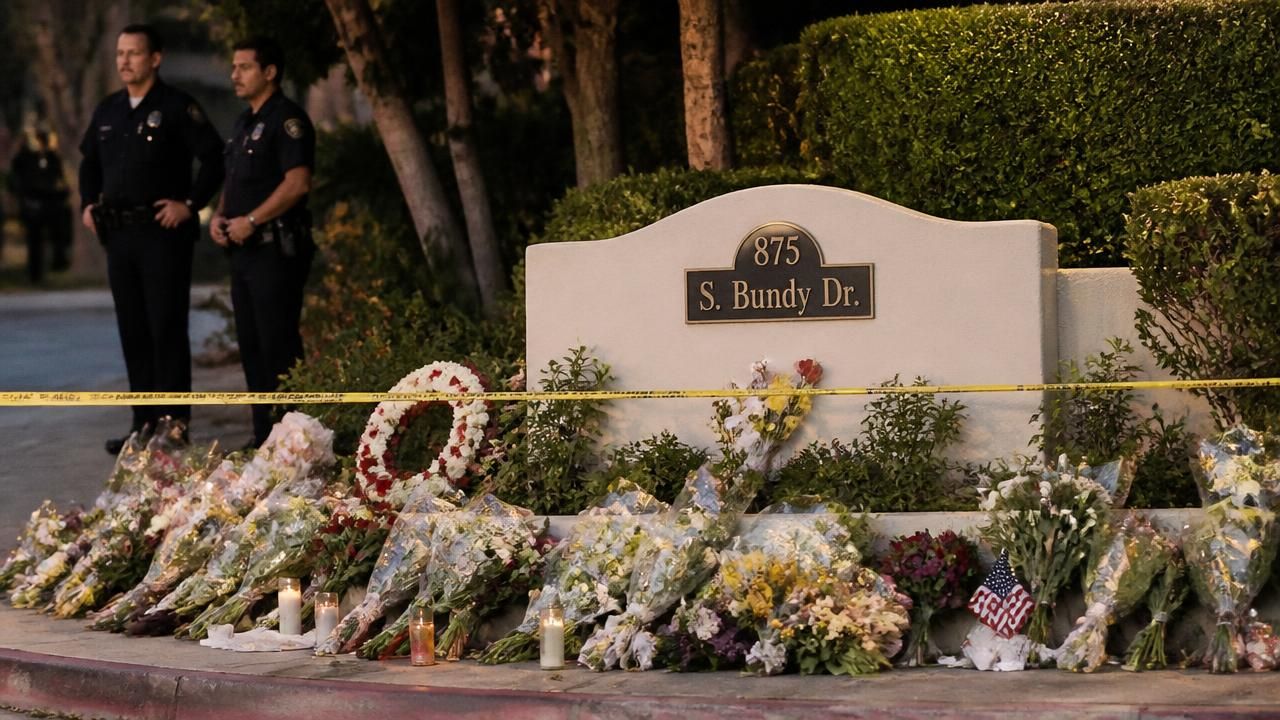
More than three decades after Nicole Brown Simpson and Ron Goldman were stabbed to death outside her Brentwood condominium, newly unsealed court records are pulling one of the case's most durable mysteries back into public view: what happened to the murder weapon, and who may have helped make it disappear.
According to the records, first reported by The New York Times, an informant described by authorities as “extremely reliable” told investigators years ago that he knew what became of the missing knife. The disclosure, contained in documents that had remained sealed until now, has renewed scrutiny of a question that has nagged detectives, prosecutors and armchair investigators since the night of June 12, 1994.
A Tip From an Unusual Source
The records describe an informant with ties that stretch well beyond the Simpson case. Britain's Daily Mail, which also reported on the unsealed files, characterized the source as a “secret mob informant” who approached police with information about the missing weapon. That framing — a jailhouse-style tip from a figure connected to organized crime — differs sharply from the Times' emphasis on the credibility label investigators attached to him.
“Extremely reliable” — the assessment authorities reportedly attached to the informant in the newly unsealed records.
The most consequential new detail, however, comes not from the informant but from his family. The informant's brother told The Times that his sibling was present at the crime scene on the night of the murders — an assertion that, if accurate, would place a previously unidentified person at the center of the investigation.
“Bloody Hands” and a Midnight Return
Coverage of the filings on MSN and elsewhere focused on an even more startling claim: the brother of a possible Simpson accomplice said the man returned home on the night of the murders with blood on his hands. That account, if corroborated, would support a theory long floated by investigators and amateur sleuths alike — that Simpson did not act alone in disposing of evidence, and that a friend or associate may have helped spirit the weapon away from the Rockingham Drive estate.
Newser distilled the story to its bluntest formulation: “OJ's Friend May Have Helped Dispose of Evidence.” The aggregator's headline captures why the disclosure matters more than the typical true-crime footnote. It is not merely a detail about a knife; it is an allegation that someone with knowledge of the killings participated in a cover-up.
Why a Missing Knife Still Matters
The weapon question has always been central to the case's contested history. Prosecutors argued that Simpson used a single-edged knife to kill his ex-wife and Goldman. The defense countered that investigators mishandled evidence and that no murder weapon was ever produced. Over the years, a series of false alarms — including a folding knife recovered during the demolition of Simpson's estate and a knife turned in by a retired detective — only deepened the fog.
Simpson was acquitted of the murders in 1995 after a televised trial that transfixed the nation, but a civil jury found him liable for the deaths two years later and ordered him to pay $33.5 million. He died in April 2024 at 76, without ever being criminally convicted of the killings. The Los Angeles Police Department has long maintained that the case is closed; the new filings suggest that, at least internally, investigators continued to receive and evaluate tips about the weapon well after the verdicts.
Differing Frames, One Story
The way outlets have handled the disclosure reveals how differently the same documents can be read. The Times, working from the unsealed records and original reporting with the informant's family, frames the story as a cold-case procedural: a credible source, an official chain of custody, a brother willing to speak on the record. The Daily Mail leans into the informant's criminal pedigree, emphasizing the mob connection and the tabloid-friendly intrigue of a gangland tipster. MSN and other outlets foreground the visceral image of a man coming home with bloody hands. Newser reduces the whole to a single proposition about evidence disposal.
Each frame is defensible; none is complete. The records reportedly establish that authorities took the tip seriously enough to document it — but documentation is not proof, and informants, particularly those with their own legal exposure, have well-known incentives to embellish. Defense attorneys in the original case built much of their strategy on impeaching prosecution witnesses for exactly that reason.
What Comes Next
- It remains unclear whether the informant's account was ever corroborated by physical evidence or independently verified by detectives.
- Neither the LAPD nor the Los Angeles County District Attorney's office has indicated that the new disclosures will prompt a formal reopening of the investigation.
- Legal analysts note that Simpson's death forecloses any further criminal liability for him, though questions of accomplice liability theoretically survive.
- For the families of Brown Simpson and Goldman, who have spent three decades pursuing civil judgments and public accountability, the filings offer fresh context rather than closure.
The unsealed records do not solve the mystery of the missing knife. They do, however, make one thing clearer: the story of what happened on June 12, 1994, and in the hours afterward, has never been as settled as the verdicts suggested. Thirty years on, a confidential informant, a brother's account and a few hundred pages of court filings are enough to reopen a wound that Los Angeles — and much of the country — thought had finally scarred over.