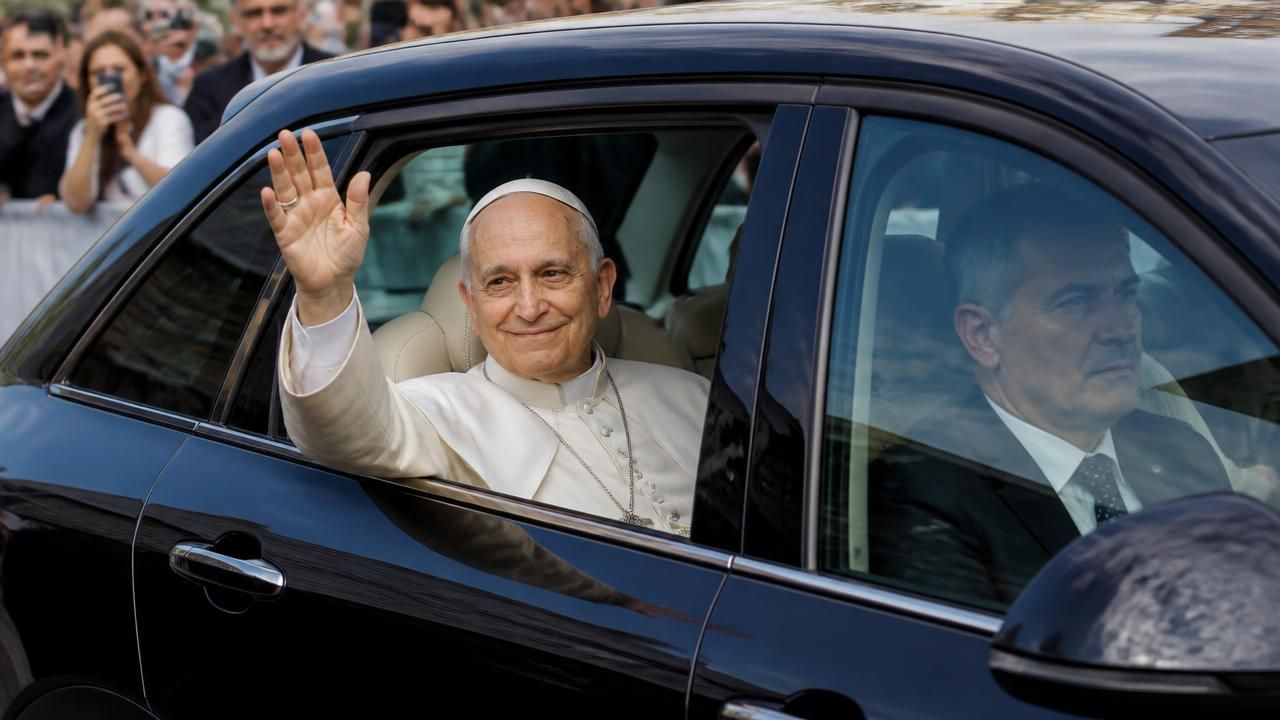
Pope Leo XIV returned to the Vatican on Saturday, four days after surgeons at Rome's Gemelli Hospital removed the lower lobe of his right lung in an operation to treat lung cancer, according to the Holy See. The 71-year-old pontiff left the hospital in the morning, ending the briefest — and most closely watched — papal hospitalization of his young tenure.
The discharge was announced in advance by the Vatican, which said the pope would be released on Saturday and return to his residence inside the walls of Vatican City. Wire services and broadcasters picked up the statement within minutes; by the time his motorcade pulled away from the Gemelli's entrance, the story had been carried by outlets from National Public Radio and the Associated Press to local radio stations in Britain and Catholic news sites in India.
A four-day stay at the 'pope's hospital'
The Gemelli, the teaching hospital of the Catholic University of the Sacred Heart in northern Rome, has become the default medical home for the modern papacy. Pope John Paul II was treated there after the 1981 assassination attempt in St. Peter's Square and returned repeatedly over the following decades; Pope Francis underwent colon surgery there in 2021 and was hospitalized for bronchitis and then a severe respiratory infection in the years that followed. The private suite on the hospital's tenth floor, with its own chapel and a corridor set aside for papal use, has acquired its own vocabulary in the Italian press — the corridoio dei papi, the corridor of the popes.
Leo's stay was shorter than most. The surgery, described in Vatican statements as successful, removed the lower lobe of the right lung — a lobectomy, a standard and often curative procedure when cancer is confined to one section of the lung. The AP reported that the pope had resumed working from his hospital room and had received a visit from a top aide, and that doctors described the lung as having recovered from the operation.
The Vatican said the pontiff would be discharged on Saturday and would return to the Vatican, four days after surgery to remove the lower lobe of his right lung.
Back to work, and a schedule that has not changed
Perhaps the most consequential line in the Vatican's communications was not medical at all: Leo is still scheduled to travel to Latin America in November. For a 71-year-old recovering from thoracic surgery, a long-haul trip involving multiple flights, altitude changes and crowded public liturgies is a substantial physical demand. The fact that the trip has not been publicly shelved is being read by Vatican-watchers as a signal that the pope's physicians expect a normal — if gradual — recovery.
Typical recovery from a lobectomy involves several weeks of reduced activity and a program of breathing exercises intended to prevent complications in the remaining lung tissue. Papal aides have not released a detailed convalescence plan, and the Vatican has not said whether general audiences and other public appearances will be scaled back during the summer.
The smoking question
Not every outlet led with the schedule. The Detroit Free Press, a Gannett newspaper, went with a reader-facing question rather than a medical bulletin: Did Pope Leo smoke? The framing reflects the most common thing people want to know after a lung-cancer diagnosis — whether the disease was self-inflicted — and it is a question the Vatican has not answered in detail. Lung cancer in never-smokers is well documented and accounts for a meaningful share of cases worldwide, particularly in women and in people of East Asian descent; exposure to radon, secondhand smoke, air pollution and occupational hazards are among the recognized risk factors. A lobectomy does not, by itself, indicate the cause of a tumor, and nothing in the Holy See's statements has addressed the pope's personal medical history.
The contrast in coverage was striking. Wire copy and legacy outlets — the AP, The New York Times, NPR — emphasized the institutional facts: the surgery, the discharge, the working schedule, the November trip. Aggregators such as MSN and Yahoo republished those dispatches under a flurry of slightly different headlines, some emphasizing the pope's age, some the number of days in hospital. Regional and religious broadcasters, including MKFM in Milton Keynes and the international affairs site DevDiscourse, kept the Vatican's own framing front and center, describing the surgery as successful and the discharge as orderly. Several major American sites, including USA Today, put the story behind an access wall, a reminder that even a globally significant health bulletin is now mediated by paywalls and syndication deals.
What it means for the papacy
Leo's illness lands at a delicate moment. He has sought to project energy and institutional continuity, and a cancer diagnosis introduces the kind of uncertainty that the Vatican's communications machinery is notoriously reluctant to discuss in detail. Popes are not obliged to disclose their medical records, and the Holy See has historically released only the outlines of a pontiff's condition — a practice that served John Paul II's long decline and Francis's recurring respiratory crises alike.
For now, the official story is one of speed and competence: a diagnosis, an operation, four days in a room on the tenth floor, and a return home. Whether that narrative holds will depend on what happens next — on the November trip, on how much of the pope's public schedule is restored, and on whether the Vatican chooses to say more about the disease it has now acknowledged he has.
- Who: Pope Leo XIV, 71, leader of the Roman Catholic Church.
- What: Discharged from Gemelli Hospital four days after surgery to remove the lower lobe of his right lung after a lung cancer diagnosis.
- When: Released Saturday; surgery earlier in the week.
- Where: Gemelli Hospital, Rome; returning to Vatican City.
- Why it matters: The pope has resumed working, and a scheduled November trip to Latin America has not been cancelled.