The United States and Iran have engaged in a rapid and dangerous cycle of attacks in the Strait of Hormuz, the world's most critical oil chokepoint, after Iranian forces struck multiple commercial vessels and Tehran declared the waterway closed. The escalation, which began early Sunday, marks the most severe confrontation between the two nations since the landmark peace agreement and has sent shockwaves through global energy markets and diplomatic circles.
What Happened: A Timeline of Strikes
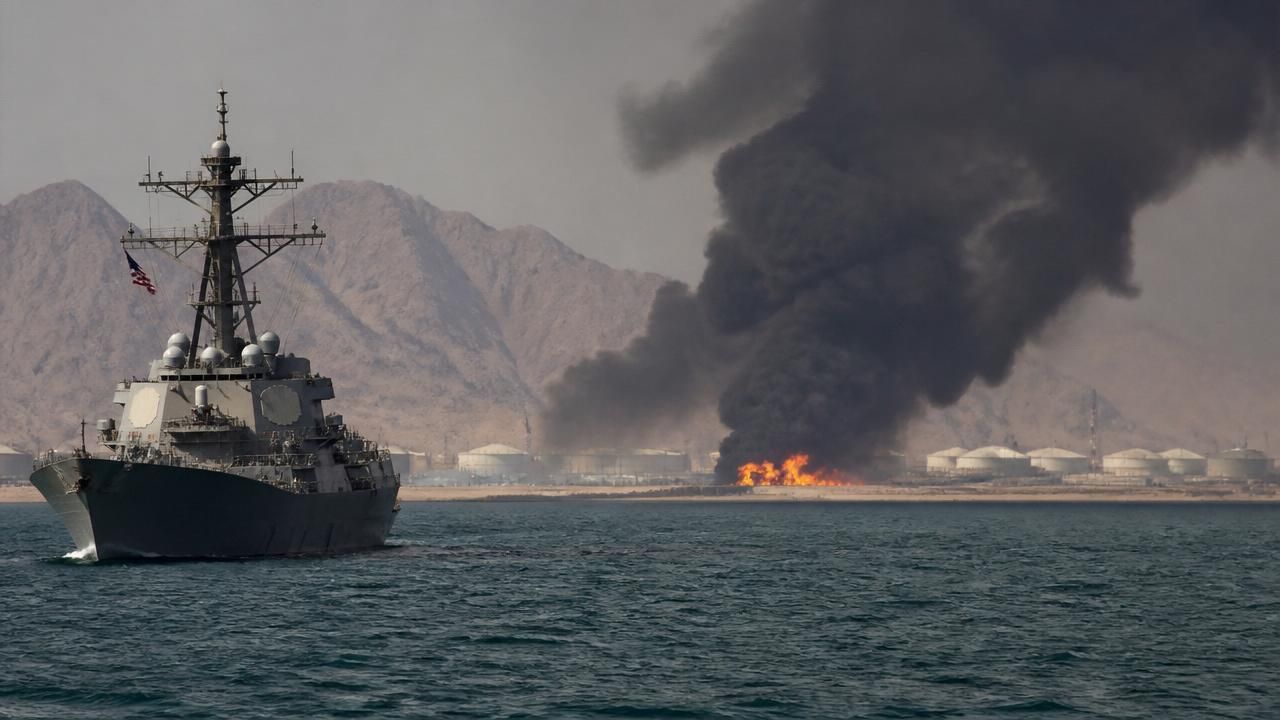
According to reports from multiple news outlets, including NPR, Reuters, and the BBC, the crisis began when Iran's Islamic Revolutionary Guard Corps (IRGC) fired missiles at a cargo ship in the Strait of Hormuz. The vessel, identified as a container ship, was struck while transiting the narrow waterway, causing damage but no immediate casualties. In rapid succession, Iran attacked two additional vessels, according to U.S. Central Command (CENTCOM) and British maritime authorities. The attacks prompted an immediate response from the United States, which launched airstrikes against Iranian military positions along the coast and inland, targeting missile batteries, radar sites, and naval facilities.
The New York Times and The Wall Street Journal reported that the U.S. strikes hit dozens of targets in southern Iran, including areas near Bushehr and Asaluyeh, home to major oil and gas infrastructure. CENTCOM confirmed the operations, stating they were 'defensive in nature' and aimed at protecting freedom of navigation. Iran, in turn, responded with further strikes, including attacks that reportedly hit targets in Bahrain, Qatar, and the United Arab Emirates, according to NPR and Al-Monitor. The IRGC also announced the indefinite closure of the Strait of Hormuz, a move that threatens to disrupt roughly 20% of the world's oil supply.
Who Is Involved and Why
The direct combatants are the United States and Iran, but the conflict has drawn in regional actors and global powers. The U.S. has long maintained a naval presence in the Persian Gulf to ensure the free flow of oil, while Iran views the Strait as a strategic lever to exert pressure and retaliate against sanctions. The immediate trigger for the latest attacks appears to be Iran's frustration over U.S. sanctions and the revocation of a license that had allowed some Iranian oil sales, as reported by NBC News and Spectrum Local News. The U.S. decision to revoke the waiver, announced just days before the attacks, was seen by Tehran as a provocation.
Iranian officials, quoted by Al-Monitor and the Guardian, justified the attacks by claiming the vessels were 'unauthorized' and violating Iranian territorial waters—a claim denied by the U.S. and shipping companies. The IRGC's declaration that the Strait is 'closed' is a dramatic escalation, though analysts note that Iran lacks the naval capability to fully enforce such a blockade. Nevertheless, the threat has already caused shipping insurance rates to spike and several major carriers to suspend transit through the waterway.
Differing Perspectives: How Outlets Frame the Story
The coverage of this crisis varies significantly across media outlets, reflecting different editorial stances and regional biases. Fox News and The Washington Examiner emphasize the U.S. response as 'retaliatory' and 'measured,' highlighting CENTCOM's precision strikes and the protection of commercial shipping. In contrast, The Guardian and Al Jazeera (via Al-Monitor) frame the conflict as a 'dangerous escalation' that risks a full-scale war, quoting analysts who warn that both sides are 'playing with fire.'
Iranian state media, as reported by Kurdistan 24, portrayed the IRGC's actions as a legitimate defense against 'American aggression' and claimed that U.S. strikes had killed civilians—a claim denied by the Pentagon. Western outlets like The New York Times and The Wall Street Journal focus on the geopolitical stakes, noting that the crisis undermines the fragile peace deal and could unravel diplomatic efforts. Meanwhile, business-focused outlets like Reuters and NBC News highlight the immediate economic impact: oil prices surged 5% in early trading, and shipping risks were raised to 'severe.'
Historical Context: From Peace to Brinkmanship
The current escalation is the worst since the U.S.-Iran peace agreement, which had de-escalated tensions after years of confrontation. That deal, brokered by international mediators, had established a ceasefire and opened channels for dialogue. However, underlying grievances—including U.S. sanctions, Iran's nuclear program, and regional rivalries—remained unresolved. The Trump administration's 'maximum pressure' policy, which included revoking oil waivers, is seen by many analysts as a key driver of the current crisis.
The Strait of Hormuz has been a flashpoint for decades. During the Iran-Iraq War in the 1980s, both sides attacked oil tankers in what became known as the 'Tanker War.' More recently, in 2019, Iran was blamed for attacks on tankers near the Strait, leading to a U.S. military buildup. The current attacks echo those incidents but on a larger scale, with Iran openly targeting multiple vessels and declaring the waterway closed.
Global Implications: Energy Markets and Diplomacy
The closure of the Strait of Hormuz, even if only partially enforced, has immediate consequences for global energy security. Approximately 17 million barrels of oil per day pass through the Strait, and any disruption can send prices soaring. NBC News reported that oil prices jumped 5% following the attacks, and the International Energy Agency warned of potential supply shortages. The U.S. has strategic petroleum reserves, but a prolonged closure could trigger a global recession, particularly in Asia, which relies heavily on Middle Eastern oil.
Diplomatic efforts are underway but face significant hurdles. The United Nations has called for an immediate ceasefire, but Iran has rejected mediation, according to CNN. President Trump, quoted by NBC News, said the ceasefire was 'over' but left the door open for talks. However, Iran's Supreme Leader Ayatollah Khamenei, in statements reported by Iranian media, vowed 'severe retaliation' for any further U.S. strikes. The European Union and Gulf Arab states, caught in the middle, are urging restraint while fearing the conflict could spread.
What Comes Next: Expert Views
Analysts are divided on whether the crisis will escalate into a full-scale war or de-escalate through backchannel negotiations. 'Both sides have shown a willingness to strike, but neither wants a protracted conflict,' said Dr. Sanam Vakil, a Middle East expert at Chatham House, in an interview with the BBC. 'The key variable is whether Iran's closure of the Strait is a bluff or a real strategic shift.'
The U.S. has reinforced its naval presence in the region, and CENTCOM has warned that further attacks will be met with 'overwhelming force.' Iran, meanwhile, has mobilized its proxy forces in Yemen, Iraq, and Syria, raising the risk of a multi-front conflict. The coming days will be critical: if both sides step back, a new ceasefire could be negotiated; if not, the world may witness the most dangerous confrontation in the Middle East in decades.
“This is the most serious escalation since the peace deal. The Strait of Hormuz is the world's economic lifeline, and any disruption will be felt from Tokyo to New York.” — Vali Nasr, professor of international affairs at Johns Hopkins University, quoted by The Guardian.
Key Takeaways
- Iran struck three commercial vessels in the Strait of Hormuz, prompting U.S. retaliatory airstrikes on Iranian military targets.
- Tehran declared the Strait of Hormuz closed, threatening global oil supplies; shipping risks raised to 'severe.'
- The U.S. revoked a license allowing Iranian oil sales, a key trigger for the attacks.
- Oil prices surged 5%, and major shipping companies suspended transits through the waterway.
- Diplomatic efforts are stalled, with both sides trading threats and demanding concessions.
As the world watches, the Strait of Hormuz has once again become the epicenter of a geopolitical storm with no easy exit. The next move by either side could determine whether this crisis becomes a footnote or a turning point in global history.