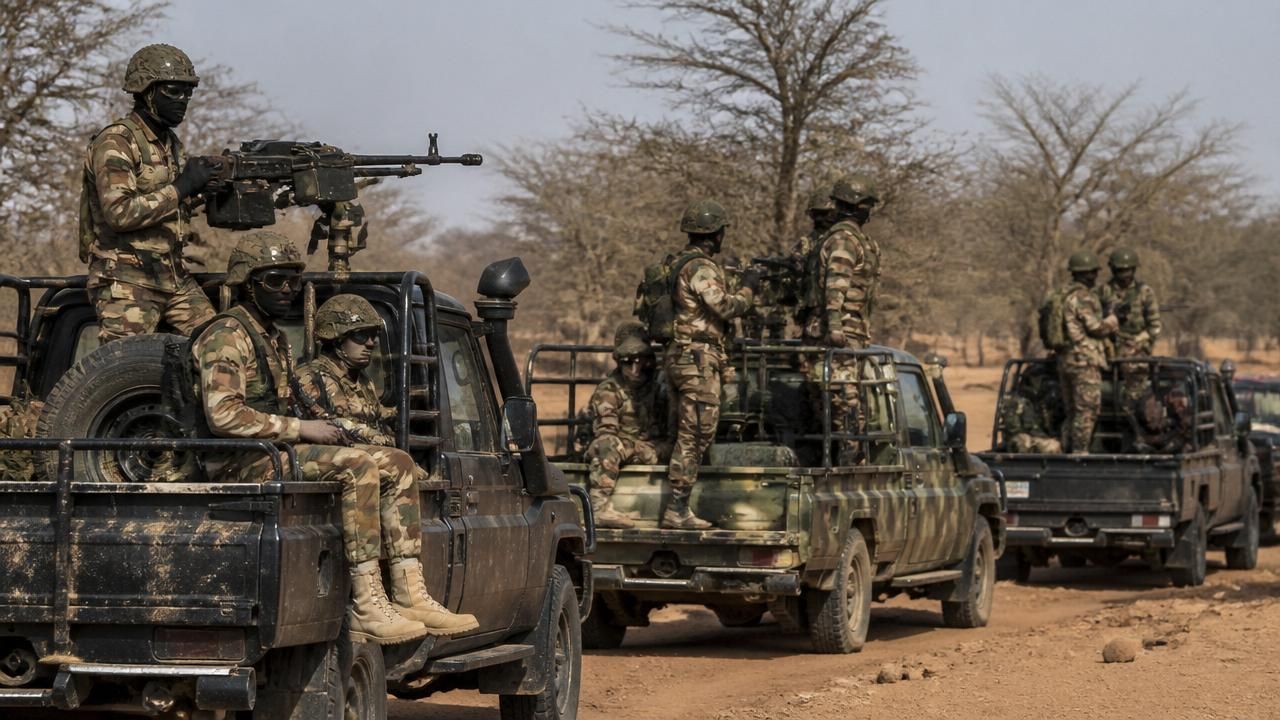
In a major military operation in northwestern Nigeria, troops have killed more than 300 bandits in the Gummi district of Zamfara state, according to state information commissioner Mahmud Muhammad Dantawasa. The two-day assault, which involved vigilantes, targeted kidnapping and cattle rustling gangs that have terrorized the region. The operation comes amid a broader escalation of violence in Nigeria's northwest, where banditry, kidnappings, and clashes with security forces have claimed hundreds of lives in recent months.
Operation Details
Dantawasa stated that the operation 'led to the elimination of more than 300 terrorists.' Residents reported that fighting raged throughout the night and into the following morning. The military has not officially commented, but local sources confirm the use of ground troops and air support. This follows a pattern of intensified military action, including airstrikes that have sometimes resulted in civilian casualties, such as a recent mistaken bombing of a religious festival.
Broader Security Crisis
Nigeria's northwest has been plagued by armed bandits who engage in mass kidnappings, cattle rustling, and village raids. The crisis has drawn comparisons to the jihadist insurgency in the northeast, with analysts debating whether banditry is becoming 'jihadized' or jihadists are adopting bandit tactics. Recent attacks include the abduction of over 300 schoolchildren in Katsina, the killing of 200 people in a motorbike gang attack in Zamfara, and a raid on two villages in the west that left more than 160 dead. In one incident, security forces rescued nearly 200 kidnap victims.
Government and Military Response
The military has vowed to go after wanted bandit leaders like Bello Turji, with the Chief of Army Staff promising relentless pursuit. However, critics argue that the military crackdown has not stemmed the tide of violence. In the past month alone, 240 lives were lost to banditry in the northwest during Ramadan. The government has also faced accusations of a 'gold-for-arms' trade that fuels the conflict, with investigations revealing that illegal mining and weapons smuggling are intertwined with banditry.
Human Impact
Villagers live in constant fear, with many too scared to speak about their experiences. The crisis has displaced thousands and disrupted farming and education. In one harrowing account, a resident said, 'We are living in the midst of bandits. They come at any time, kill, kidnap, and take our cattle.' The United Nations has warned of rising attacks on children, who are often targets for abduction and forced labor.
International Dimensions
The United States has conducted strikes against Islamic State militants in Nigeria, following warnings from former President Trump. The involvement of foreign powers highlights the transnational nature of the threat. Meanwhile, neighboring countries like Niger and Chad face similar challenges, with bandits operating across borders.
Analysis and Perspectives
Different outlets frame the story in varied ways. Western media often emphasize the scale of violence and government failures, while Nigerian sources focus on military successes. The Combating Terrorism Center at West Point explores the complex relationship between banditry and jihadism, suggesting that the two are increasingly intertwined. Some analysts argue that poverty, climate change, and weak governance are root causes, while others point to the proliferation of small arms and the breakdown of traditional security structures.
Conclusion
The killing of 300 bandits in Zamfara is a tactical victory for Nigeria's military, but the strategic picture remains grim. With ongoing kidnappings, village raids, and a cycle of reprisal attacks, the northwest is in the grip of a security crisis that demands a comprehensive response—military, political, and economic. As the government struggles to regain control, ordinary Nigerians continue to pay the heaviest price.