President Donald Trump said on Sunday that Russia and Ukraine had agreed to an “energy ceasefire,” a potentially significant step toward reducing attacks on power plants and refineries. But within hours, the announcement was shadowed by reports from Kyiv that Russian strikes on Ukrainian energy sites had continued, and by President Volodymyr Zelenskyy’s blunt assessment that the deal was “news for me.”
The White House offered no written terms, no start time, no duration and no monitoring mechanism. Trump’s statement, carried by NPR, The Associated Press, BBC News, NBC News and other outlets, was long on ambition but short on specifics. The Kremlin has not confirmed the arrangement, and Ukrainian officials said they were still awaiting details of ceasefire proposals from Washington and Moscow.
A claim without a framework
Trump described the agreement as an “energy ceasefire,” suggesting that both sides would halt strikes on energy infrastructure. It was not immediately clear whether the pause would cover only power plants and substations, or also oil refineries, pipelines and fuel depots. There was also no indication of how long it would last, when it would begin, or who would verify compliance.
The lack of detail immediately shaped coverage. The Associated Press framed the story as “Trump says Russia and Ukraine agree to an ‘energy ceasefire’ but Kyiv says attacks continue.” NPR noted that Trump “offered no details” and that Kyiv reported attacks by Moscow on energy sites after his statement. NBC News led with the claim itself, while Chicago Tribune stressed that Trump “gives no details.”
“Trump says Russia and Ukraine agree to an ‘energy ceasefire’ but Kyiv says attacks continue.” — The Associated Press
Zelenskyy backs the idea but disputes the reality
Zelenskyy’s response was calibrated but pointed. He backed the concept of an energy ceasefire, saying Ukraine would stop hitting Russian refineries if Russia halted attacks on Ukrainian energy facilities. But he also said the deal was “news for me” — a phrase rendered by some outlets as “news to me” — and that Russia was continuing to strike power plants.
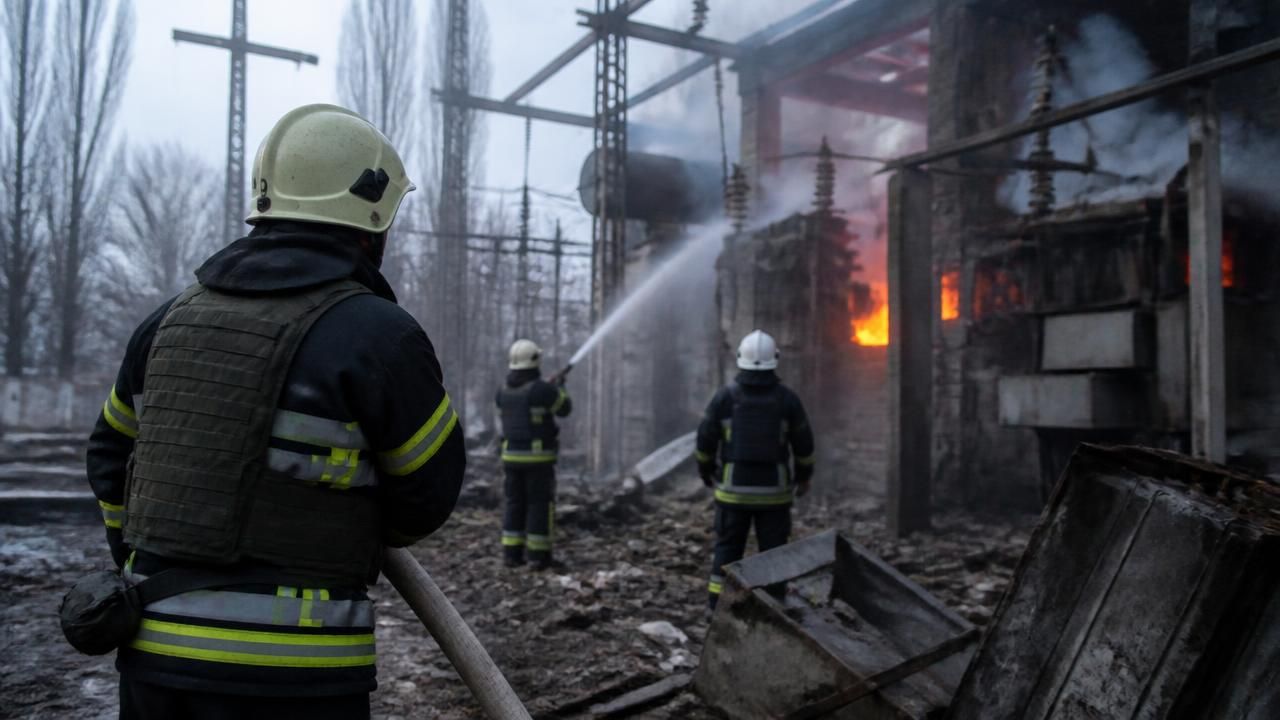
BBC News reported that Zelenskyy “backs Trump’s ‘energy ceasefire’ but says Russia continues to hit power plants.” The Guardian went further, running a live blog under the headline “Ukraine says Russia violated Trump’s ‘energy ceasefire.’” Ukrainian officials reported power outages after fresh Russian strikes, undercutting the idea that a pause was already in effect.
“Ukraine will stop hitting refineries if Russia halts energy attacks.” — President Volodymyr Zelenskyy
That conditional offer put the burden on Moscow. But it also exposed the gap between Trump’s announcement and conditions on the ground. If Russian drones and missiles kept targeting Ukraine’s grid, Kyiv argued, there was no ceasefire to speak of.
Russia’s silence and competing narratives
Moscow has not publicly confirmed the arrangement. Initial reports noted that both sides had yet to comment, even as Ukrainian officials described continued attacks. BBC News live coverage reported power outages across Ukraine after Russian strikes, despite Trump’s claim. A BBC Sounds segment summarized the contradiction bluntly: “Russia attacks Ukraine despite ‘energy agreement.’”
MSN’s coverage reflected the same skepticism, with one headline declaring: “Ukraine says Putin is already ignoring Trump’s ‘energy ceasefire’ claim.” Dutch-language MSN described Trump’s announcement as an “energie-wapenstilstand,” or energy armistice, but also noted the absence of confirmation from the warring parties.
Other coverage highlighted the political volatility around the announcement. Dutch-language MSN reported that Trump lashed out at Zelenskyy after a dispute over a diesel deal with Putin, underscoring how quickly the diplomatic mood can shift. The Guardian described Trump’s move as a “partial ceasefire” announcement, while Yahoo News emphasized Zelenskyy’s “news for me” reaction.
Why energy infrastructure matters
Energy sites have been a central battleground since Russia’s full-scale invasion in February 2022. Moscow has repeatedly targeted Ukraine’s power generation and transmission network, trying to plunge cities into darkness and weaken civilian morale. Ukraine has responded with long-range drone strikes on Russian oil refineries, aiming to disrupt fuel supplies and export revenue.
A genuine energy ceasefire would therefore be narrow but meaningful. It could spare Ukraine’s battered grid ahead of future winter months, reduce global oil-market jitters, and create a test case for broader de-escalation. But it would also be difficult to verify. Energy infrastructure is dispersed, attacks can be launched from multiple platforms, and both sides have incentives to accuse the other of cheating.
Previous attempts at partial ceasefires in this war have collapsed amid similar disputes. The Black Sea grain deal, brokered in 2022, eventually fell apart. Minsk agreements failed to stop fighting in eastern Ukraine. The absence of a signed document or independent monitor makes Trump’s latest initiative especially fragile.
What happens next
Ukraine is awaiting details of ceasefire proposals from the United States and Russia. Zelenskyy has said he is open to an energy truce, but only if it is mutual and verifiable. The Kremlin’s silence leaves the arrangement in limbo. If Russian strikes continue, the “energy ceasefire” may be stillborn. If they stop, it could become the first concrete de-escalation step in years.
For now, the story is less about a settled agreement than about competing claims. Trump presented a breakthrough. Zelenskyy offered conditional support and immediate evidence of violations. Russia said nothing. And Ukrainians, once again, faced power outages while waiting to see whether the lights would stay on.