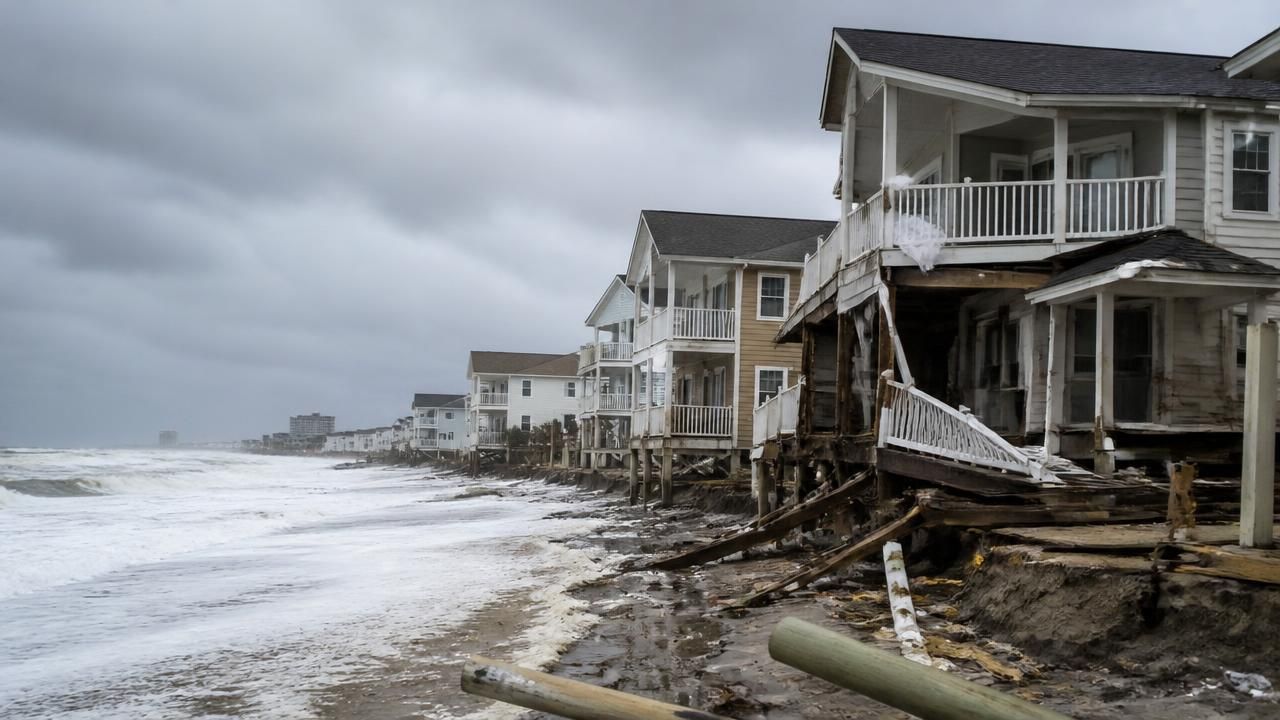
Hurricane Isaias has jolted an insurance industry that had enjoyed months of relative calm, sending loss estimators, adjusters, and homeowners scrambling as the storm churned through the Gulf of Mexico toward the Northern Gulf Coast and Florida Panhandle. After reaching Category 3 status, Isaias was later downgraded as it moved inland, but not before triggering hurricane deductibles, forcing evacuations, and focusing attention on a property insurance market already under pressure from rising values, climate risk, and political fights.
Insured Loss Estimates: Billions, But How Many?
Bloomberg Intelligence Senior Insurance Equity Analyst Matthew Palazola told Bloomberg This Weekend that Isaias could generate insured losses in the single-digit billions of dollars. He noted that stronger Florida building codes may limit damage despite rising property values, and that two relatively mild hurricane seasons have helped insurers rebuild capital. Recent Florida insurance reforms have improved market conditions, Palazola added, but they have yet to face a major test.
Palazola said two relatively mild hurricane seasons have helped insurers rebuild capital, while recent Florida insurance reforms have improved market conditions but have yet to face a major test.
Trade publication The Insurer reported that the expected insured loss from Isaias crept up but was expected to stay below $10 billion. Separately, The Insurer cited brokers who estimated losses could reach up to $5 billion. The range reflects the difficulty of modeling a storm whose intensity, path, and damage footprint shifted quickly. Insurance Journal reported that Isaias reached Category 3 status as insurers, adjusters, and property owners prepared for landfall. Insurance Business noted that after months of calm, Isaias put hurricane coverage back under scrutiny, while MSN reported that the insurance industry was watching and waiting as the storm churned in the Gulf.
Exposure: Homes, Multifamily, and Deductibles
Beyond insured losses, the storm's potential footprint is enormous. Cotality estimated that Isaias threatened about 777,000 homes along the Northern Gulf Coast as a major hurricane. Yahoo reported that more than $40 billion in multifamily property lay in its path. Those figures represent property value at risk, not necessarily destruction, but they underscore why insurers, reinsurers, and mortgage holders were on high alert.
For individual homeowners, the financial sting can begin before an insurer pays a claim. MSN reported that Hurricane Isaias switched on Florida's hurricane deductibles, which can top $6,000 before insurance pays out. Unlike standard deductibles, hurricane deductibles are often calculated as a percentage of a home's insured value, typically 2% to 5%, meaning a $300,000 policy could carry a $6,000 to $15,000 deductible. That leaves many policyholders responsible for a substantial share of repairs, even as they face evacuation costs and potential lost income.
Political Storm: Blame Over Florida's Property Insurance Crisis
The storm also became a political flashpoint. MSN reported that Democrats gave a hurricane warning of their own, arguing that Republicans created Florida's property insurance crisis. The allegation reflects long-running disputes over rate increases, insurer insolvencies, the growth of state-backed Citizens Property Insurance Corp., and reforms passed by the GOP-led Legislature and Gov. Ron DeSantis. Republicans have defended the changes as necessary to stabilize a market hit by litigation costs and catastrophic claims. Isaias is now testing those claims in real time, and any widespread damage could intensify the debate over who is responsible for the state's fragile insurance market.
Homeowner Preparation and Claims
As the storm approached, consumer outlets shifted to practical guidance. Yahoo Finance published advice on how homeowners can prepare for Hurricane Isaias and simplify insurance claims, urging policyholders to review coverage, save emergency funds, and keep receipts. PNJ told readers to photograph three things before Isaias made landfall, a reminder that documentation is critical to claims. Standard advice includes photographing the exterior and interior of a home, videotaping belongings, storing receipts for expensive items, and keeping a copy of the insurance policy in a waterproof container or the cloud.
USA Today reported that Isaias was downgraded and that the Panhandle began assessing damage. That shift from preparation to recovery brings new challenges: filing claims quickly, documenting damage before cleanup, avoiding contractor fraud, and understanding that flood damage is generally not covered by standard homeowners policies unless the homeowner has separate flood insurance through the National Flood Insurance Program or a private carrier.
What Comes Next for Insurers and Residents
The insurance industry enters this storm with stronger capital than after some past hurricanes, according to Bloomberg Intelligence, but also with growing exposure. Rising property values in coastal Florida mean that even a storm with moderate winds can produce large dollar losses. Strong building codes, especially in newer construction, may reduce damage, but older homes and multifamily properties remain vulnerable.
For insurers, the key questions are whether losses stay below $10 billion, how much reinsurance absorbs, and whether Florida's reforms hold up under a major event. For homeowners, the priorities are documentation, understanding deductibles, and preparing for a claims process that can take months. For politicians, Isaias may become another test of whether Florida's property insurance market is truly on stable ground or merely waiting for the next big storm.