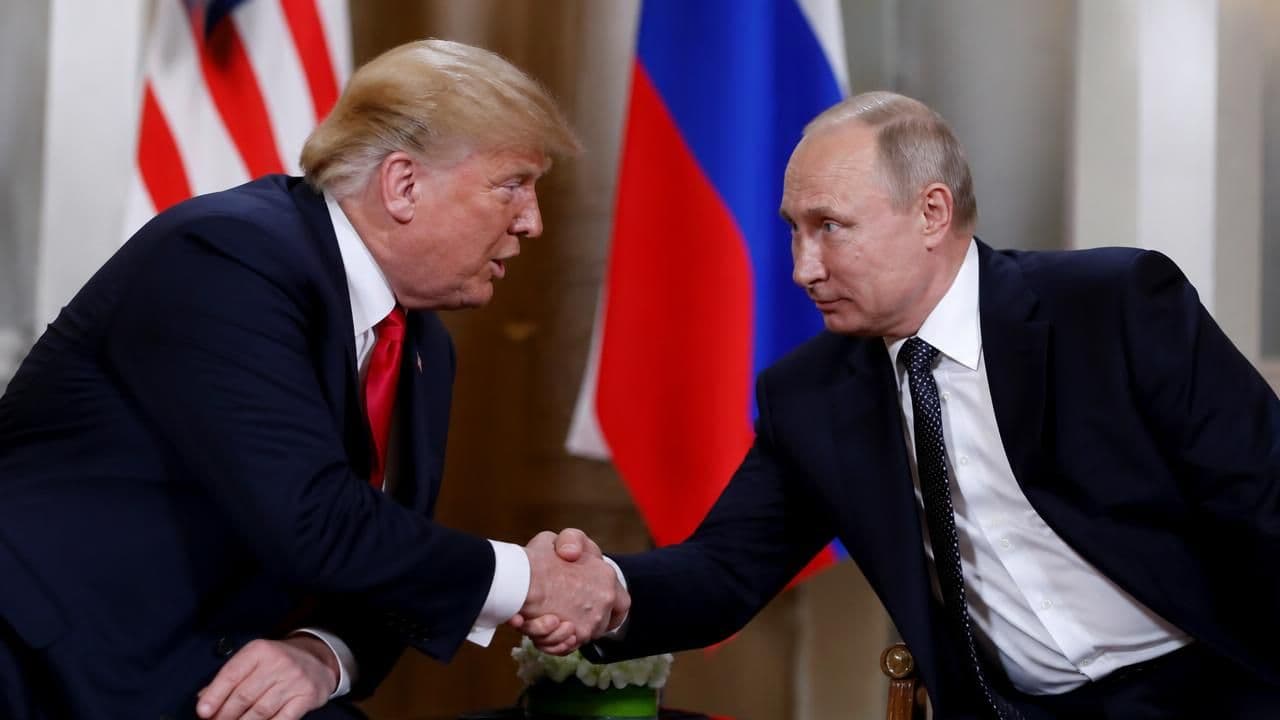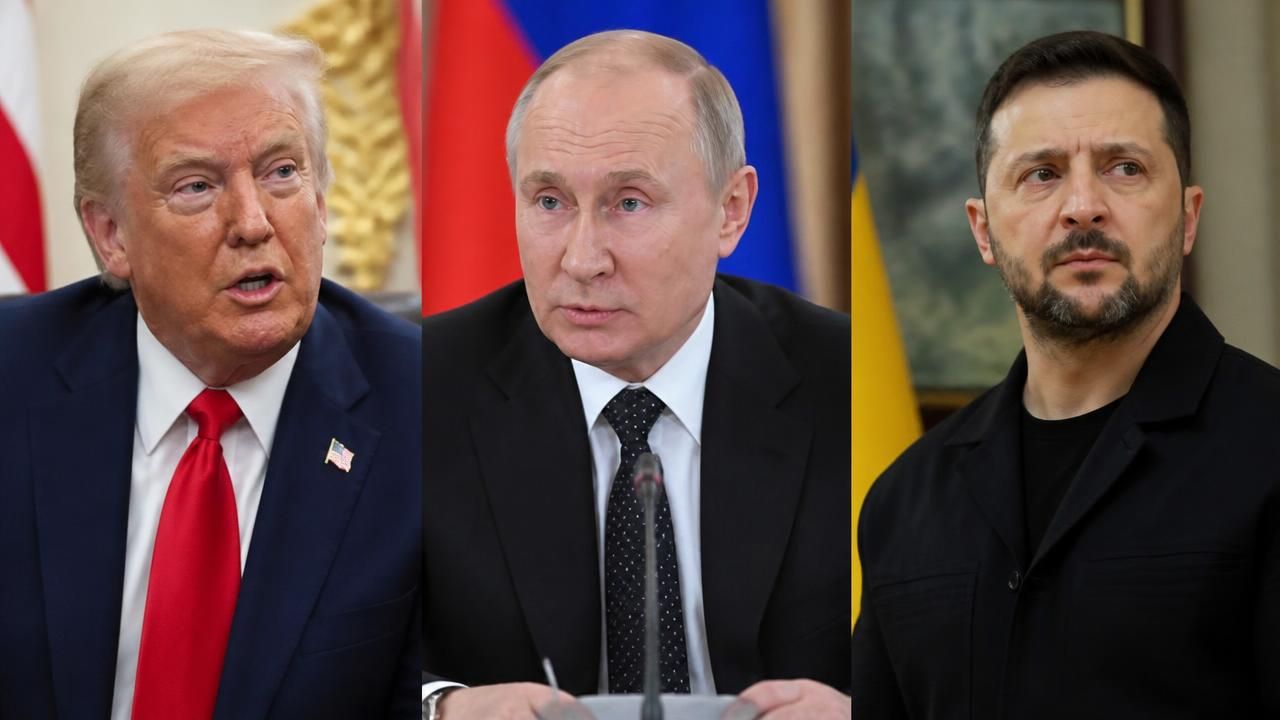
President Donald Trump said Vladimir Putin has agreed to supply Russian diesel to the United States and to global markets, an abrupt reversal of Washington’s years-long effort to choke off Russian energy revenue that drew immediate condemnation from Kyiv and deep skepticism from commodity analysts.
Trump framed the arrangement as a supply-side answer to a global fuel crunch, saying the Russian president would “immediately” release diesel onto world markets. According to accounts of his remarks, the first tranche would total roughly 300,000 tons, with “millions more to follow.” The announcement, carried by Bloomberg Television into the final minutes of the Wall Street trading session, arrived as diesel prices surged to unprecedented levels, squeezing truckers, farmers and freight operators across the United States and Europe.
A reversal that unwinds years of pressure
The deal, as described by Trump, marks a sharp break from the sanctions architecture the United States and its allies built after Russia’s full-scale invasion of Ukraine — a regime that included price caps on seaborne Russian crude, restrictions on refined-product exports and a coordinated push to deprive the Kremlin of petrodollars.
Outlets framed the news in markedly different registers. The BBC led on the political flashpoint, headlining the announcement alongside Volodymyr Zelensky’s charge that it was a “gift to Putin.” Yahoo Finance and MSN concentrated on the market mechanics, emphasizing Trump’s claim that Putin had agreed to “immediately release more diesel to markets.” The Chicago Tribune and RTÉ carried the story as a straight diplomatic and economic development, while several MSN aggregations foregrounded the disbelief of analysts who questioned whether the barrels could physically move. A separate MSN headline captured the mood in Kyiv: “Trump deal for Russian diesel sparks anger in Ukraine, doubts among analysts.”
Kyiv’s fury
Zelensky did not disguise his anger. In remarks carried by the BBC, RTÉ and This is the Coast, he described the arrangement as a “weak decision” and a “gift to Putin.” Other Ukrainian officials went further, characterizing any resumption of Russian fuel purchases by the United States as “an investment in war” — a formulation that quickly became the shorthand for Kyiv’s position.
“Letting Russia sell diesel to the US is an investment in war.”
The criticism carries an obvious sting: Washington spent three years urging Europe and Asia to wean themselves off Russian hydrocarbons, and the moral argument for that campaign rested on denying Moscow the revenue that funds its military. A US import deal undermines that case almost by definition.
Analysts: where are the barrels?
Market analysts were less outraged than puzzled. Several raised immediate operational questions that Trump’s announcement did not answer:
- Sanctions mechanics. It remains unclear whether Washington would issue waivers, licenses or a formal easing of restrictions to allow US refiners, traders or shippers to handle Russian product without legal exposure.
- Russian refined-product exports depend on tankers, port capacity and insurance — much of which has been constrained by Western restrictions on maritime services.
- Refinery reality. Russia is a major diesel exporter, but Ukrainian drone strikes have damaged refining capacity in recent months, raising doubts about how quickly Moscow could deliver a surge of 300,000 tons, let alone “millions” more.
- Price signals. Traders noted that Russian diesel already flows to willing buyers in Asia, Africa and Latin America. Redirecting a portion to the United States could be more an accounting shift than a genuine addition to global supply.
One recurring critique, aired across the MSN aggregation of analyst reactions, was that the deal may amount to sanctions relief under another name — a concession dressed up as a supply solution.
The domestic diesel squeeze
The announcement did not arrive in isolation. Trump also signed an executive order aimed at easing dyed diesel regulations, a move the White House pitched as relief for farmers and truckers. But those audiences were unpersuaded. As reported by the Seattle Times, agricultural and freight groups said the order would offer little relief because dyed diesel is largely restricted to off-road use and the change does not alter refining capacity, trucking costs or retail prices.
Taken together, the two moves sketch a White House scrambling to respond to a fuel market that has become politically toxic — low supply, high prices and an approaching harvest and holiday freight season.
What to watch
- Whether the Treasury Department issues explicit sanctions guidance or licenses for Russian diesel imports.
- Whether US refiners and traders, wary of reputational and legal risk, are willing to participate.
- Whether Congress moves to block or codify the arrangement, and how European allies respond.
- Whether diesel futures retreat — or simply shrug off an announcement that so far lacks a logistical blueprint.
For now, the deal exists mainly as an assertion: Trump says Putin has agreed; the barrels, the paperwork and the politics remain to be worked out.