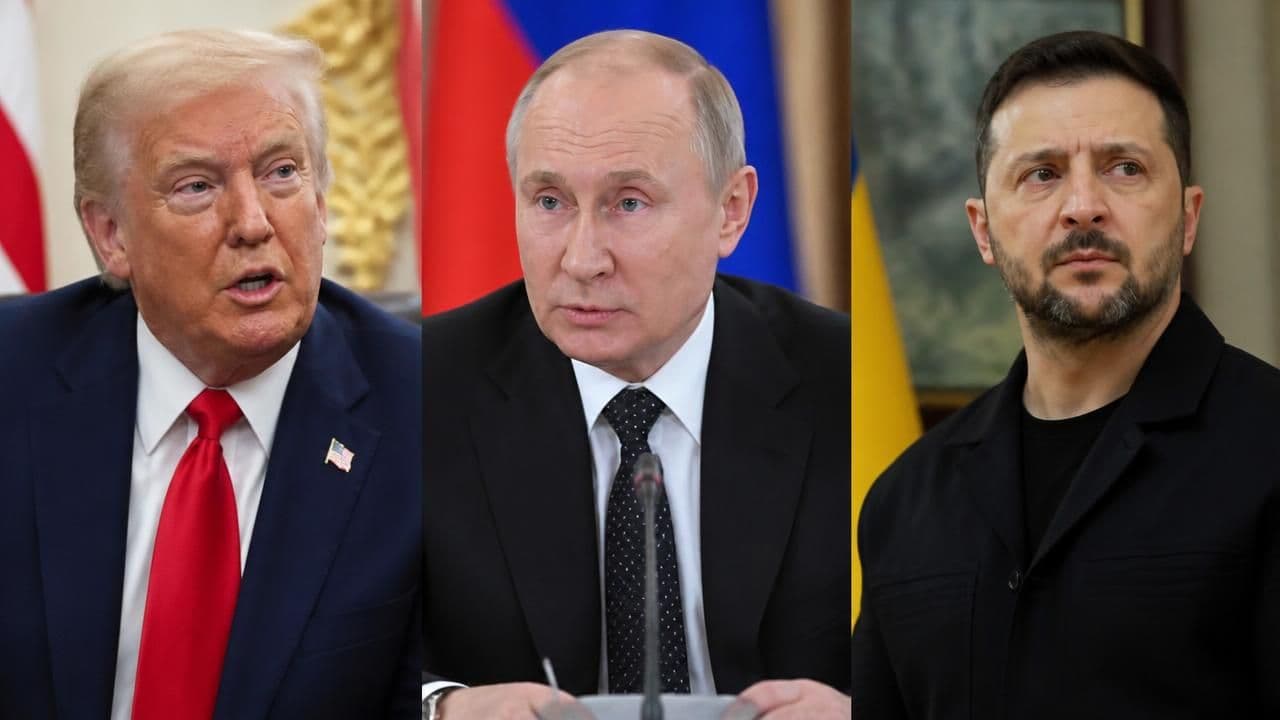
President Donald Trump said the United States will begin taking delivery of diesel fuel from Russia, a move that unwinds years of American economic pressure on Moscow and, by the president's own account, is aimed squarely at lowering fuel prices before the midterm elections.
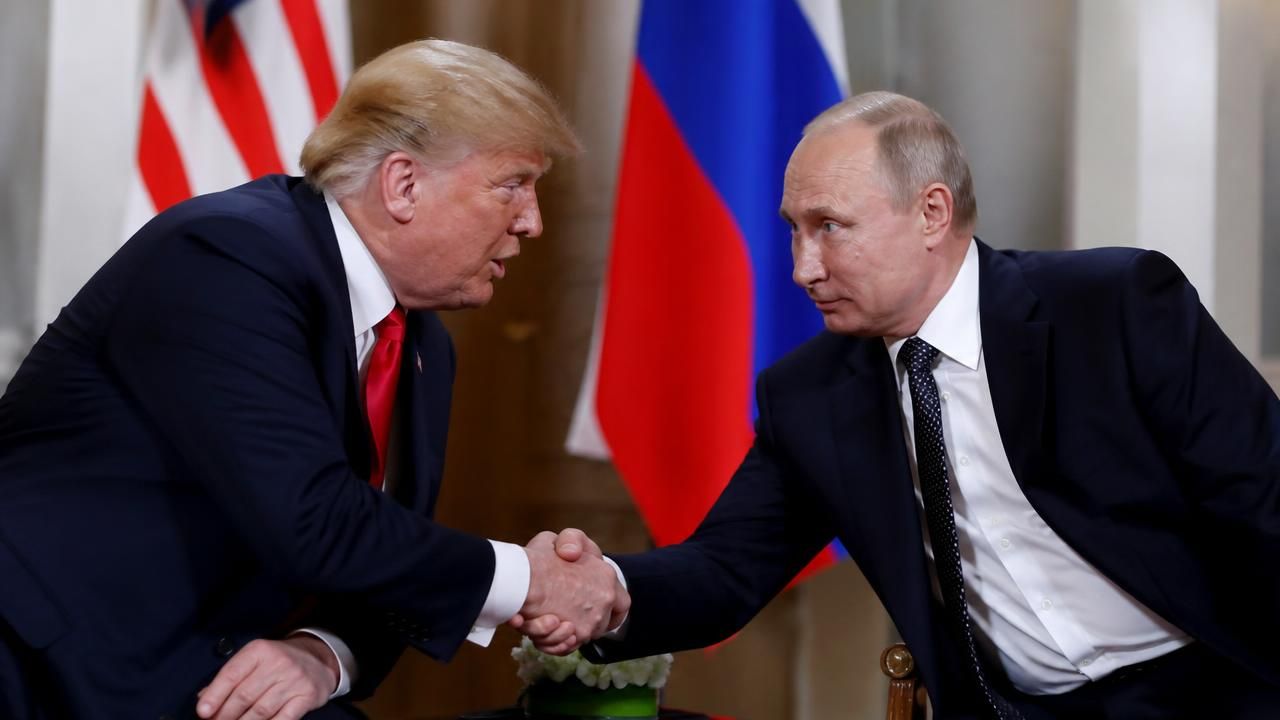
Trump said he struck the arrangement with Russian President Vladimir Putin in a phone call, according to reporting by NPR News. In the account relayed to the public, the president framed the agreement as a straightforward supply fix: Russian barrels would flow to U.S. buyers and, in the phrasing used by Yahoo News, Russia would be permitted to supply millions of tons of diesel to the United States and to global markets.
The announcement was carried across a wide band of outlets within hours — MSN, Yahoo, CNBC, The New York Times and others — each emphasizing a different facet of the same story. Some led with the relief at the pump; at least one led with the legal questions.
A Reversal, Not a Tweaking
What makes the decision notable is not the volume of fuel involved but the direction of travel. Since Russia's annexation of Crimea in 2014, and far more aggressively after the full-scale invasion of Ukraine in 2022, Washington has built a dense architecture of sanctions, export controls and price caps designed to shrink Moscow's energy revenues. Diesel and other refined products were explicitly targeted by allied embargoes and by a price-cap mechanism negotiated with the G7 and the European Union.
The reported deal does not repeal those measures outright. But it relaxes the pressure that sits at their core, and it does so on the eve of a national election in which gasoline and diesel prices have become one of the most reliable measures of voter sentiment.
Trump said the U.S. will obtain diesel from Russia, relaxing years of U.S. pressure on Moscow, to combat prices before midterms. He said he struck the deal with Russian President Vladimir Putin in a phone call. (NPR News)
The Sanctions Question
CNBC framed the story through its most contentious angle: the claim that the agreement contradicts Russia sanctions law. That framing has become the central objection raised by critics, who argue that a president cannot simply telephone a counterpart and suspend restrictions that Congress wrote into statute — particularly measures that include mandatory sanctions and reporting requirements, along with provisions allowing lawmakers to review or block certain forms of relief.
The practical and legal questions overlap:
- Statutory conflict: Whether the arrangement requires explicit congressional authorization, a waiver, or a declaration of national emergency if it touches congressionally mandated sanctions.
- Enforcement: How the Treasury and State departments would handle shippers, insurers and traders moving Russian refined products into U.S. ports.
- Allied coordination: Whether Europe, which banned Russian diesel imports, would view the U.S. move as a rupture of a jointly maintained policy.
- Market signal: Whether the mere announcement — before any cargo sails — already softens futures prices for distillates.
The New York Times emphasized the price context, headlining the development as an import decision arising amid high prices. That is the political logic the White House appears to be betting on: diesel is not just a transportation fuel but the backbone of freight, agriculture, construction and home heating, and its cost feeds into nearly every consumer price index.
Why Diesel, Why Now
Unlike crude oil, which trades in a genuinely global market, refined products are constrained by refinery capacity — and the United States, despite being a major exporter of distillates, has seen tight inventories in recent years as older refineries closed and others were retooled. Russia, meanwhile, has surplus refining capacity and, cut off from European buyers, has been selling diesel at a discount to willing purchasers in Asia, Africa and the Middle East.
Buying that discounted fuel is, in pure supply terms, one of the faster ways to add barrels to a tight market. In political terms, it is an unusually direct intervention in the run-up to an election. That combination — rapid relief on one side, a visible concession to Moscow on the other — explains why the story has been covered so differently across the press.
Outlets aggregating wire and syndicated content, including MSN and Yahoo, largely repeated the announcement and its stated rationale. CNBC foregrounded the sanctions conflict. The New York Times, in a brief alert-style headline, foregrounded the price environment. The resulting picture is less contradictory than it is layered: a policy that is simultaneously a cost-of-living measure, a geopolitical concession and a possible legal collision.
The Wider Political Backdrop
The diesel announcement did not land in isolation. In the same news cycle, other outlets were documenting a broader pattern in the president's political position.
The Boston Herald reported that Republicans who once raced to embrace Trump are now giving debate answers that tell a different story — a sign that the sanction-relief decision may land differently with a base animated by prices than with a party establishment still publicly committed to confronting Moscow. The same outlet published a fact-check finding that the president's claims about tariffs bringing more auto factories to the United States do not match the numbers.
Elsewhere, the Press-Democrat reported that Trump has established a committee to investigate Federal Reserve Governor Lisa Cook in his latest effort to remove her — another front in an ongoing campaign to reshape independent economic institutions. The Daily News reported a new lawsuit from Arlington County, Virginia, over the president's proposed memorial arch, and noted that while the midterms will not keep Trump away from college football on Saturday, a hurricane might.
Taken together, the coverage portrays a president operating on multiple fronts at once — trade, monetary policy, public monuments and now energy sanctions — with the midterm clock as the common denominator.
What to Watch
Three things will determine whether the diesel deal becomes a durable policy or a contested footnote. First, whether Congress moves to challenge the arrangement on statutory grounds. Second, whether actual cargoes arrive, since an announced deal and a delivered barrel are very different things. And third, whether prices fall enough, and fast enough, to be felt by voters before they cast ballots — the outcome on which the entire political rationale depends.