NEW DELHI — Indian police detained hundreds of demonstrators in the capital this week as protests over the removal of some 130 million names from the country's voter roll escalated into what organizers are calling a broader citizens' movement against the Election Commission of India and its chief, Gyanesh Kumar.
The confrontation centered on Jantar Mantar, the iconic protest ground in the heart of New Delhi, where activists from the Citizens for Justice and Peace (CJP), the All India Students' Association (AISA), the Students' Federation of India (SFI) and the DYFI had gathered to demand Kumar's resignation over what they describe as irregularities in the electoral roll.
A Movement, and a Crackdown
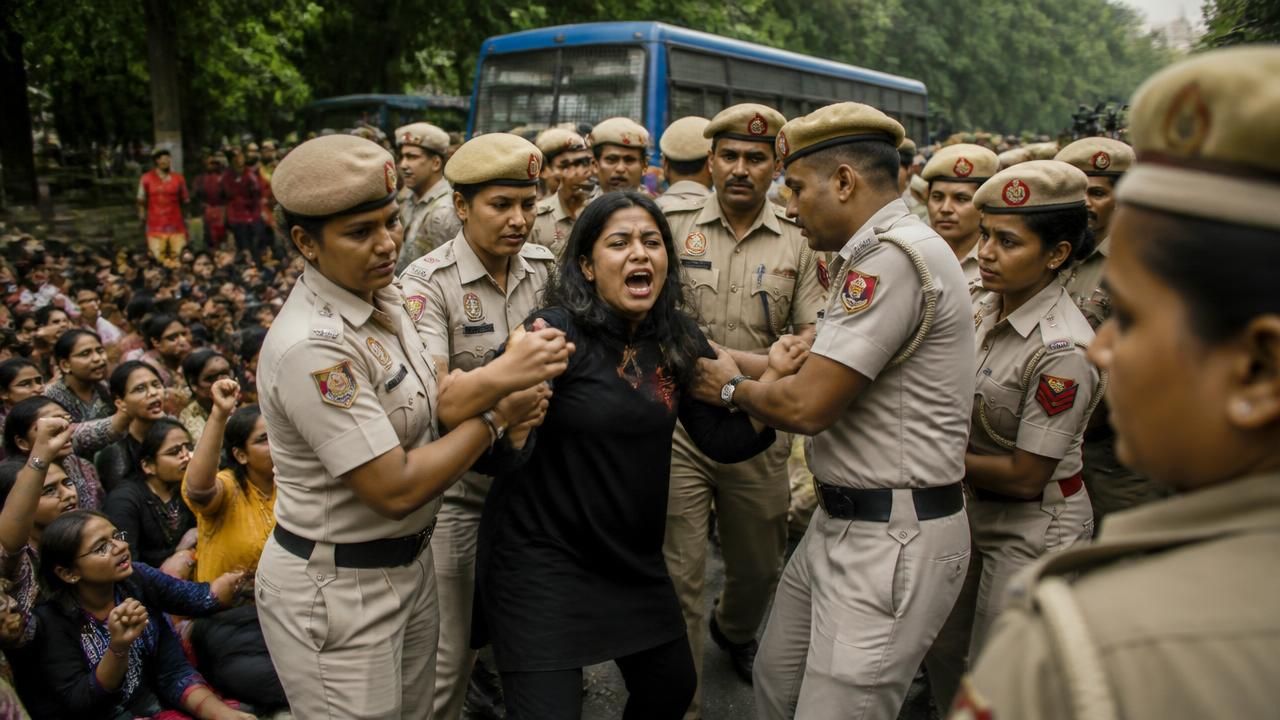
By the weekend, the scale of the police response had become the story. India Today reported that nearly 200 protesters were detained at Jantar Mantar alone, while Careers360 put the number of detained SFI and DYFI activists and students at more than 1,000. The Quint described how barricades were breached before police moved in, with thousands rallying and hundreds held.
Authorities left little to chance. Delhi Police requested the closure of 57 metro stations from 9 p.m., according to MSN, and additional forces were deployed across the city. India Today reported that liquor shops would remain shut for two days amid the protests and a heightened police alert. The Supreme Court, meanwhile, asked the government to reconsider curbs on metro and train services in Delhi, even as it agreed to list a plea challenging the crackdown for an early hearing.
Voices From the Ground
Individual accounts painted a picture of chaos and fear. Neha Bora, recounting the police action, framed the stakes in sweeping terms. "It's about defending democracy," she said. Student leaders Aishe Ghosh and Abhijeet Dipke were blunt in their assessment: "Jantar Mantar 2.0 has begun." Police scrutiny extended beyond the protest site — The Week reported that officers were scanning Delhi hotels to determine where prominent figures such as YouTuber Dhruv Rathee and activist Abhijeet Dipke were staying.
The crackdown drew allegations of misconduct. Malay Mail reported that Indian police were investigating sexual harassment allegations made during the protests against the election commission. In an account published by The Quint, an independent woman journalist described being physically manhandled by officers. "Cops lifted my shirt," she said, describing her experience covering the demonstrations.
"Jantar Mantar 2.0 has begun." — Aishe Ghosh and Abhijeet Dipke, after the protest crackdown
The CJP aimed its anger squarely at the police force, accusing it of acting as political muscle. "Stop acting like henchmen of Amit Shah," the organization said, naming the Union home minister directly in its criticism of the Delhi Police. AISA's president argued that what began as a protest against the chief election commissioner had evolved into something larger — a citizens' movement.
Amnesty Documents 'Unlawful and Deadly Force'
Amnesty International weighed in with a new investigation documenting what it called unlawful and deadly force against CJP-led protests "amid ongoing police impunity." In a parallel statement, Amnesty USA accused Indian authorities of "trampling on human rights in crackdown on electoral roll protests," underscoring how international human rights organizations are framing the events as part of a wider pattern of impunity rather than an isolated policing failure.
Political Fallout
The crackdown quickly migrated from the streets to the corridors of power. In the Parliamentary Standing Committee on Home Affairs, opposition and BJP members clashed over demands for a discussion on the Delhi protest crackdown, according to The Hindu. The Telegraph India reported that the Supreme Court had agreed to an early hearing on a plea against the police action.
Different outlets framed the story through sharply different lenses. International coverage, led by The New York Times, emphasized the government's suppression of protests over the voter-roll purge — a correspondent, Mujib Mashal, reported from the heart of the demonstrations. Indian outlets focused on logistics and politics: metro closures, traffic diversions, liquor store shutdowns and parliamentary sparring. Student and activist outlets centered the human toll.
An Online Front
The confrontation also extended into the digital realm. Wikinews reported that India was seeking a web crackdown after failed talks with the technology industry, while the country's IT minister publicly insisted that the government would not censor social media. The two positions sit awkwardly together, highlighting the tension between New Delhi's appetite for controlling online speech and its official insistence that it does not.
Whether the movement sustains momentum remains uncertain. The Shillong Times reported that the opposition protest was gaining strength despite the police crackdown — a signal that the detentions have not, so far, achieved their apparent aim of demobilization.
What Comes Next
The proximate demand is the resignation of the chief election commissioner over the removal of 130 million names from the rolls, a figure that opponents say threatens the integrity of the world's largest electoral system. The Supreme Court's willingness to hear a challenge to the crackdown, the ongoing Amnesty investigation, and the parliamentary clashes all point to a fight that is now as much legal and institutional as it is street-level.
- Detained: Nearly 200 at Jantar Mantar, per India Today; over 1,000 SFI and DYFI activists per Careers360.
- Disrupted: 57 metro stations sought for closure; liquor shops shut for two days.
- Under scrutiny: Allegations of sexual harassment during protests and a documented account of a woman journalist being manhandled.
- Litigation: Supreme Court agrees to list a plea against the crackdown.
For now, the protest camp and the police barricades remain in place — and the question of who counts in India's electoral roll has become inseparable from the question of who is allowed to protest it.